Department of Biomedical Engineering, Eindhoven University of Technology, Eindhoven, The Netherlands.
Institute for Complex Molecular Systems, Eindhoven University of Technology, Eindhoven, The Netherlands.
Curr Heart Fail Rep. 2023 Dec;20(6):519-529. doi: 10.1007/s11897-023-00630-0. Epub 2023 Oct 9.
Cardiac tissue regenerative strategies have gained much traction over the years, in particular those utilizing hydrogels. With our review, and with special focus on supporting post-myocardial infarcted tissue, we aim to provide insights in determining crucial design considerations of a hydrogel and the implications these could have for future clinical use.
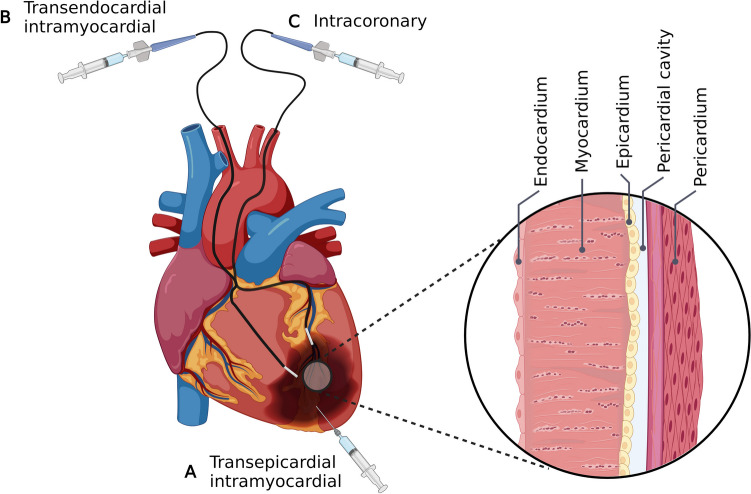
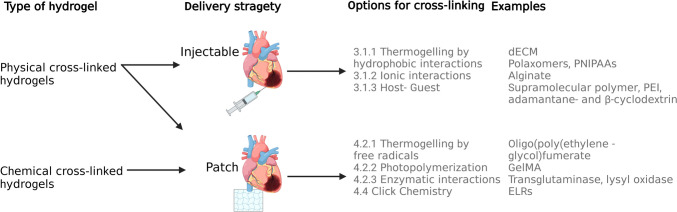
To date, two hydrogel delivery strategies are being explored, cardiac injection or patch, to treat myocardial infarction. Recent advances have demonstrated that the mechanism by which a hydrogel is gelated (i.e., physically or chemically cross-linked) not only impacts the biocompatibility, mechanical properties, and chemical structure, but also the route of delivery of the hydrogel and thus its effect on cardiac repair. With regard to cardiac regeneration, various hydrogels have been developed with the ability to function as a delivery system for therapeutic strategies (e.g., drug and stem cells treatments), as well as a scaffold to guide cardiac tissue regeneration following myocardial infarction. However, these developments remain within the experimental and pre-clinical realm and have yet to transition towards the clinical setting.
近年来,心脏组织再生策略受到了广泛关注,特别是利用水凝胶的策略。通过本次综述,特别关注支持心肌梗死后组织的策略,我们旨在提供关于确定水凝胶关键设计因素的见解,以及这些因素对未来临床应用的影响。
迄今为止,有两种水凝胶输送策略正在探索中,即心脏内注射或贴敷,以治疗心肌梗死。最近的进展表明,水凝胶的凝胶化机制(即物理或化学交联)不仅影响生物相容性、机械性能和化学结构,还影响水凝胶的输送途径,从而影响其对心脏修复的效果。关于心脏再生,已经开发出各种水凝胶,它们具有作为治疗策略(例如药物和干细胞治疗)的输送系统的功能,以及作为心肌梗死后引导心脏组织再生的支架的功能。然而,这些发展仍然处于实验和临床前阶段,尚未过渡到临床应用。