Department of Anesthesiology, The Second Affiliated Hospital of Fujian Medical University, No. 34 North Zhongshan Road, Quanzhou, 362000, Fujian Province, China.
Department of Anesthesiology, Shishi General Hospital, No. 2156 Shijin Road, Shishi, 362700, Fujian Province, China.
Sci Rep. 2023 Oct 14;13(1):17458. doi: 10.1038/s41598-023-44656-9.
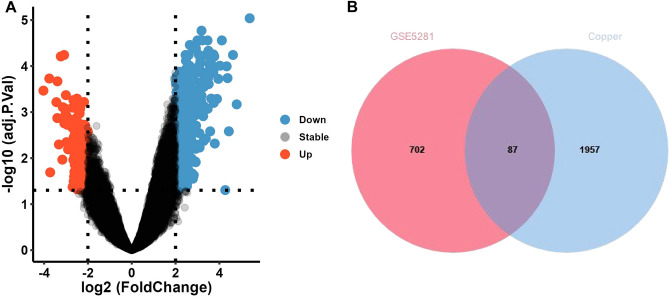
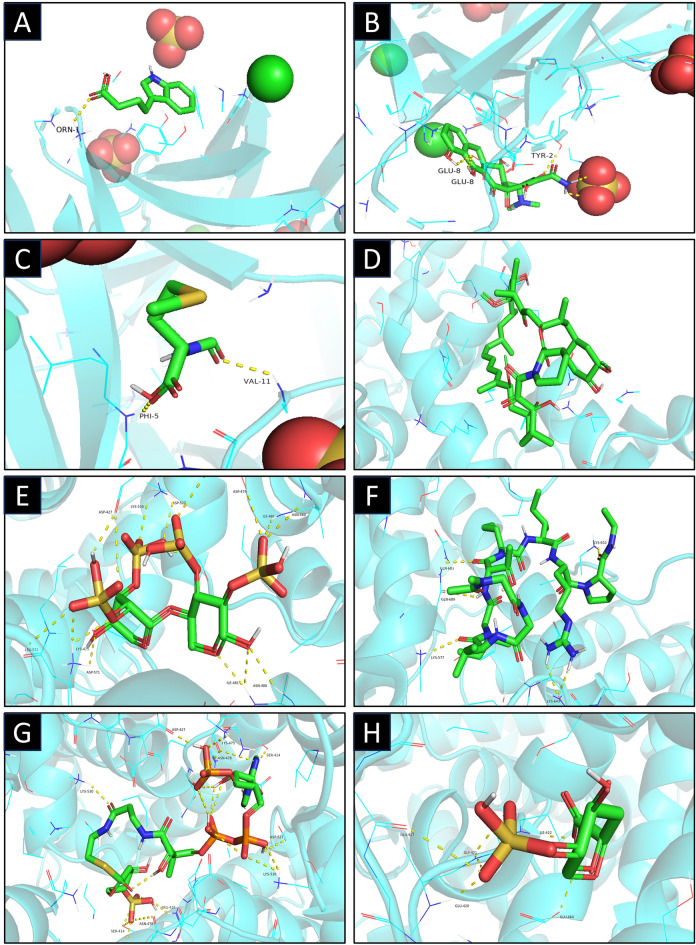
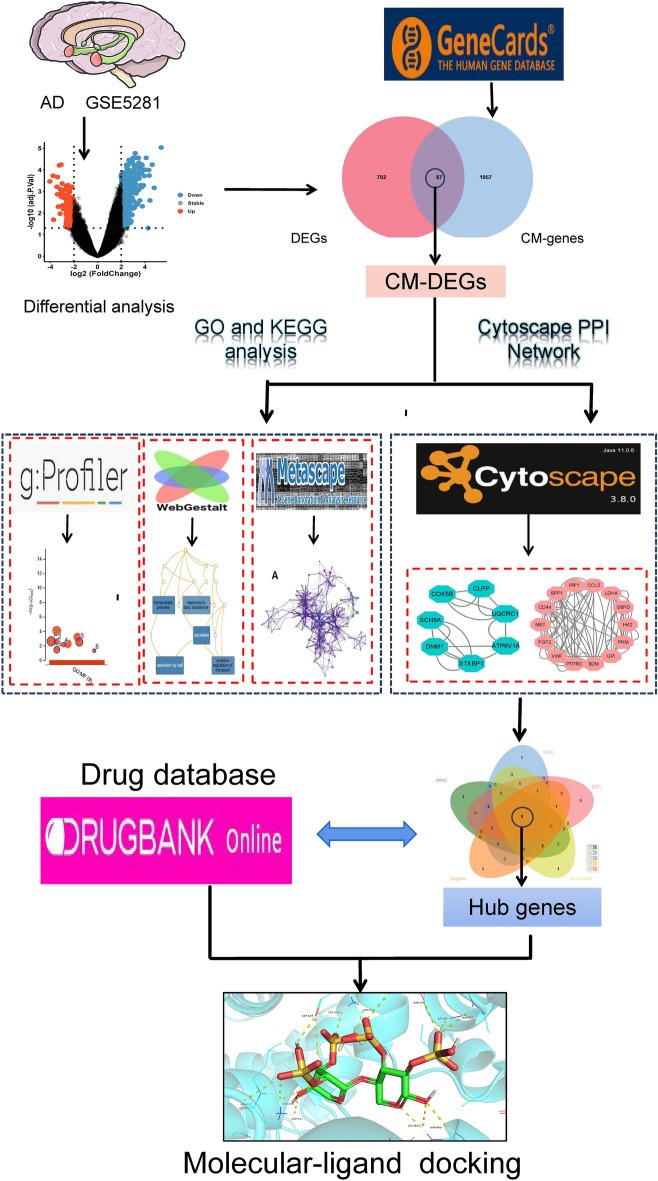
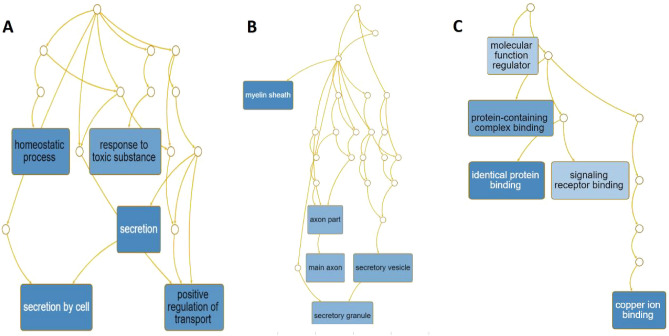
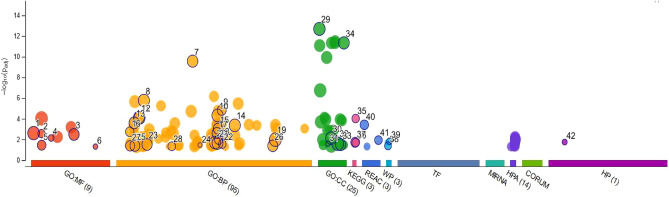
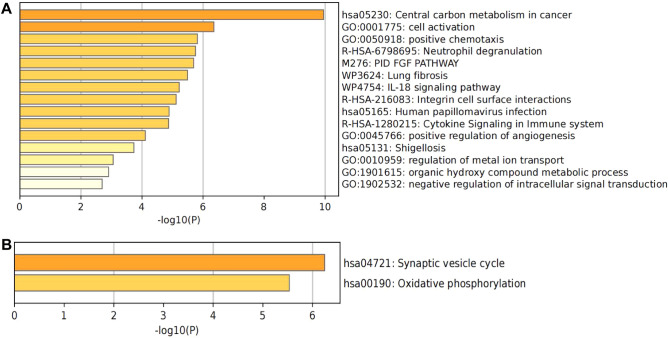
The pathological features of Alzheimer's disease are the formation of amyloid plaques and entanglement of nerve fibers. Studies have shown that Cu may be involved in the formation of amyloid plaques. However, their role has been controversial. The aim of this study was to explore the role of Cu in AD. We applied the "R" software for our differential analysis. Differentially expressed genes were screened using the limma package. Copper metabolism-related genes and the intersection set of differential genes with GSE5281 were searched; functional annotation was performed. The protein-protein interaction network was constructed using several modules to analyse the most significant hub genes. The hub genes were then qualified, and a database was used to screen for small-molecule AD drugs. We identified 87 DEGs. gene ontology analysis focused on homeostatic processes, response to toxic substances, positive regulation of transport, and secretion. The enriched molecular functions are mainly related to copper ion binding, molecular function regulators, protein-containing complex binding, identical protein binding and signalling receptor binding. The KEGG database is mainly involved in central carbon metabolism in various cancers, Parkinson's disease and melanoma. We identified five hub genes, FGF2, B2M, PTPRC, CD44 and SPP1, and identified the corresponding small molecule drugs. Our study identified key genes possibly related to energy metabolism in the pathological mechanism of AD and explored potential targets for AD treatment by establishing interaction networks.
阿尔茨海默病的病理学特征是淀粉样斑块的形成和神经纤维的缠结。研究表明,Cu 可能参与了淀粉样斑块的形成。然而,它们的作用一直存在争议。本研究旨在探讨 Cu 在 AD 中的作用。我们应用“R”软件进行差异分析。使用 limma 包筛选差异表达基因。搜索与 GSE5281 有差异的基因和铜代谢相关基因的交集集;进行功能注释。使用几个模块构建蛋白质-蛋白质相互作用网络,分析最显著的枢纽基因。然后对枢纽基因进行定性,并使用数据库筛选小分子 AD 药物。我们鉴定了 87 个 DEGs。基因本体分析集中在稳态过程、对有毒物质的反应、运输和分泌的正调节。丰富的分子功能主要与铜离子结合、分子功能调节剂、含有蛋白质的复合物结合、相同蛋白质结合和信号受体结合有关。KEGG 数据库主要涉及各种癌症、帕金森病和黑色素瘤中的中心碳代谢。我们鉴定了五个枢纽基因,即 FGF2、B2M、PTPRC、CD44 和 SPP1,并鉴定了相应的小分子药物。我们的研究通过建立相互作用网络,确定了 AD 病理机制中可能与能量代谢相关的关键基因,并探讨了 AD 治疗的潜在靶点。