Nie Zhongbiao, Xu Jiaming, Cheng Yinchu, Li Zhihong, Zhang Ran, Zhang Wentao, Zhao Libo
Department of Pharmacy, Peking University Third Hospital, Beijing, 100191, China.
Department of Pharmacy, Shanxi Bethune Hospital, Shanxi Academy of Medical Sciences, Tongji Shanxi Hospital, Third Hospital of Shanxi Medical University, Taiyuan, 030032, China.
Diabetol Metab Syndr. 2023 Oct 24;15(1):209. doi: 10.1186/s13098-023-01190-y.
Time-restricted eating (TRE), a feasible form of intermittent fasting, has been proven to benefit metabolic health in animal models and humans. To our knowledge, specific guidance on the appropriate period for eating during TRE has not yet been promoted. Therefore, to compare and assess the relative effectiveness estimates and rankings of TRE with different eating windows on human metabolic health, we conducted a systematic review and network meta-analysis (NMA).
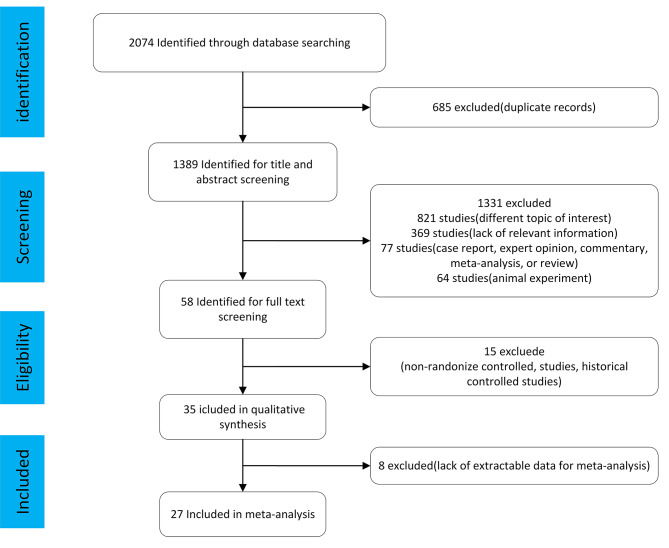
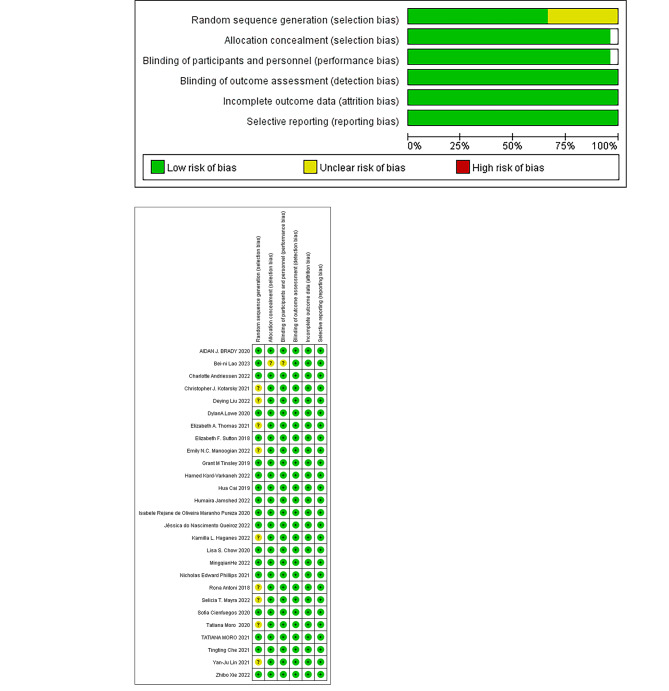
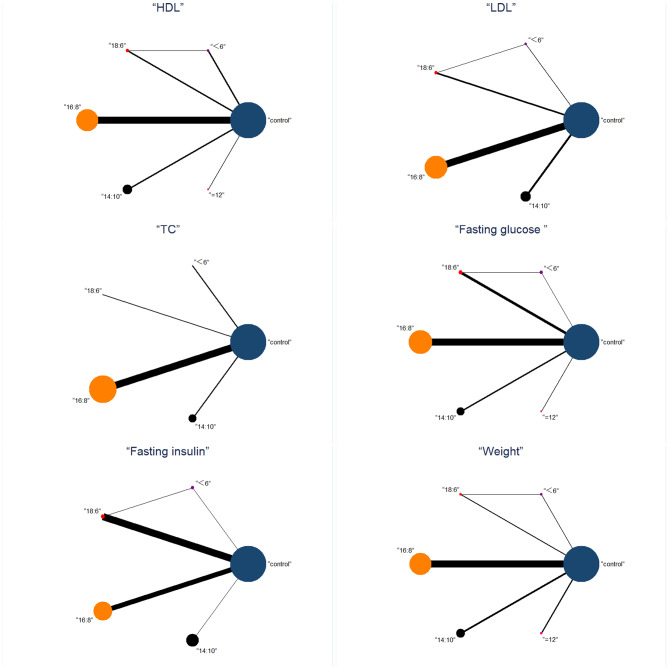
PubMed, EMBASE and the Cochrane Library were searched for randomized controlled trials that compared different eating windows on human metabolic health for adults. A Bayesian NMA was used to compare direct and indirect effects to determine the best different eating windows, and scientific evidence using GRADE.
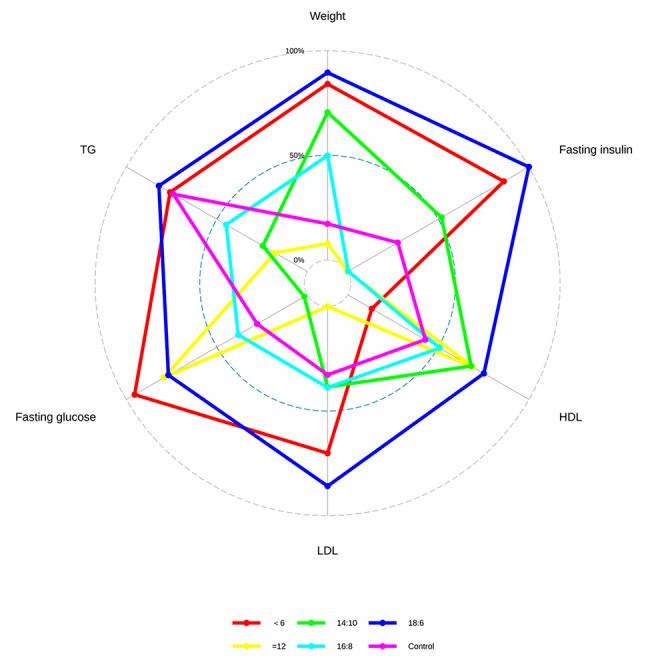
Twenty-seven RCTs comparing TRE with different eating windows on human metabolic health were reviewed, and all were included in the NMA. Compared with the normal diet group (non-TRE), the TRE group has certain benefits in reducing weight and fasting insulin. In terms of reducing fasting insulin, the 18:6 group (eating time = 6 h) was better than the 14:10 group (eating time = 10 h) and 16:8 group (eating time = 8 h) (P < 0.05); The < 6 group (eating time < 6 h) was better than the 14:10 group (P < 0.05). In terms of reducing fasting glucose, the < 6 group was better than the 14:10 group (P < 0.05). There were no statistical variations in weight, HDL, TG, and LDL across the different modes of TRE (P > 0.05).
Our research showed that no particular metabolic advantages of various eating windows were found. Therefore, our results suggested that different eating windows could promote similar benefits for metabolic parameters.
限时进食(TRE)是一种可行的间歇性禁食形式,已被证明对动物模型和人类的代谢健康有益。据我们所知,尚未有关于TRE期间合适进食时段的具体指导。因此,为了比较和评估不同进食窗口的TRE对人类代谢健康的相对有效性估计和排名,我们进行了一项系统评价和网络荟萃分析(NMA)。
在PubMed、EMBASE和Cochrane图书馆中检索比较不同进食窗口对成人人类代谢健康影响的随机对照试验。使用贝叶斯NMA比较直接和间接效应,以确定最佳的不同进食窗口,并使用GRADE评估科学证据。
回顾了27项比较不同进食窗口的TRE对人类代谢健康影响的随机对照试验,所有试验均纳入NMA。与正常饮食组(非TRE)相比,TRE组在减轻体重和降低空腹胰岛素方面有一定益处。在降低空腹胰岛素方面,18:6组(进食时间 = 6小时)优于14:10组(进食时间 = 10小时)和16:8组(进食时间 =