Institute of Plant Sciences, University of Bern, Bern 3013, Switzerland.
Department of Environmental Sciences, University of Basel, Basel 4056, Switzerland.
Proc Natl Acad Sci U S A. 2023 Oct 31;120(44):e2310134120. doi: 10.1073/pnas.2310134120. Epub 2023 Oct 25.
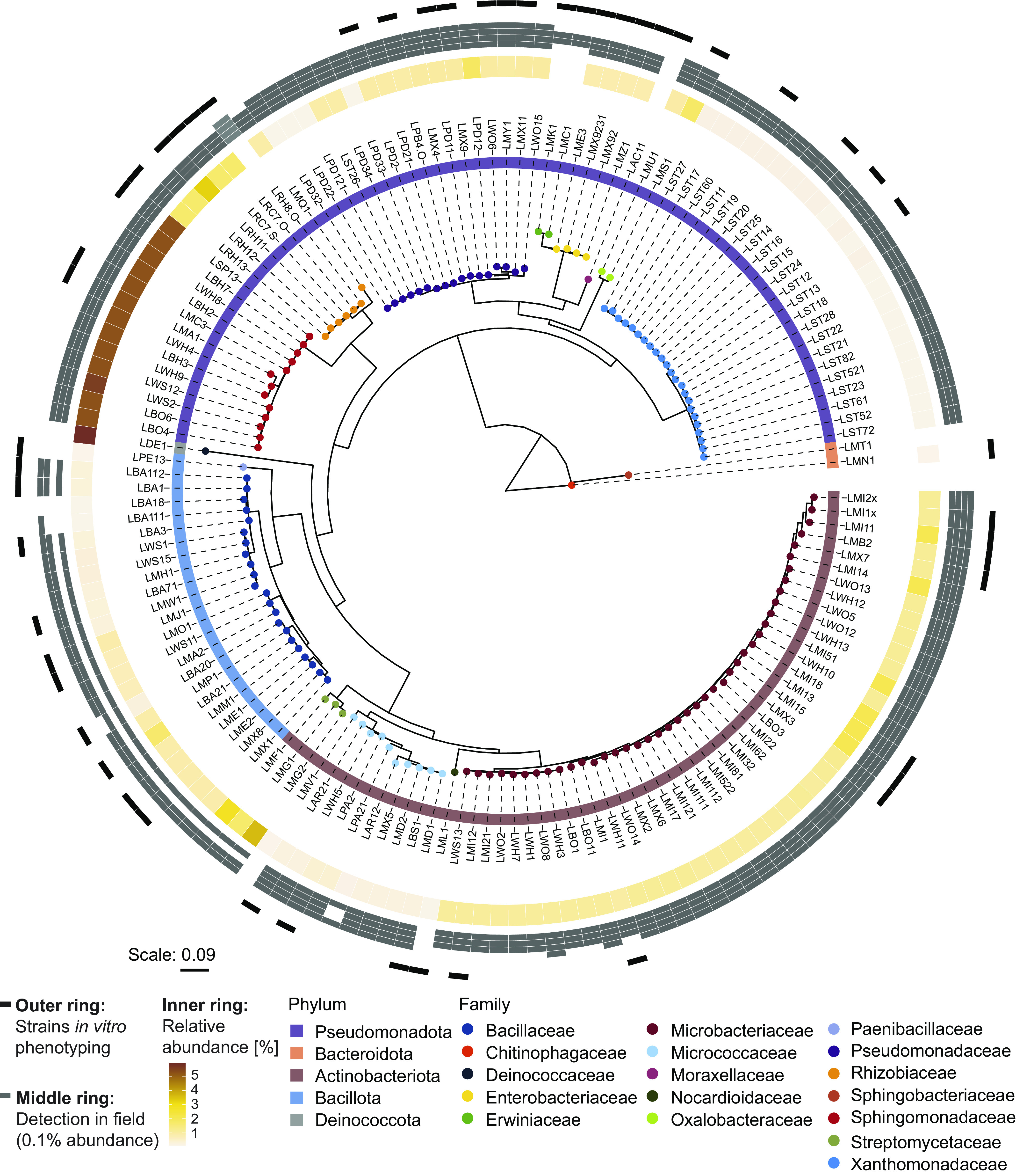
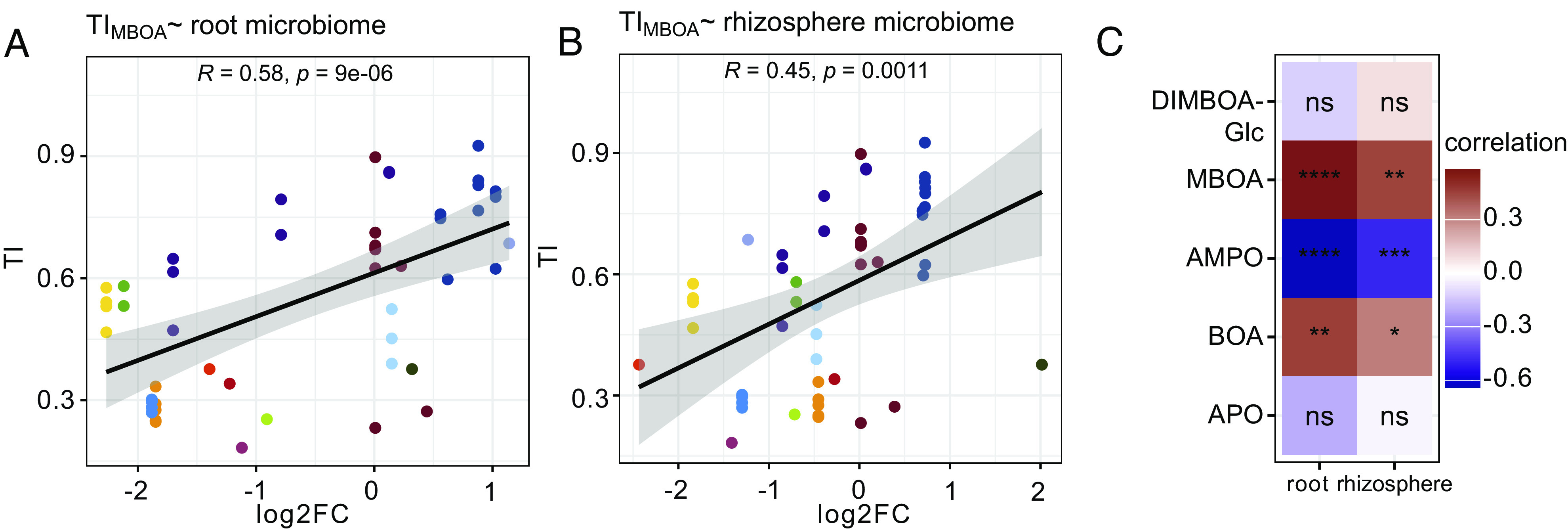
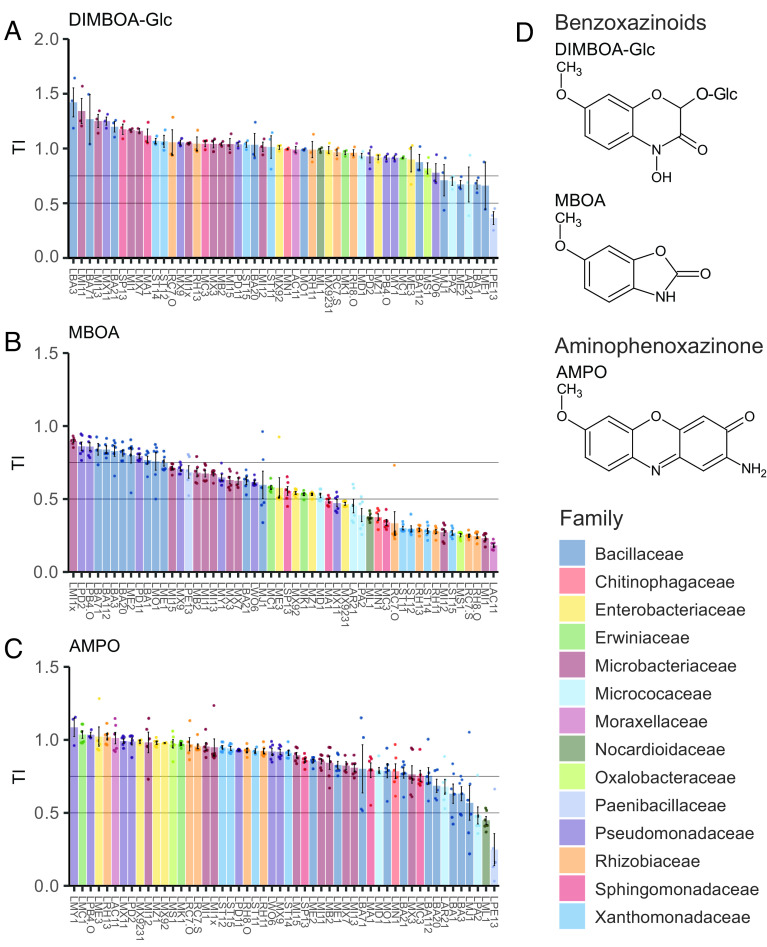
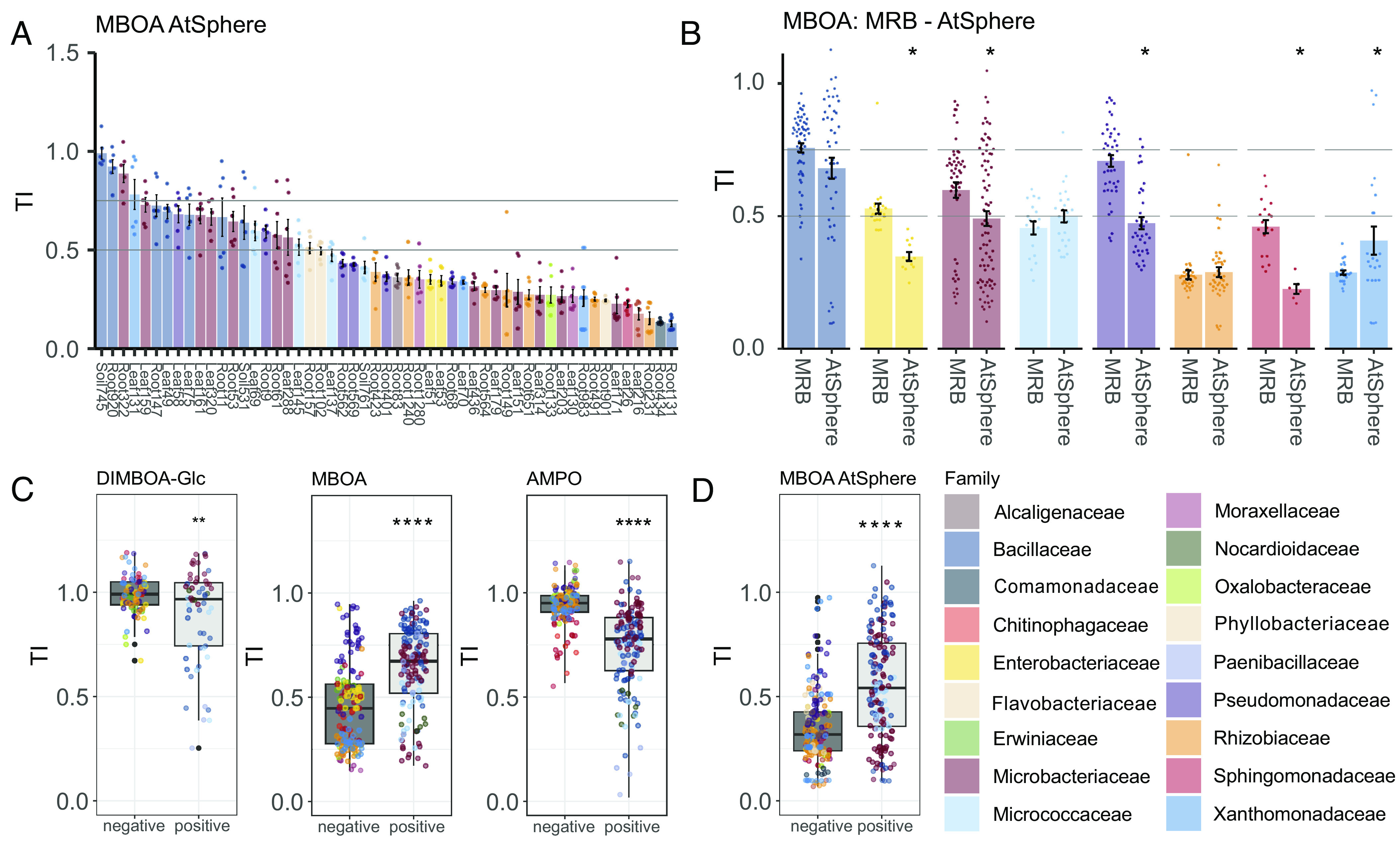
Plants exude specialized metabolites from their roots, and these compounds are known to structure the root microbiome. However, the underlying mechanisms are poorly understood. We established a representative collection of maize root bacteria and tested their tolerance against benzoxazinoids (BXs), the dominant specialized and bioactive metabolites in the root exudates of maize plants. In vitro experiments revealed that BXs inhibited bacterial growth in a strain- and compound-dependent manner. Tolerance against these selective antimicrobial compounds depended on bacterial cell wall structure. Further, we found that native root bacteria isolated from maize tolerated the BXs better compared to nonhost Arabidopsis bacteria. This finding suggests the adaptation of the root bacteria to the specialized metabolites of their host plant. Bacterial tolerance to 6-methoxy-benzoxazolin-2-one (MBOA), the most abundant and selective antimicrobial metabolite in the maize rhizosphere, correlated significantly with the abundance of these bacteria on BX-exuding maize roots. Thus, strain-dependent tolerance to BXs largely explained the abundance pattern of bacteria on maize roots. Abundant bacteria generally tolerated MBOA, while low abundant root microbiome members were sensitive to this compound. Our findings reveal that tolerance to plant specialized metabolites is an important competence determinant for root colonization. We propose that bacterial tolerance to root-derived antimicrobial compounds is an underlying mechanism determining the structure of host-specific microbial communities.
植物从根部分泌特化代谢物,这些化合物被认为是构建根部微生物组的结构。然而,其潜在机制还了解甚少。我们建立了一个代表性的玉米根细菌集合,并测试了它们对苯并恶嗪类化合物(BXs)的耐受性,BXs 是玉米植物根部渗出物中的主要特化和生物活性代谢物。体外实验表明,BXs 以菌株和化合物依赖的方式抑制细菌生长。对这些选择性抗菌化合物的耐受性取决于细菌细胞壁结构。此外,我们发现从玉米中分离出的土著根细菌比非宿主拟南芥细菌更能耐受 BXs。这一发现表明根细菌适应了宿主植物的特化代谢物。细菌对 6-甲氧基苯并恶唑啉-2-酮(MBOA)的耐受性,MBOA 是玉米根际中最丰富和选择性抗菌的代谢物,与这些细菌在分泌 BX 的玉米根上的丰度显著相关。因此,菌株对 BXs 的依赖性耐受性在很大程度上解释了玉米根上细菌的丰度模式。丰富的细菌通常耐受 MBOA,而低丰度的根微生物组成员对这种化合物敏感。我们的研究结果表明,对植物特化代谢物的耐受性是根定植的一个重要竞争决定因素。我们提出,细菌对根衍生的抗菌化合物的耐受性是决定宿主特异性微生物群落结构的潜在机制。