
茯砖茶通过增强高脂喂养肥胖小鼠的结肠功能促进脂肪生热作用。 (原英文文本表述似乎不完整,此译文是根据合理推测给出,仅供参考。)
from Fu Brick Tea Promotes Adipose Thermogenesis by Boosting Colonic in High-Fat-Fed Obese Mice.
作者信息
Wang Yu, Li Ting, Yang Chengcheng, Wu Yingmei, Liu Yueyue, Yang Xingbin
机构信息
College of Food Engineering and Nutritional Science, Shaanxi Normal University, Xi'an 710119, China.
出版信息
Foods. 2023 Oct 10;12(20):3716. doi: 10.3390/foods12203716.
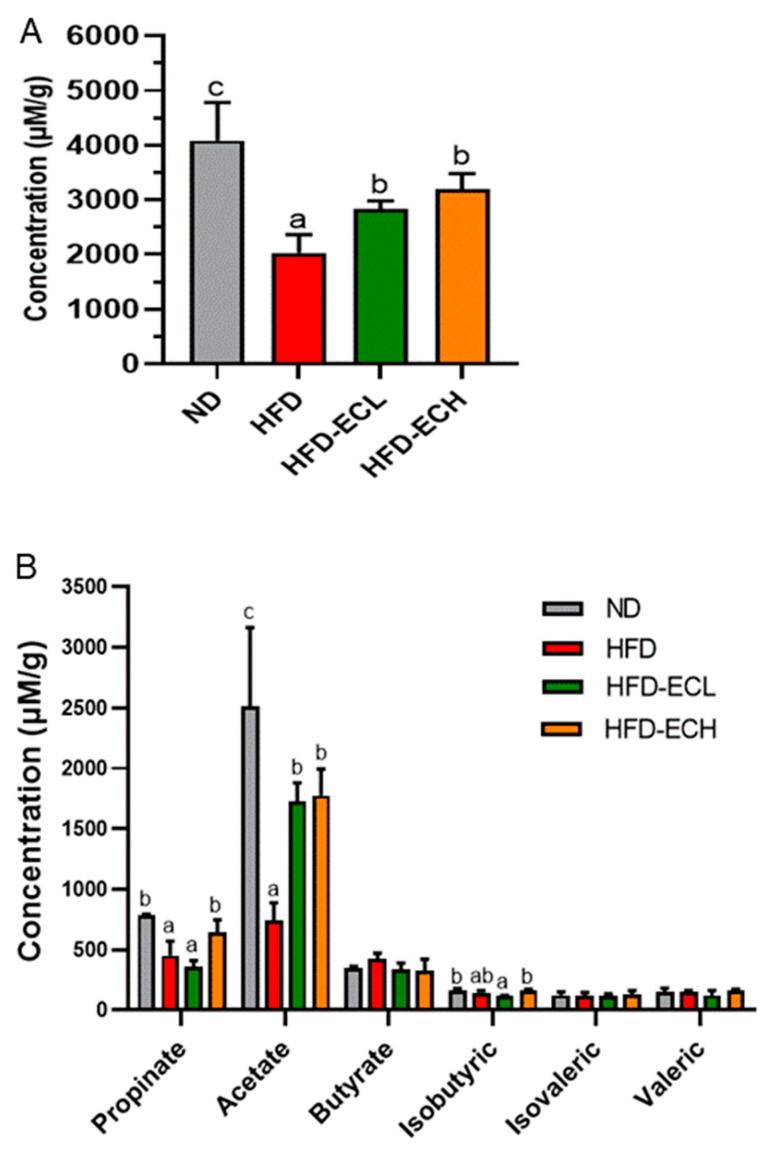
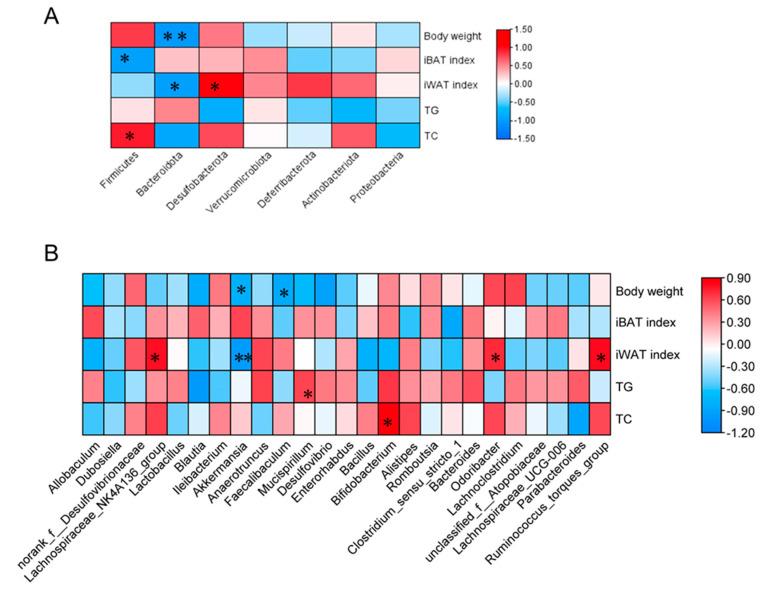
This study investigated the potential fat-thermogenic effects of , and elucidated the underlying mechanisms. The 12-week administration of in HFD-fed obese mice reduced body weight and improved glucolipid metabolism disorders. The administration of also efficiently promoted thermogenesis by increasing the expression of UCP1 and PRDM16 in both interscapular brown adipose tissue (iBAT) and inguinal white adipose tissue (iWAT) of HFD-fed mice. Furthermore, shaped the gut microbiome by increasing the abundance of and , and also elevated the levels of cecal short-chain fatty acids, particularly propionate and acetate. Of note, was highly negatively correlated with body weight gain (r = -0.801, < 0.05) and the iWAT index (r = -0.977, < 0.01), suggesting that may play an important role in the thermogenic mobilization induced by . Continuous supplementation with suppressed adipose accumulation, improved glucolipid metabolism, and enhanced the thermogenic activity of iWAT and iBAT. Collectively, our results propose that boosted acts as a key microbe in tea-derived probiotic -mediated fat-thermogenic and anti-obesity effects.
本研究调查了[具体物质]的潜在脂肪产热作用,并阐明了其潜在机制。在高脂饮食喂养的肥胖小鼠中连续12周给予[具体物质]可减轻体重并改善糖脂代谢紊乱。给予[具体物质]还通过增加高脂饮食喂养小鼠肩胛间棕色脂肪组织(iBAT)和腹股沟白色脂肪组织(iWAT)中UCP1和PRDM16的表达,有效促进了产热。此外,[具体物质]通过增加[具体微生物1]和[具体微生物2]的丰度塑造肠道微生物群,并提高盲肠短链脂肪酸水平,特别是丙酸和乙酸。值得注意的是,[具体物质]与体重增加(r = -0.801,P < 0.05)和iWAT指数(r = -0.977,P < 0.01)高度负相关,表明[具体物质]可能在[具体物质]诱导的产热动员中起重要作用。持续补充[具体物质]可抑制脂肪堆积,改善糖脂代谢,并增强iWAT和iBAT的产热活性。总体而言,我们的结果表明,[具体物质]作为茶源益生菌介导的脂肪产热和抗肥胖作用中的关键微生物发挥作用。





 Zotero 插件