Yu Xueqing, Zhao Jing, Fan Daidi
Engineering Research Center of Western Resource Innovation Medicine Green Manufacturing, Ministry of Education, School of Chemical Engineering, Northwest University, Xi'an 710069, China.
Shaanxi Key Laboratory of Degradable Biomedical Materials and Shaanxi R&D Center of Biomaterials and Fermentation Engineering, School of Chemical Engineering, Northwest University, Xi'an 710069, China.
Polymers (Basel). 2023 Oct 12;15(20):4059. doi: 10.3390/polym15204059.
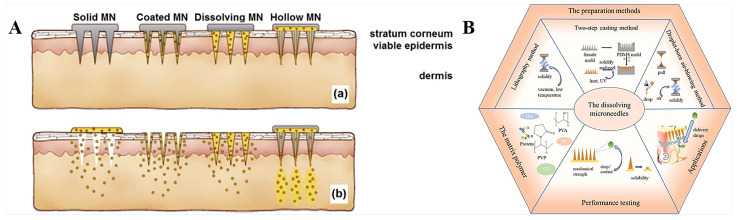
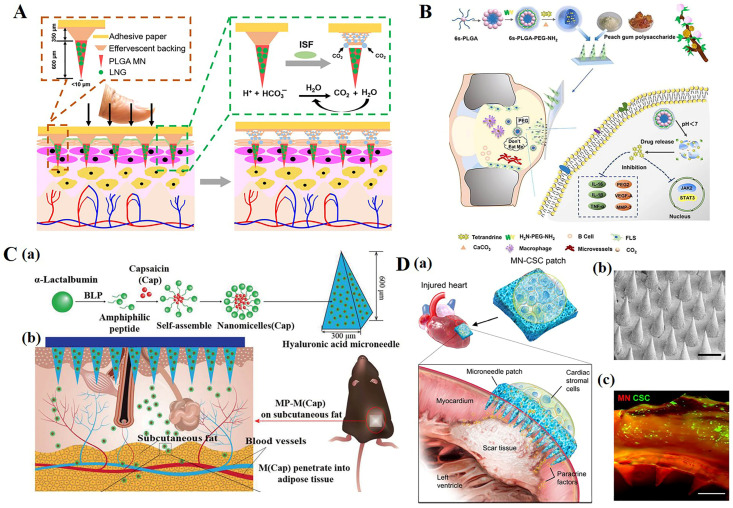
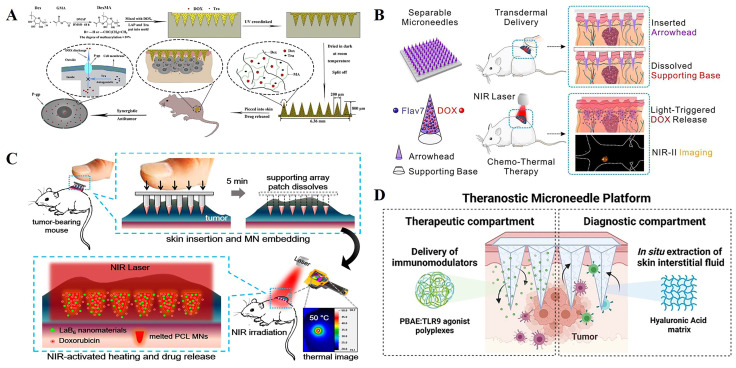
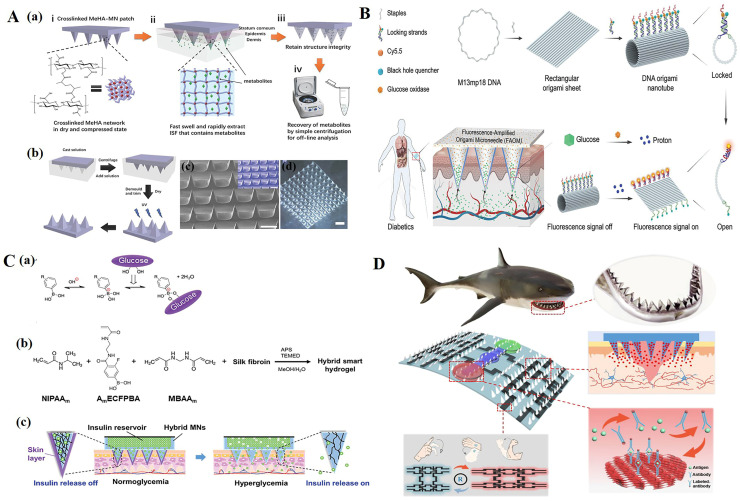
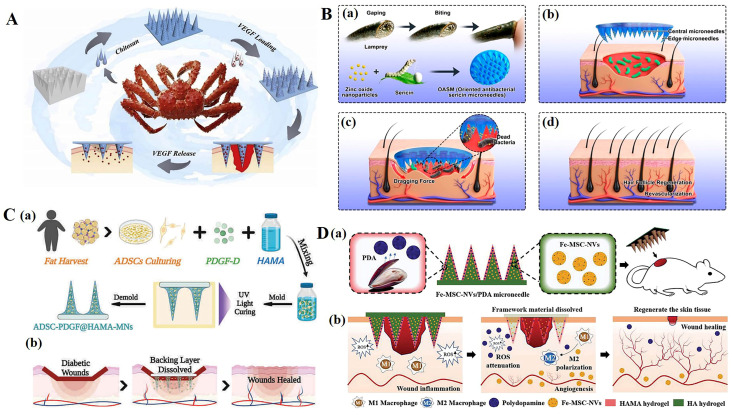
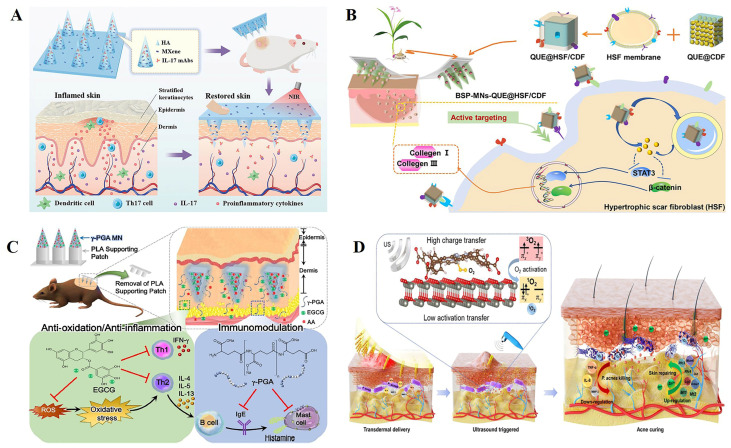
In recent years, microneedle technology has been widely used for the transdermal delivery of substances, showing improvements in drug delivery effects with the advantages of minimally invasive, painless, and convenient operation. With the development of nano- and electrochemical technology, different types of microneedles are increasingly being used in other biomedical fields. Recent research progress shows that dissolving microneedles have achieved remarkable results in the fields of dermatological treatment, disease diagnosis and monitoring, and vaccine delivery, and they have a wide range of application prospects in various biomedical fields, showing their great potential as a form of clinical treatment. This review mainly focuses on dissolving microneedles, summarizing the latest research progress in various biomedical fields, providing inspiration for the subsequent intelligent and commercial development of dissolving microneedles, and providing better solutions for clinical treatment.
近年来,微针技术已被广泛用于物质的经皮递送,在药物递送效果方面有所改善,具有微创、无痛和操作方便的优点。随着纳米技术和电化学技术的发展,不同类型的微针越来越多地应用于其他生物医学领域。最近的研究进展表明,溶蚀性微针在皮肤病治疗、疾病诊断与监测以及疫苗递送等领域取得了显著成果,在各个生物医学领域具有广泛的应用前景,显示出其作为一种临床治疗形式的巨大潜力。本综述主要聚焦于溶蚀性微针,总结其在各个生物医学领域的最新研究进展,为溶蚀性微针后续的智能化和商业化发展提供思路,并为临床治疗提供更好的解决方案。