Artificial Intelligence in Medicine (AIM) Program, Mass General Brigham, Harvard Medical School, Boston, MA, USA.
Department of Radiation Oncology, Dana-Farber Cancer Institute, Brigham and Women's Hospital, Boston Children's Hospital, Harvard Medical School, Boston, MA, USA.
Nat Commun. 2023 Nov 9;14(1):6863. doi: 10.1038/s41467-023-42501-1.
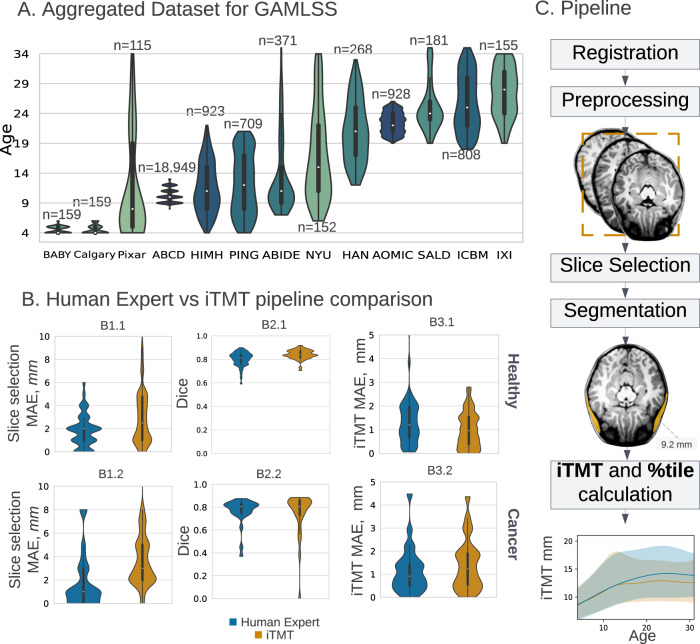
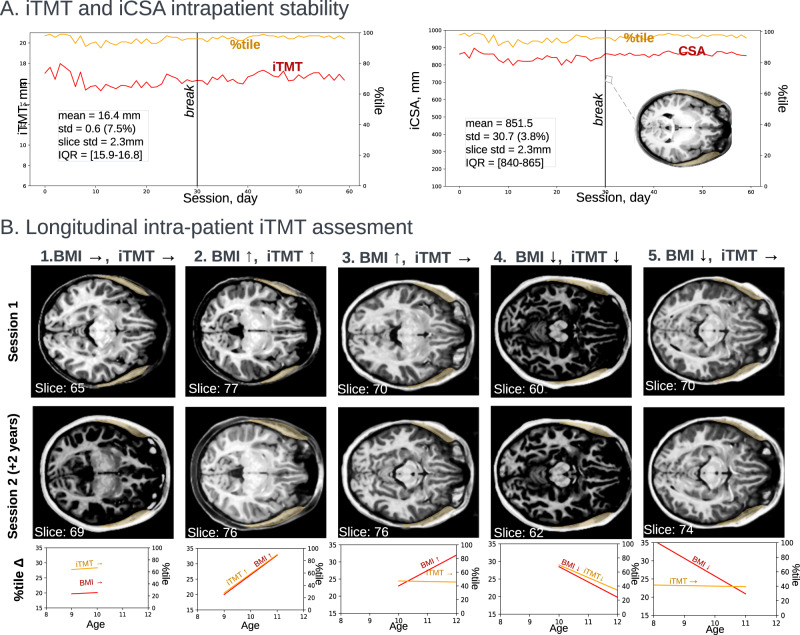
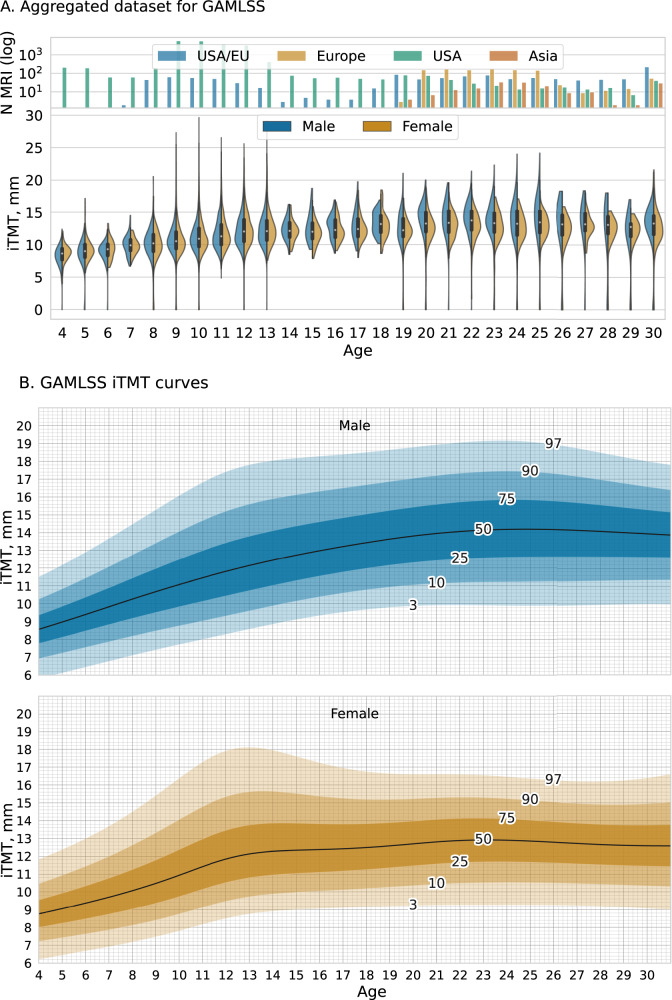
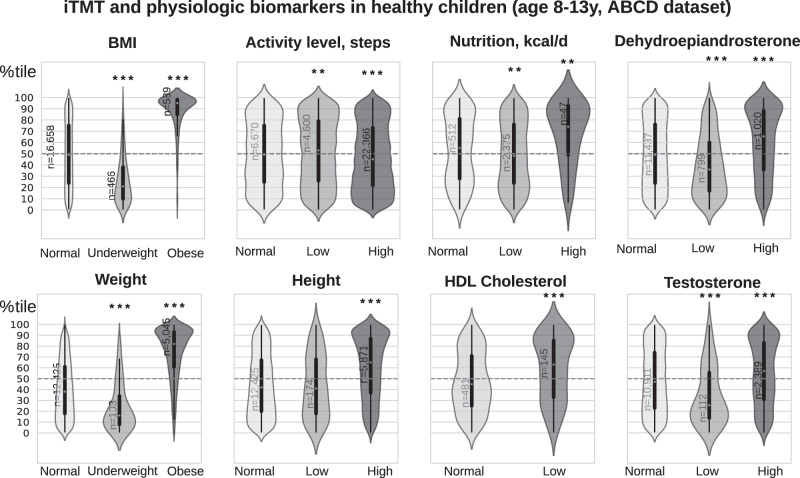
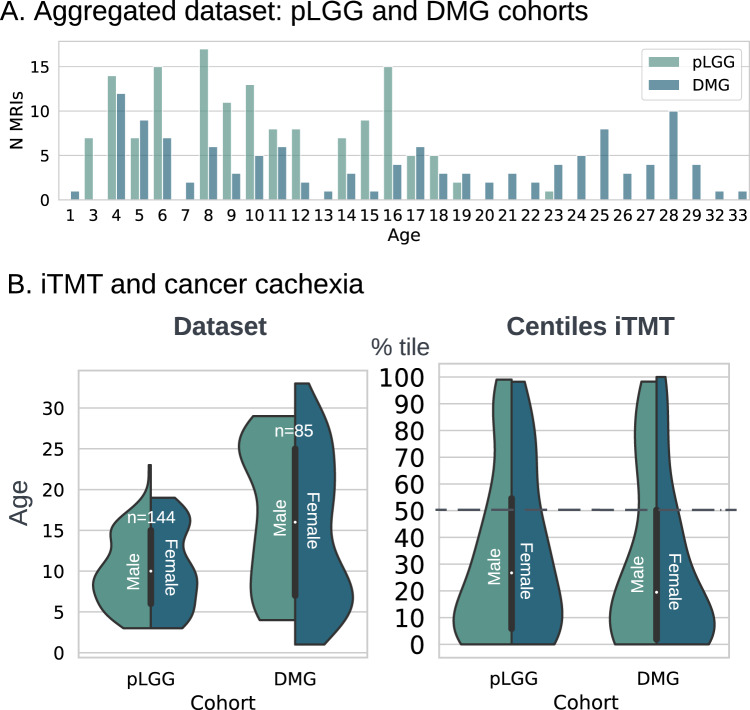
Lean muscle mass (LMM) is an important aspect of human health. Temporalis muscle thickness is a promising LMM marker but has had limited utility due to its unknown normal growth trajectory and reference ranges and lack of standardized measurement. Here, we develop an automated deep learning pipeline to accurately measure temporalis muscle thickness (iTMT) from routine brain magnetic resonance imaging (MRI). We apply iTMT to 23,876 MRIs of healthy subjects, ages 4 through 35, and generate sex-specific iTMT normal growth charts with percentiles. We find that iTMT was associated with specific physiologic traits, including caloric intake, physical activity, sex hormone levels, and presence of malignancy. We validate iTMT across multiple demographic groups and in children with brain tumors and demonstrate feasibility for individualized longitudinal monitoring. The iTMT pipeline provides unprecedented insights into temporalis muscle growth during human development and enables the use of LMM tracking to inform clinical decision-making.
瘦肌肉量(LMM)是人体健康的一个重要方面。颞肌厚度是一种很有前途的 LMM 标志物,但由于其正常生长轨迹和参考范围未知,以及缺乏标准化测量,其应用受到限制。在这里,我们开发了一种自动深度学习管道,以从常规脑磁共振成像(MRI)中准确测量颞肌厚度(iTMT)。我们将 iTMT 应用于 23876 名健康受试者的 MRI,年龄在 4 至 35 岁之间,并生成具有百分位数的性别特异性 iTMT 正常生长图表。我们发现 iTMT 与特定的生理特征有关,包括热量摄入、身体活动、性激素水平和恶性肿瘤的存在。我们在多个人群中验证了 iTMT,并在患有脑瘤的儿童中进行了验证,证明了个体化纵向监测的可行性。iTMT 管道提供了在人类发育过程中颞肌生长的前所未有的见解,并使 LMM 跟踪能够用于为临床决策提供信息。