HHMI Janelia Research Campus, Ashburn, VA, USA.
Nat Neurosci. 2024 Jan;27(1):187-195. doi: 10.1038/s41593-023-01490-6. Epub 2023 Nov 20.
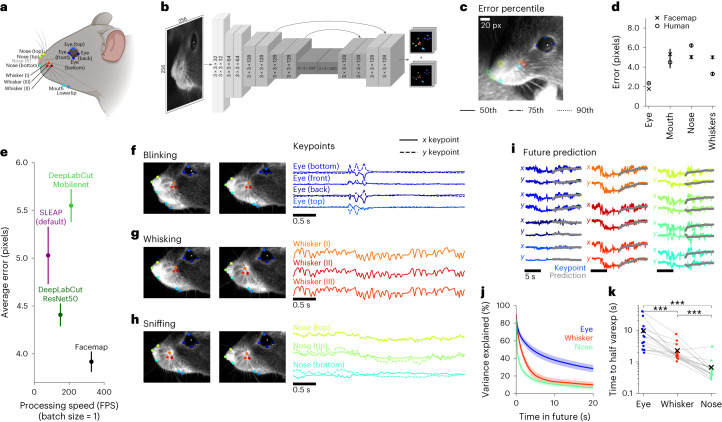
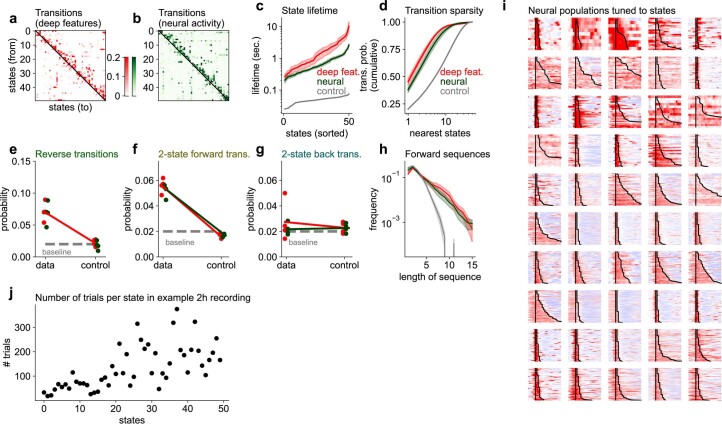
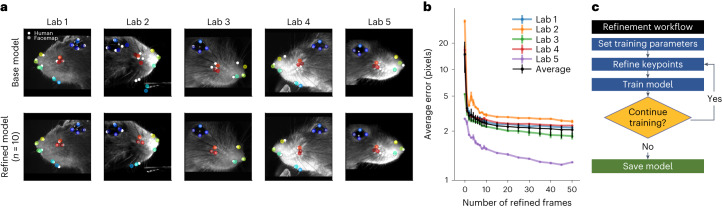
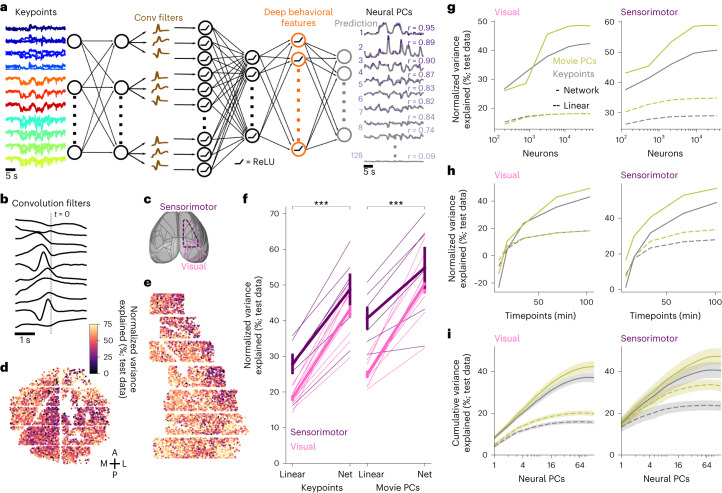
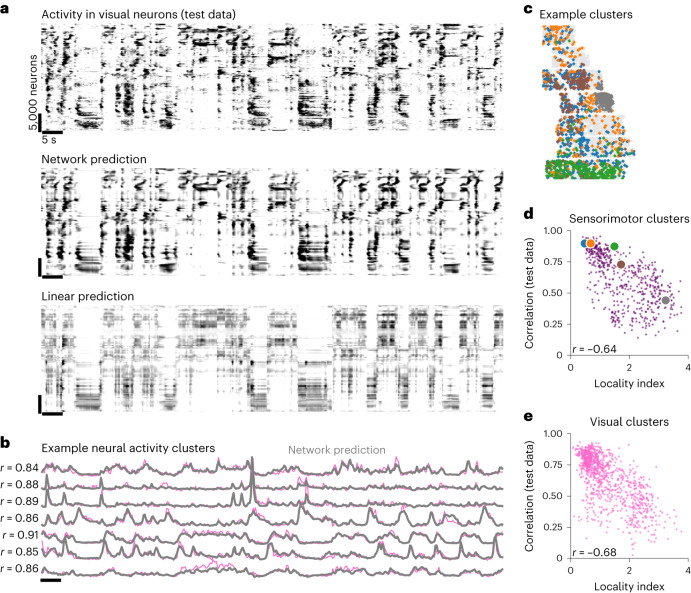
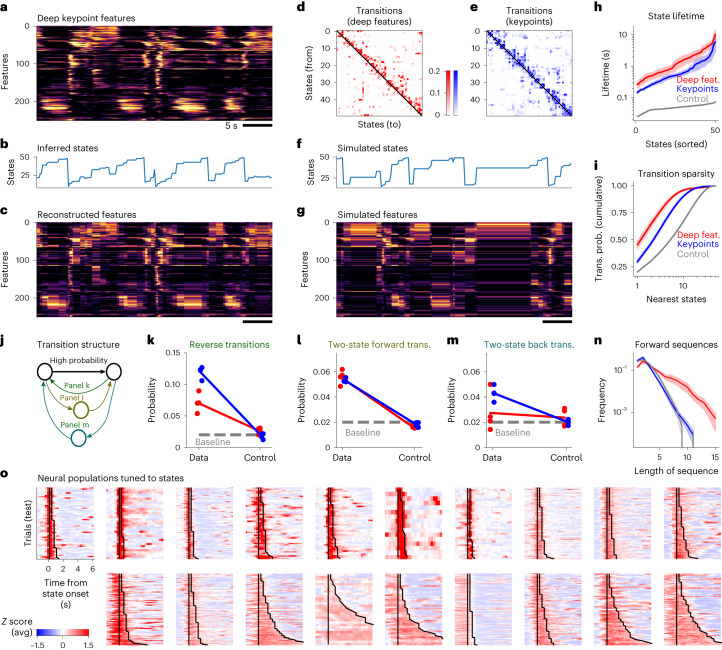
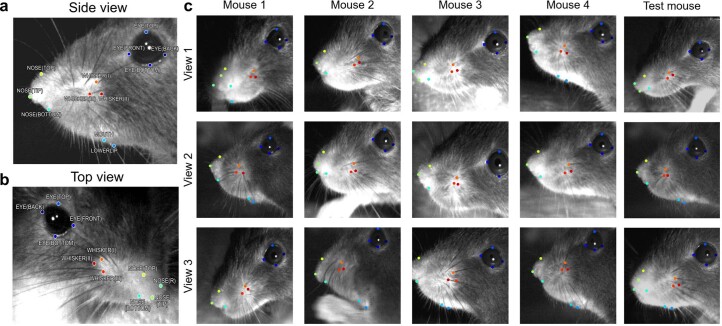
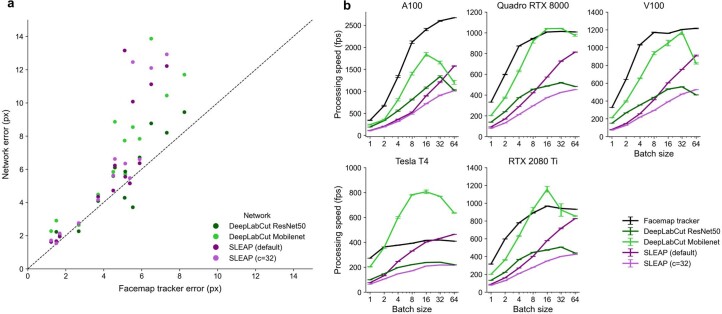
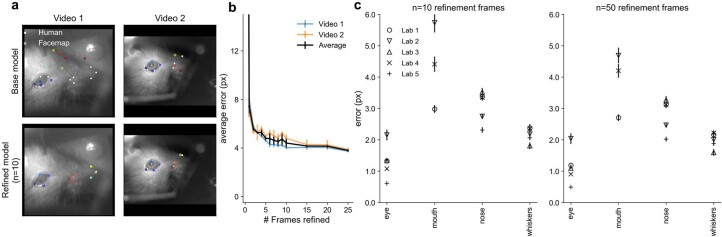
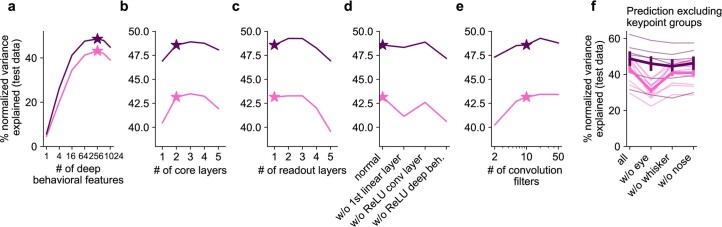
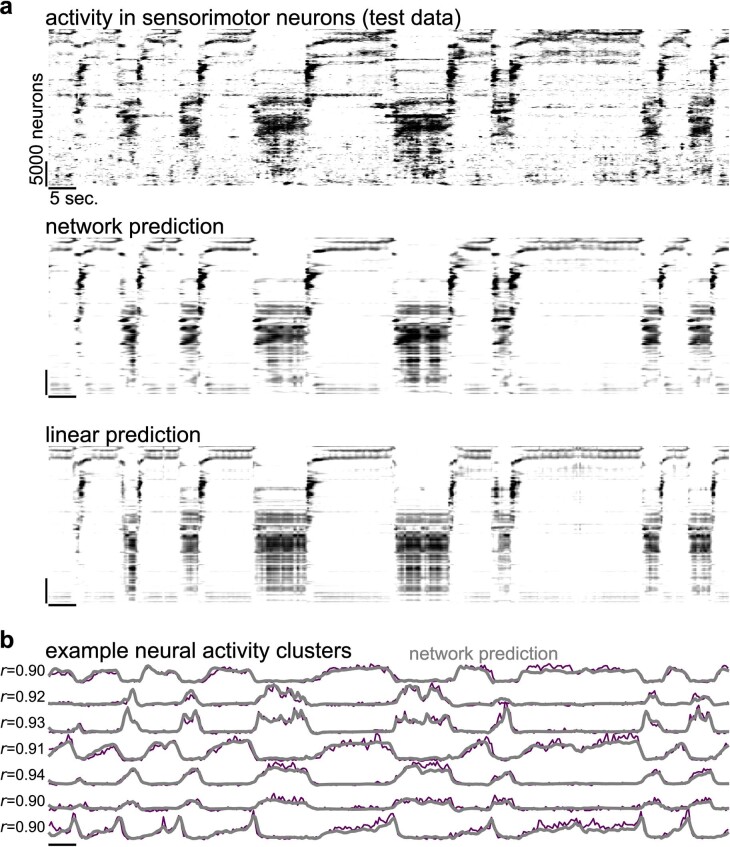
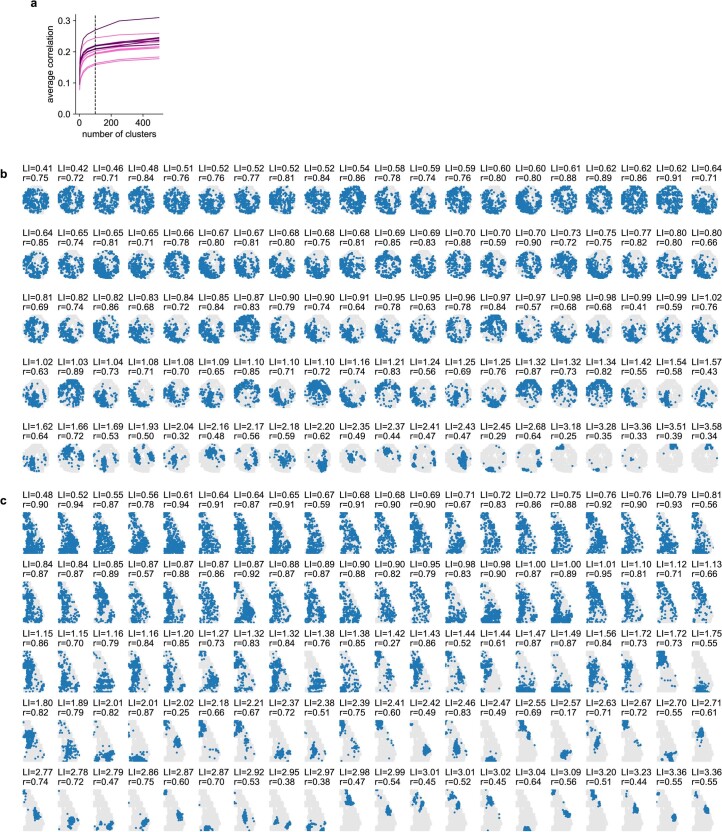
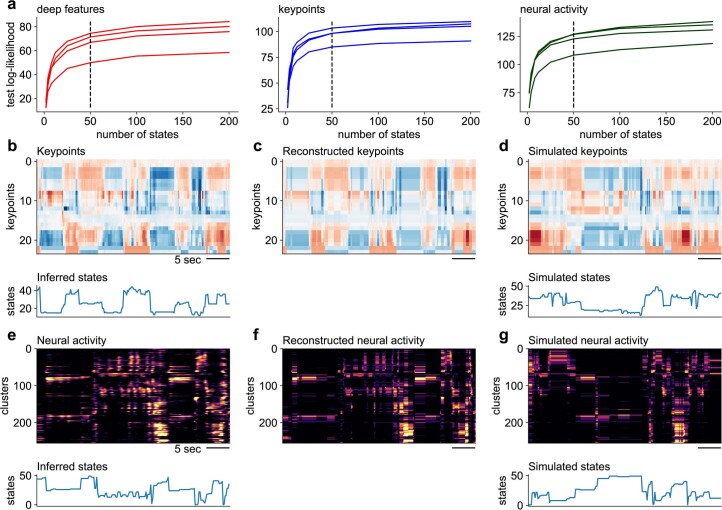
Recent studies in mice have shown that orofacial behaviors drive a large fraction of neural activity across the brain. To understand the nature and function of these signals, we need better computational models to characterize the behaviors and relate them to neural activity. Here we developed Facemap, a framework consisting of a keypoint tracker and a deep neural network encoder for predicting neural activity. Our algorithm for tracking mouse orofacial behaviors was more accurate than existing pose estimation tools, while the processing speed was several times faster, making it a powerful tool for real-time experimental interventions. The Facemap tracker was easy to adapt to data from new labs, requiring as few as 10 annotated frames for near-optimal performance. We used the keypoints as inputs to a deep neural network which predicts the activity of ~50,000 simultaneously-recorded neurons and, in visual cortex, we doubled the amount of explained variance compared to previous methods. Using this model, we found that the neuronal activity clusters that were well predicted from behavior were more spatially spread out across cortex. We also found that the deep behavioral features from the model had stereotypical, sequential dynamics that were not reversible in time. In summary, Facemap provides a stepping stone toward understanding the function of the brain-wide neural signals and their relation to behavior.
最近在小鼠身上的研究表明,口腔面部行为驱动了大脑中很大一部分的神经活动。为了理解这些信号的性质和功能,我们需要更好的计算模型来描述这些行为,并将它们与神经活动联系起来。在这里,我们开发了 Facemap,这是一个由关键点跟踪器和深度神经网络编码器组成的框架,用于预测神经活动。我们的跟踪小鼠口腔面部行为的算法比现有的姿势估计工具更准确,而处理速度则快了数倍,使其成为实时实验干预的强大工具。Facemap 跟踪器很容易适应来自新实验室的数据,只需要 10 个左右的注释帧就能达到接近最佳的性能。我们将关键点作为输入提供给一个深度神经网络,该网络可以预测大约 50000 个同时记录的神经元的活动,在视觉皮层中,与以前的方法相比,解释方差的数量增加了一倍。使用这个模型,我们发现,从行为上很好地预测到的神经元活动簇在皮层中的空间分布更加广泛。我们还发现,模型中的深度行为特征具有刻板的、顺序的动态性,在时间上不可逆转。总之,Facemap 为理解全脑神经信号的功能及其与行为的关系提供了一个垫脚石。