Laboratory Chemistry of Natural Products, Institute of Organic Chemistry with Centre of Phytochemistry, Bulgarian Academy of Sciences, 1113 Sofia, Bulgaria.
Laboratory Organic Chemistry and Spectroscopy, Institute of Organic Chemistry with Centre of Phytochemistry, Bulgarian Academy of Sciences, 1113 Sofia, Bulgaria.
Molecules. 2023 Nov 19;28(22):7666. doi: 10.3390/molecules28227666.
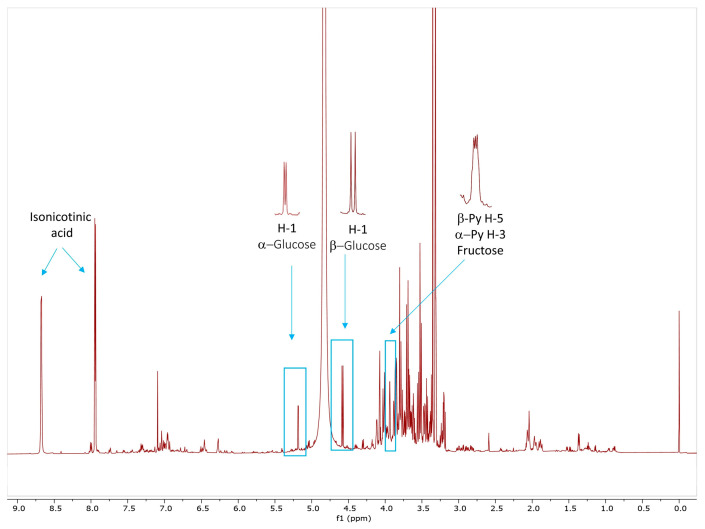
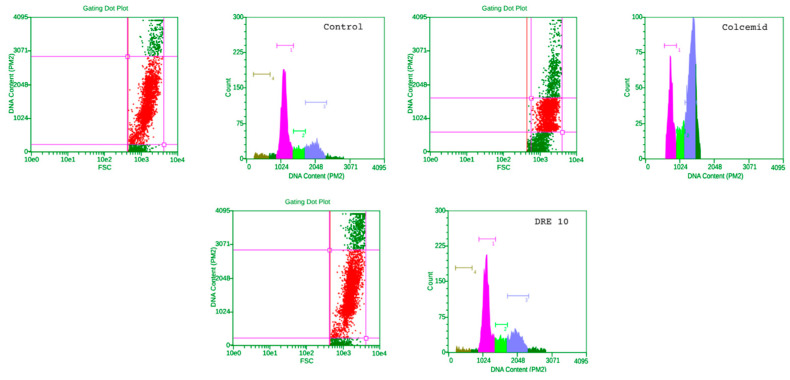
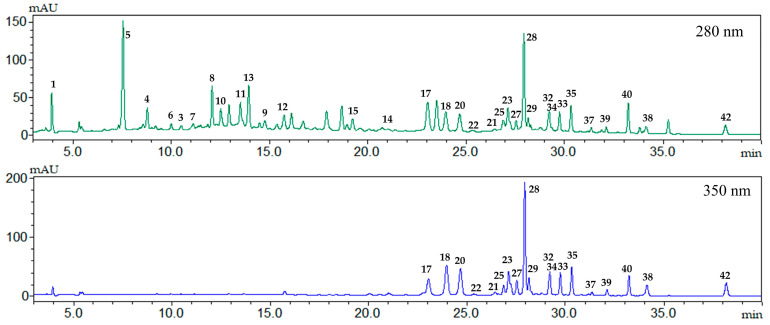
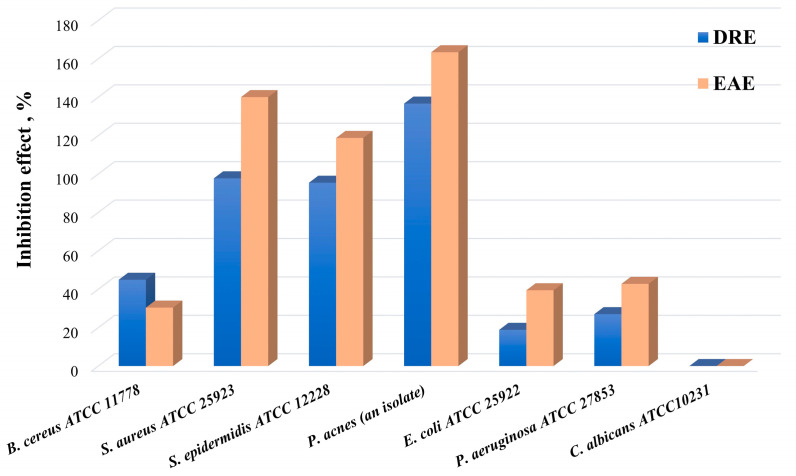
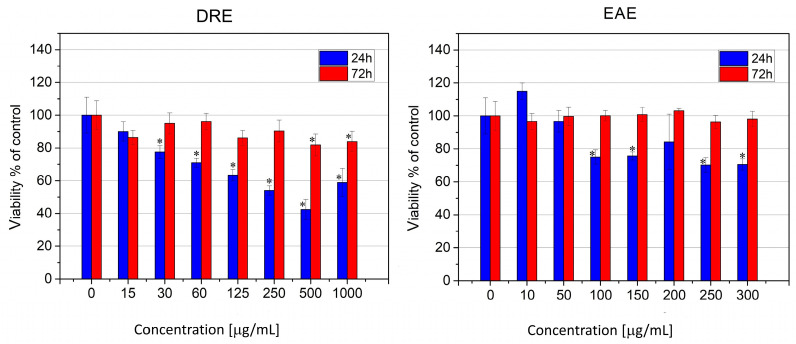
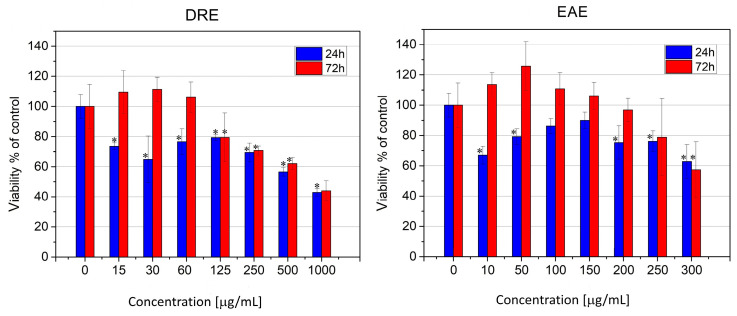
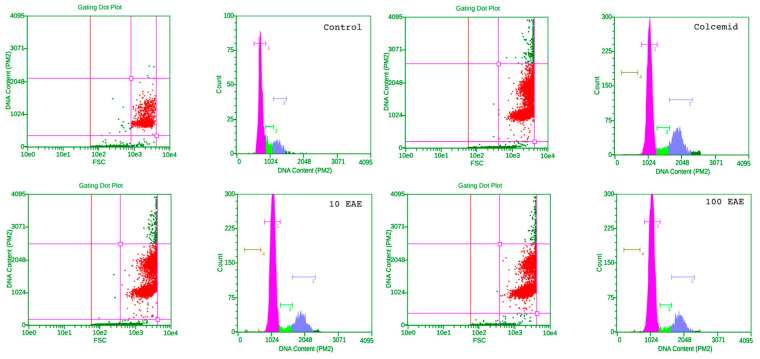
Dry rose extract (DRE) obtained industrially by aqueous ethanol extraction from flowers and its phenolic-enriched fraction, obtained by re-extraction with ethyl acetate (EAE) were the subject of this study. H NMR of DRE allowed the identification and quantitation of fructose and glucose, while the combined use of HPLC-DAD-ESIMS and HPLC-HRMS showed the presence of 14 kaempferol glycosides, 12 quercetin glycosides, 4 phenolic acids and their esters, 4 galloyl glycosides, 7 ellagitannins, and quinic acid. In addition, the structures of 13 of the flavonoid glycosides were further confirmed by NMR. EAE was found to be richer in TPC and TFC and showed better antioxidant activity (DPPH, ABTS, and FRAP) compared to DRE. Both extracts displayed significant activity against , , and , but showed no activity against Toxicity tests on normal human skin fibroblasts revealed low toxicity for both extracts with stronger effects observed at 24 hours of treatment that were compensated for over the following two days. Human hepatocarcinoma (HepG2) cells exhibited an opposite response after treatment with a concentration above 350 µg/mL for EAE and 500 µg/mL for DRE, showing increased toxicity after the third day of treatment. Lower concentrations were non-toxic and did not significantly affect the cell cycle parameters of either of the cell lines.
干玫瑰提取物(DRE)通过从花朵中用水乙醇提取工业获得,其酚类富集部分通过用乙酸乙酯(EAE)再提取获得。DRE 的 1H NMR 允许鉴定和定量果糖和葡萄糖,而高效液相色谱-二极管阵列检测-电喷雾质谱(HPLC-DAD-ESIMS)和高效液相色谱-高分辨质谱(HPLC-HRMS)的联合使用表明存在 14 种山柰酚糖苷、12 种槲皮素糖苷、4 种酚酸及其酯、4 种没食子酰糖苷、7 种鞣花单宁和奎尼酸。此外,通过 NMR 进一步证实了 13 种类黄酮糖苷的结构。与 DRE 相比,EAE 具有更高的 TPC 和 TFC,并且显示出更好的抗氧化活性(DPPH、ABTS 和 FRAP)。两种提取物均对 、 、 和 显示出显著的活性,但对 没有活性。正常人类皮肤成纤维细胞的毒性试验表明,两种提取物的毒性均较低,在治疗 24 小时后观察到更强的效果,随后两天得到补偿。在浓度高于 350 µg/mL 时,EAE 对人肝癌(HepG2)细胞表现出相反的反应,而 500 µg/mL 时 DRE 对 HepG2 细胞表现出更高的毒性,在治疗第三天后毒性增加。较低的浓度是非毒性的,并且不会显著影响两种细胞系的细胞周期参数。