Disease Vector Group, Unit of Chemical Ecology, Department of Plant Protection Biology, Swedish University of Agricultural Sciences, Alnarp 750 07, Sweden.
School of Life Sciences, Arizona State University, Tempe, AZ, USA.
Proc Biol Sci. 2023 Nov 29;290(2011):20232092. doi: 10.1098/rspb.2023.2092.
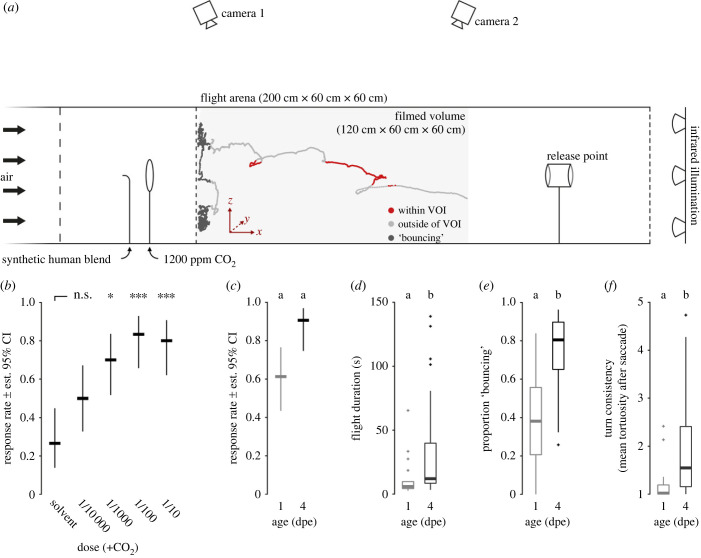
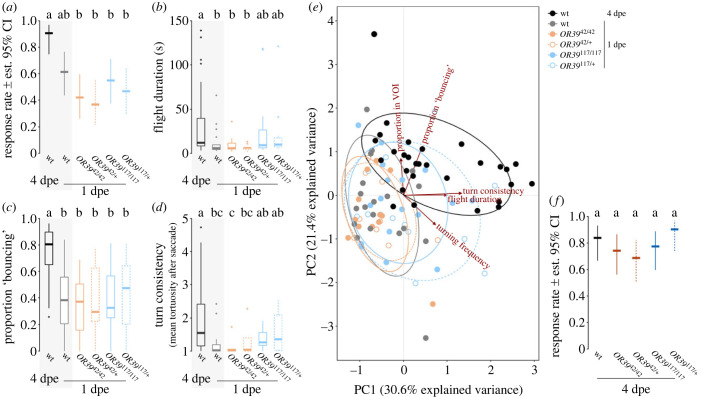
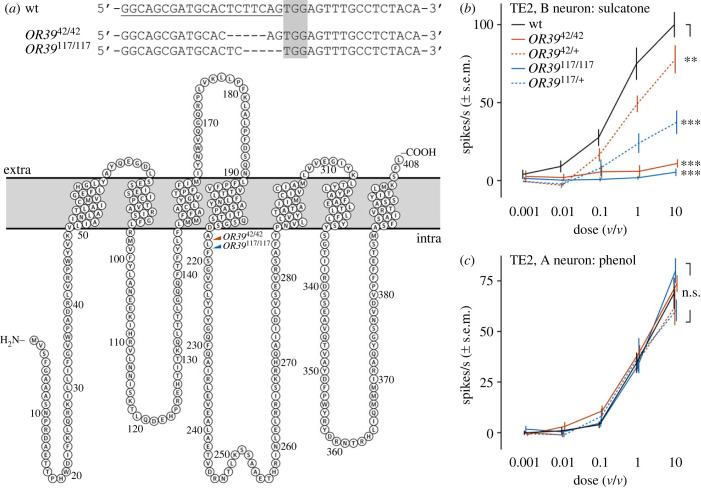
The attraction of anthropophilic mosquitoes to human host cues, such as body odour and carbon dioxide, gradually increases during adult maturation. This acquisition of host-seeking behaviour correlates with age-dependent changes in odorant receptor (OR) transcript abundance and sensitivity of olfactory sensory neurons (OSNs). One OR gene of the human malaria vector, , , is significantly downregulated in mature females, and a cognate ligand of AcolOR39, sulcatone, a major component of human emanations, mediates the observed behavioural inhibition of newly emerged (teneral) females to human body odour. Knockout of , using CRISPR-Cas9 mutagenesis, selectively abolished sulcatone detection in OSNs, housed in trichoid sensilla. However, knockout of altered neither the response rate nor the flight behaviour of teneral females in a wind tunnel, indicating the involvement of other genes, and thus a redundancy, in regulating the acquisition of host seeking in mosquitoes.
嗜人按蚊对人体气味和二氧化碳等宿主线索的吸引力在成虫成熟过程中逐渐增强。这种宿主寻求行为的获得与气味受体 (OR) 转录物丰度和嗅觉感觉神经元 (OSN) 的敏感性随年龄的变化相关。人类疟疾传播媒介的一个 OR 基因 , ,在成熟雌性中显著下调,而 AcolOR39 的同源配体,sulcatone,人体散发物的主要成分,介导了新出现的(柔嫩)雌性对人体气味的观察到的行为抑制。使用 CRISPR-Cas9 诱变技术敲除 ,选择性地消除了 Trichoid 感器中 OSN 对 sulcatone 的检测。然而,敲除 既没有改变柔嫩雌性在风洞中对飞行行为的反应率,也没有改变其飞行行为,表明在调节蚊子寻找宿主的过程中涉及其他基因,因此存在冗余。