Hinze Annika, Lantz Jörgen, Hill Sharon R, Ignell Rickard
Disease Vector Group, Chemical Ecology, Department of Plant Protection Biology, Swedish University of Agricultural Sciences, Alnarp, Sweden.
Jörgen Lantz Engineering Consulting Firm, Alnarp, Sweden.
Front Behav Neurosci. 2021 Mar 11;15:643693. doi: 10.3389/fnbeh.2021.643693. eCollection 2021.
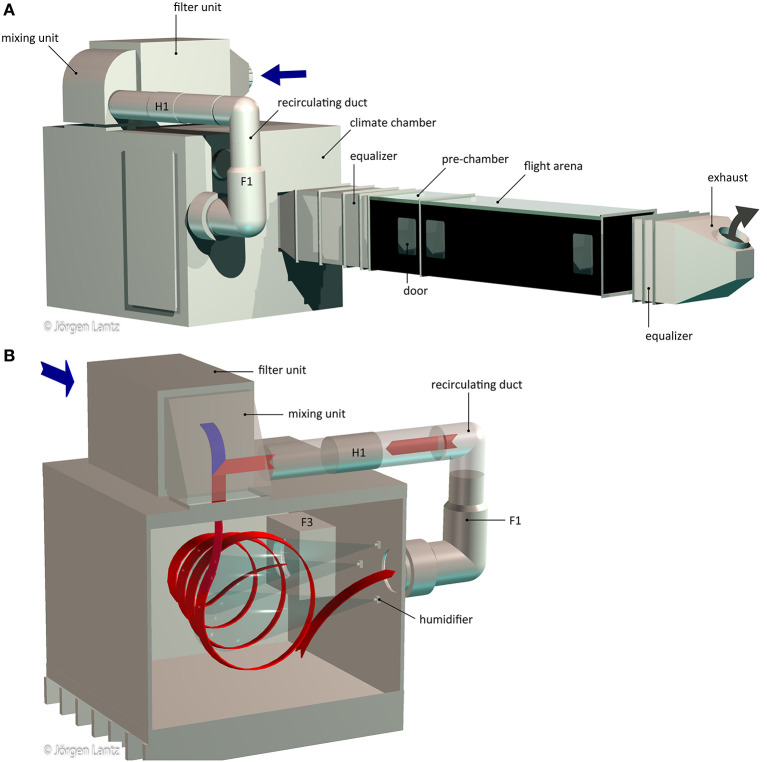
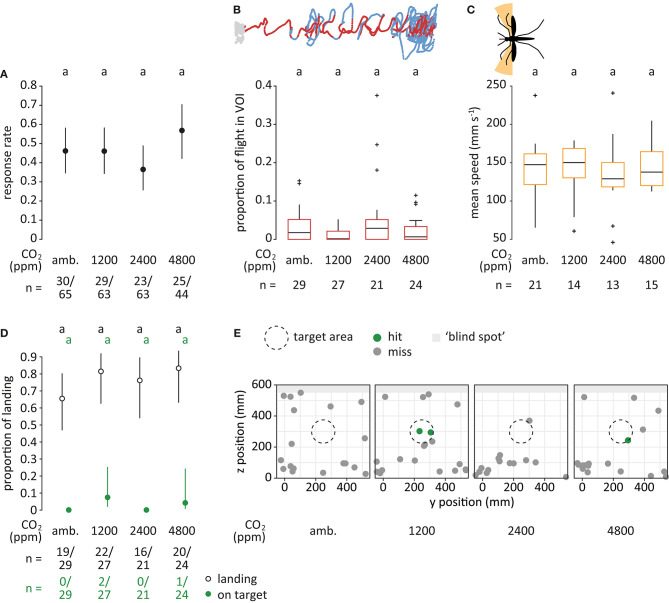
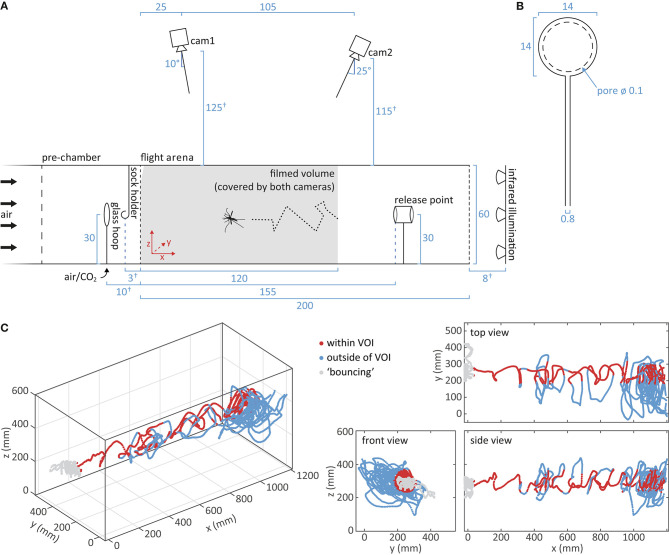
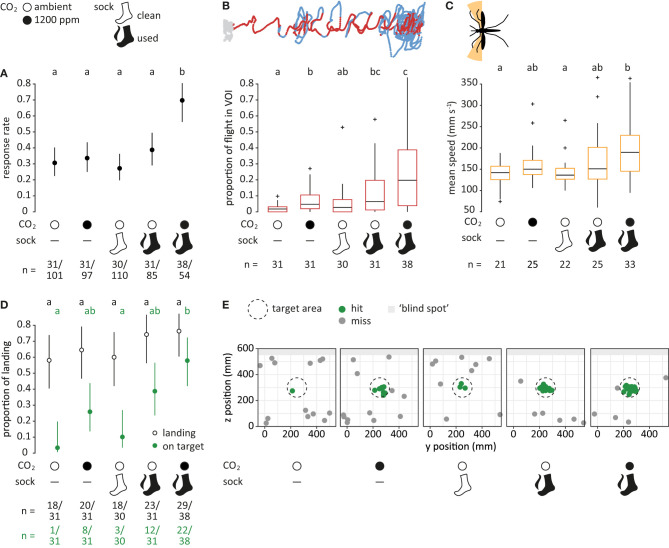
Future anthropogenic climate change is predicted to impact sensory-driven behaviors. Building on recent improvements in computational power and tracking technology, we have developed a versatile climate-controlled wind tunnel system, in which to study the effect of climate parameters, including temperature, precipitation, and elevated greenhouse gas levels, on odor-mediated behaviors in insects. To establish a baseline for future studies, we here analyzed the host-seeking behavior of the major malaria vector mosquito, , to human odor and carbon dioxide (CO), under tightly controlled climatic conditions, and isolated from potential background contamination by the presence of an experimenter. When presented with a combination of human foot odor and CO (case study I), mosquitoes engaged in faster crosswind flight, spent more time in the filamentous odor plume and targeted the odor source more successfully. In contrast, female . presented with different concentrations of CO alone, did not display host-seeking behavior (case study II). These observations support previous findings on the role of human host-associated cues in host seeking and confirm the role of CO as a synergist, but not a host-seeking cue on its own. Future studies are aimed at investigating the effect of climate change on odor-mediated behavior in mosquitoes and other insects. Moreover, the system will be used to investigate detection and processing of olfactory information in various behavioral contexts, by providing a fine-scale analysis of flight behavior.
预计未来人为气候变化将影响由感官驱动的行为。基于计算能力和追踪技术最近的改进,我们开发了一种多功能的气候控制风洞系统,用于研究气候参数(包括温度、降水和升高的温室气体水平)对昆虫气味介导行为的影响。为了为未来的研究建立一个基线,我们在此分析了主要疟疾媒介蚊子在严格控制的气候条件下,以及在与实验者存在所导致的潜在背景污染隔离开的情况下,对人类气味和二氧化碳(CO₂)的宿主寻找行为。当呈现人类足部气味和CO₂的组合时(案例研究I),蚊子进行更快的侧风飞行,在丝状气味羽流中花费更多时间,并且更成功地定位气味源。相比之下,单独呈现不同浓度CO₂的雌性蚊子并未表现出宿主寻找行为(案例研究II)。这些观察结果支持了先前关于人类宿主相关线索在宿主寻找中的作用的发现,并证实了CO₂作为增效剂而非自身作为宿主寻找线索的作用。未来的研究旨在调查气候变化对蚊子和其他昆虫气味介导行为的影响。此外,该系统将通过对飞行行为进行精细分析,用于研究在各种行为背景下嗅觉信息的检测和处理。