Department of Research and Design, Glac Biotech Co., Ltd., Tainan 744, Taiwan.
Department of Neurology, En Chu Kong Hospital, New Taipei City 237, Taiwan.
Nutrients. 2023 Dec 20;16(1):16. doi: 10.3390/nu16010016.
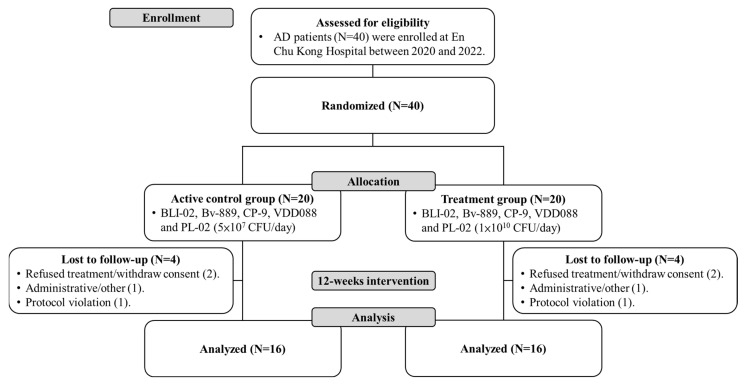
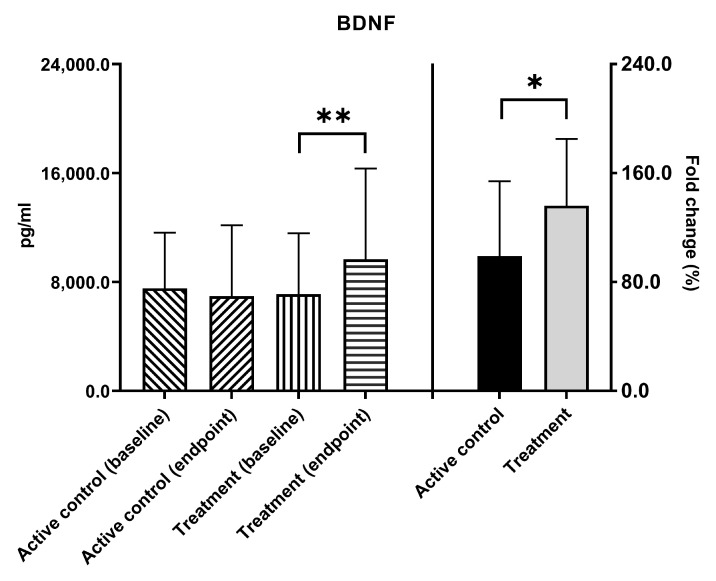
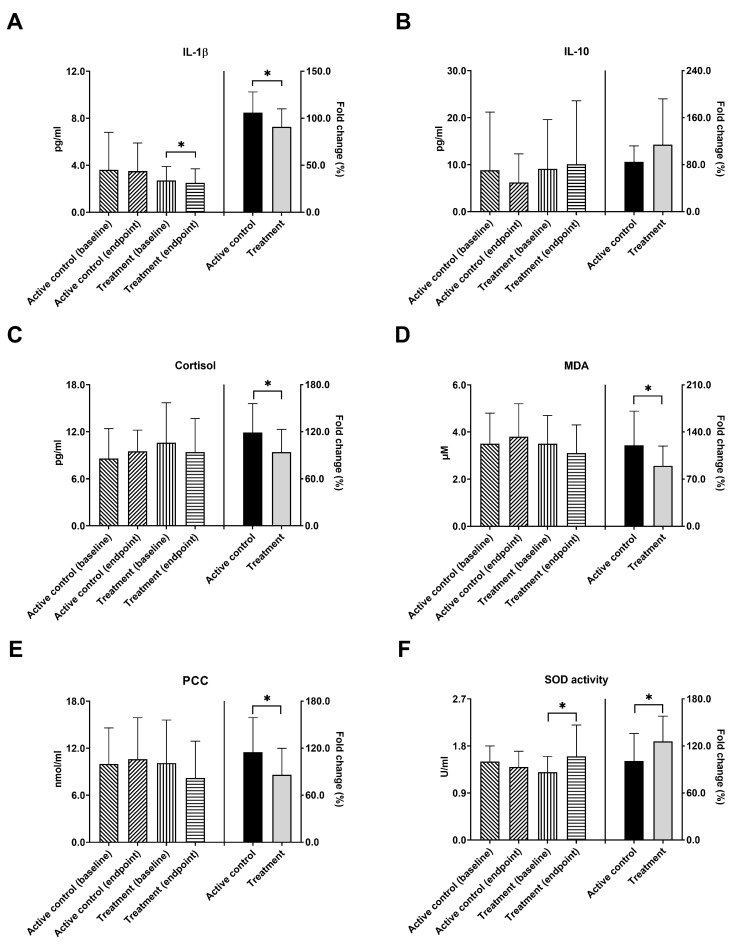
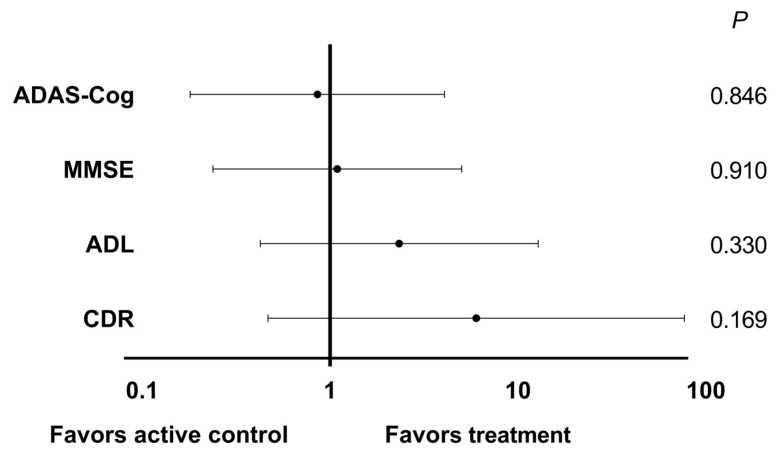
The role of neurotrophic factors, oxidative stress, and inflammation in the pathogenesis of Alzheimer's disease (AD) has been explored. Animal studies have reported the positive effects of probiotics on these factors. Some clinical studies also support the potential role of probiotics in improving cognitive function via the gut-brain axis in older adults. However, clinical experimental studies evaluating the efficacy of probiotics targeting the neurotrophic factors and inflammatory biomarkers, particularly among AD patients, remain very limited. In this randomized, double-blinded, active-controlled trial, we used multi-strain probiotic supplements, including subsp. BLI-02, Bv-889, subsp. CP-9, VDD088, and PL-02 as the intervention. Participants were divided into an active control group (received probiotic supplements containing 5 × 10 colony-forming units per day, CFU/day) and a treatment group (1 × 10 CFU/day). Student's test was applied as the main method of statistical analysis. After 12 weeks of intervention, the treatment group demonstrated a 36% increase in serum brain-derived neurotrophic factor (BDNF) (* = 0.005), a reduction in IL-1β (* = 0.041), and an increase in antioxidant superoxide dismutase (SOD) (* = 0.012). No significant change was found in the active control group. A trend toward less cognitive deterioration was observed, but not statistically significant. In conclusion, this study presents evidence supporting the benefits of multi-strain probiotics in enhancing BDNF, ameliorating inflammation and oxidative stress in AD patients.
神经递质、氧化应激和炎症在阿尔茨海默病(AD)发病机制中的作用已经得到了探讨。动物研究报告了益生菌对这些因素的积极影响。一些临床研究也支持益生菌通过肠道-大脑轴在老年人中改善认知功能的潜在作用。然而,针对 AD 患者神经递质和炎症生物标志物的益生菌疗效的临床实验研究仍然非常有限。在这项随机、双盲、阳性对照试验中,我们使用了多菌株益生菌补充剂,包括 subsp. BLI-02、Bv-889、subsp. CP-9、VDD088 和 PL-02 作为干预措施。参与者被分为活性对照组(接受含有 5×10 菌落形成单位/天(CFU/天)益生菌补充剂)和治疗组(1×10 CFU/天)。学生 t 检验被应用为主要的统计分析方法。经过 12 周的干预,治疗组血清脑源性神经营养因子(BDNF)增加了 36%(* = 0.005),IL-1β 减少(* = 0.041),抗氧化超氧化物歧化酶(SOD)增加(* = 0.012)。活性对照组没有发现显著变化。观察到认知恶化的趋势有所减少,但没有统计学意义。总之,这项研究提供了证据支持多菌株益生菌在增强 AD 患者 BDNF、改善炎症和氧化应激方面的益处。