Student Research Committee, Kerman University of Medical Sciences, Kerman, Iran.
Department of Physiology and Pharmacology, Kerman University of Medical Sciences, Kerman, Iran.
BMC Pulm Med. 2024 Jan 20;24(1):45. doi: 10.1186/s12890-024-02853-w.
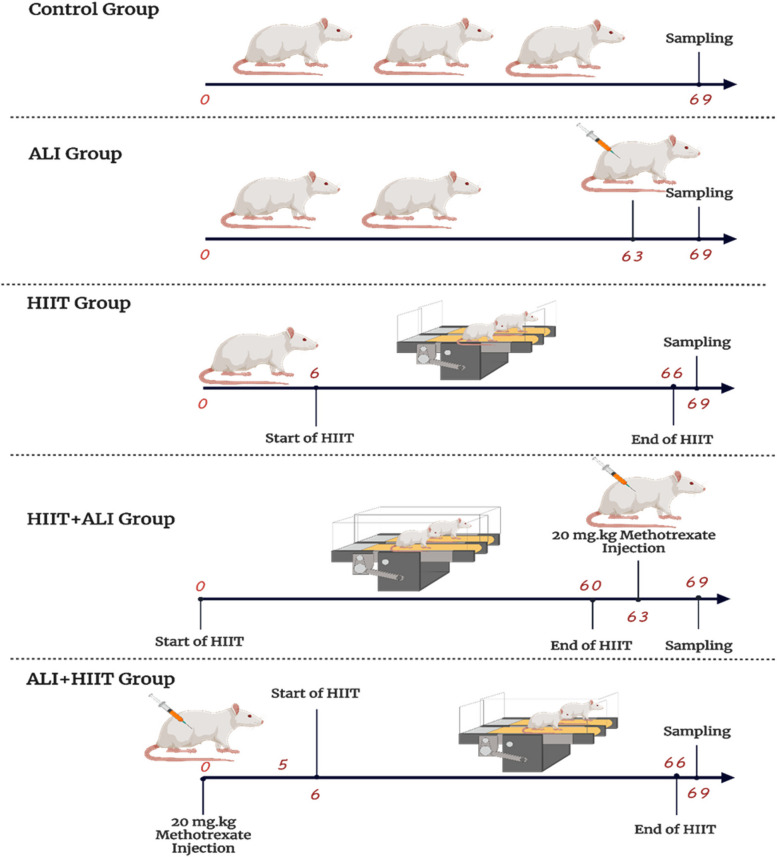
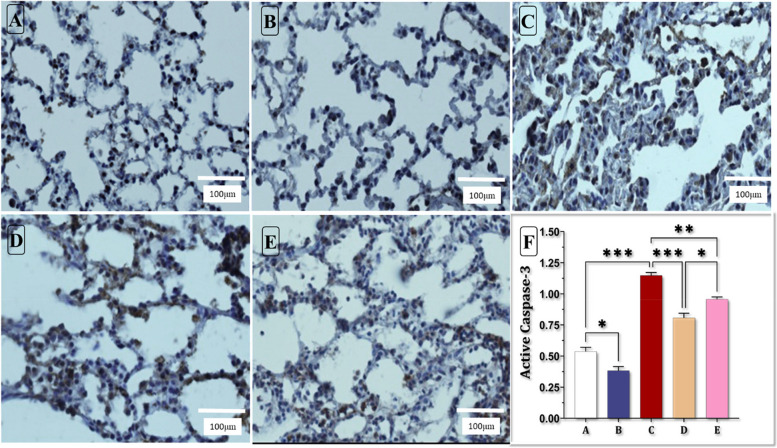
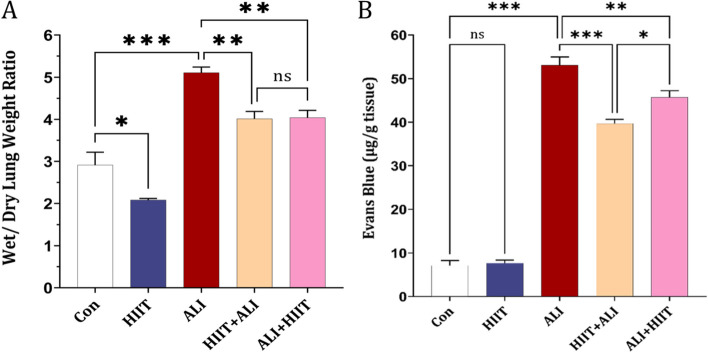
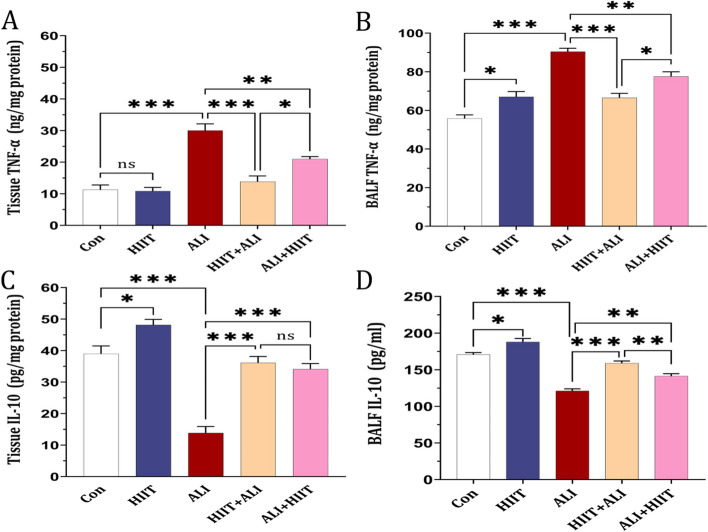
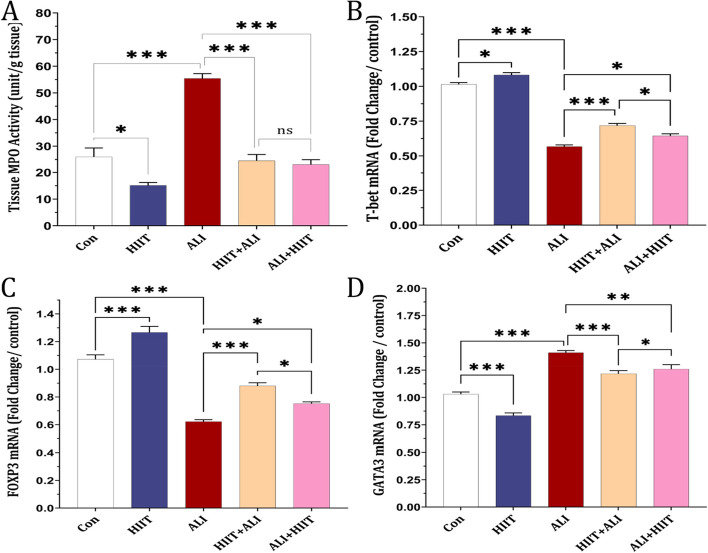
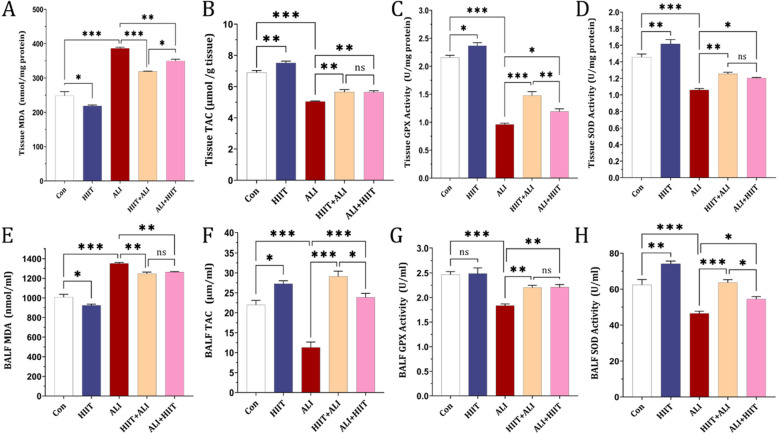
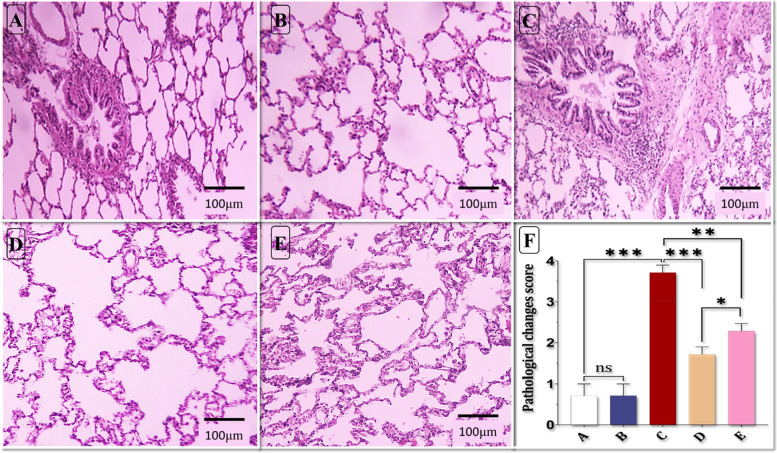
Inflammation and oxidative stress are recognized as two primary causes of lung damage induced by methotrexate, a drug used in the treatment of cancer and immunological diseases. This drug triggers the generation of oxidants, leading to lung injury. Given the antioxidant and anti-inflammatory effects of high-intensity intermittent training (HIIT), our aim was to evaluate the therapeutic potential of HIIT in mitigating methotrexate-induced lung damage in rats. Seventy male Wistar rats were randomly divided into five groups: CTL (Control), HIIT (High-intensity intermittent training), ALI (Acute Lung Injury), HIIT+ALI (pretreated with HIIT), and ALI + HIIT (treated with HIIT).HIIT sessions were conducted for 8 weeks. At the end of the study, assessments were made on malondialdehyde, total antioxidant capacity (TAC), superoxide dismutase (SOD), glutathione peroxidase (Gpx), myeloperoxidase (MPO), interleukin 10 (IL-10), tumor necrosis factor-alpha (TNF-α), gene expression of T-bet, GATA3, FOXP3, lung wet/dry weight ratio, pulmonary capillary permeability, apoptosis (Caspase-3), and histopathological indices.Methotrexate administration resulted in increased levels of TNF-α, MPO, GATA3, caspase-3, and pulmonary edema indices, while reducing the levels of TAC, SOD, Gpx, IL-10, T-bet, and FOXP3. Pretreatment and treatment with HIIT reduced the levels of oxidant and inflammatory factors, pulmonary edema, and other histopathological indicators. Concurrently, HIIT increased the levels of antioxidant and anti-inflammatory factors.
炎症和氧化应激被认为是甲氨蝶呤(一种用于治疗癌症和免疫性疾病的药物)引起肺损伤的两个主要原因。这种药物会引发氧化剂的产生,导致肺损伤。鉴于高强度间歇训练(HIIT)具有抗氧化和抗炎作用,我们旨在评估 HIIT 对减轻大鼠甲氨蝶呤诱导的肺损伤的治疗潜力。70 只雄性 Wistar 大鼠被随机分为五组:CTL(对照组)、HIIT(高强度间歇训练组)、ALI(急性肺损伤组)、HIIT+ALI(HIIT 预处理组)和 ALI+HIIT(HIIT 治疗组)。HIIT 疗程为 8 周。在研究结束时,对丙二醛、总抗氧化能力(TAC)、超氧化物歧化酶(SOD)、谷胱甘肽过氧化物酶(Gpx)、髓过氧化物酶(MPO)、白细胞介素 10(IL-10)、肿瘤坏死因子-α(TNF-α)、T-bet、GATA3、FOXP3 基因表达、肺湿/干重比、肺毛细血管通透性、细胞凋亡(Caspase-3)和组织病理学指标进行评估。甲氨蝶呤给药导致 TNF-α、MPO、GATA3、Caspase-3 和肺水肿指数增加,而 TAC、SOD、Gpx、IL-10、T-bet 和 FOXP3 水平降低。HIIT 预处理和治疗降低了氧化剂和炎症因子、肺水肿和其他组织病理学指标的水平。同时,HIIT 增加了抗氧化和抗炎因子的水平。