Bass Gary Alan, Chang Cherylee W J, Sorce Lauren R, Subramanian Sanjay, Laytin Adam D, Somodi Reka, Gray Jaime R, Lane-Fall Meghan, Kaplan Lewis J
Division of Trauma, Surgical Critical Care and Emergency Surgery, Perelman School of Medicine, University of Pennsylvania, Philadelphia, PA.
Department of Neurology, Duke University School of Medicine, Durham, NC.
Crit Care Explor. 2024 Jan 19;6(1):e1034. doi: 10.1097/CCE.0000000000001034. eCollection 2024 Jan.
To explore gamification as an alternative approach to healthcare education and its potential applications to critical care.
English language manuscripts addressing: 1) gamification theory and application in healthcare and critical care and 2) implementation science focused on the knowledge-to-practice gap were identified in Medline and PubMed databases (inception to 2023).
Studies delineating gamification underpinnings, application in education or procedural mentoring, utilization for healthcare or critical care education and practice, and analyses of benefits or pitfalls in comparison to other educational or behavioral modification approaches.
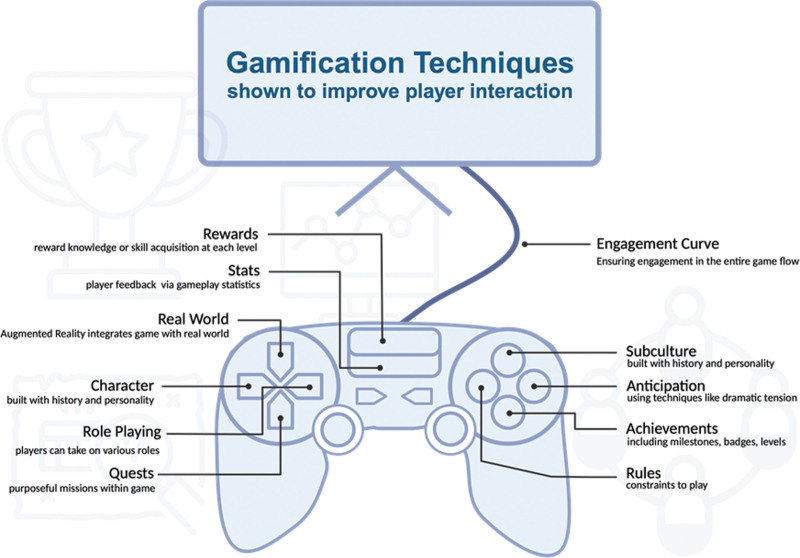
Data indicated the key gamification tenets and the venues within which they were used to enhance knowledge, support continuing medical education, teach procedural skills, enhance decision-making, or modify behavior.
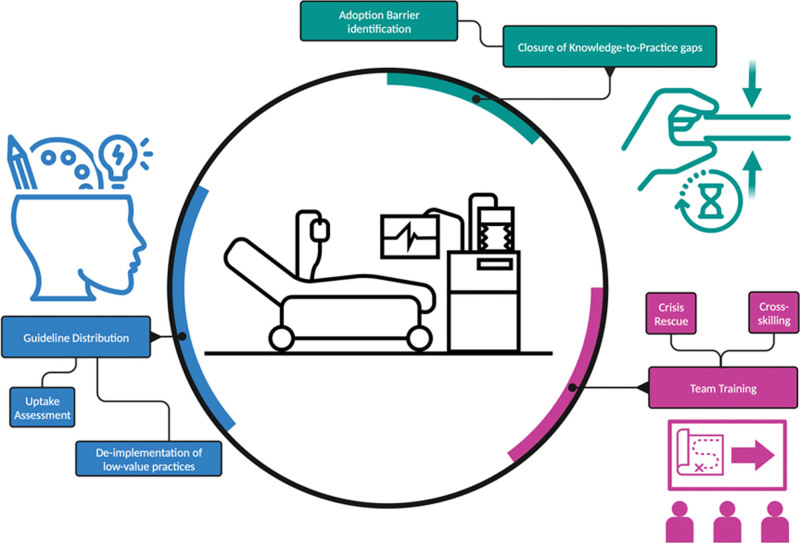
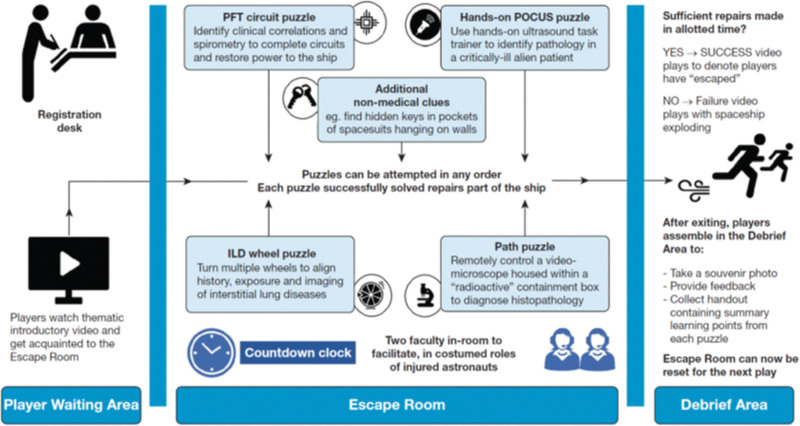
Gamification engages learners in a visual and cognitive fashion using competitive approaches to enhance acquiring new knowledge or skills. While gamification may be used in a variety of settings, specific design elements may relate to the learning environment or learner styles. Additionally, solo and group gamification approaches demonstrate success and leverage adult learning theory elements in a low-stress and low-risk setting. The potential for gamification-driven behavioral modification to close the knowledge-to-practice gap and enable guideline and protocol compliance remains underutilized.
Gamification offers the potential to substantially enhance how critical care professionals acquire and then implement new knowledge in a fashion that is more engaging and rewarding than traditional approaches. Accordingly, educational undertakings from courses to offerings at medical professional meetings may benefit from being gamified.
探讨游戏化作为一种替代方法在医疗保健教育中的应用及其在重症监护中的潜在应用。
在Medline和PubMed数据库(从创建到2023年)中检索到的英文手稿,涉及:1)游戏化理论及其在医疗保健和重症监护中的应用,以及2)关注知识转化为实践差距的实施科学。
描述游戏化基础、在教育或程序指导中的应用、在医疗保健或重症监护教育与实践中的利用,以及与其他教育或行为改变方法相比的益处或缺陷分析的研究。
数据表明了关键的游戏化原则以及用于增强知识、支持继续医学教育、教授程序技能、增强决策制定或改变行为的场所。
游戏化通过竞争方法以视觉和认知方式吸引学习者,以增强新知识或技能的获取。虽然游戏化可用于多种环境,但特定的设计元素可能与学习环境或学习者风格相关。此外,单人及小组游戏化方法已取得成功,并在低压力和低风险环境中运用了成人学习理论元素。游戏化驱动的行为改变在缩小知识与实践差距以及实现指南和协议依从性方面的潜力仍未得到充分利用。
游戏化有潜力极大地提升重症监护专业人员获取并应用新知识的方式,使其比传统方法更具吸引力且更有回报。因此,从课程到医学专业会议的各类教育活动都可能受益于游戏化。