Mora Jonah Feliza B, Meclat Vanessa Yvonne B, Calayag Alyzza Marie B, Campino Susana, Hafalla Julius C R, Hibberd Martin L, Phelan Jody E, Clark Taane G, Rivera Windell L
Pathogen-Host-Environment Interactions Research Laboratory, Institute of Biology, College of Science, University of the Philippines Diliman, Quezon City, Philippines.
Department of Infection Biology, London School of Hygiene and Tropical Medicine, London, United Kingdom.
Front Microbiol. 2024 Jan 19;14:1304283. doi: 10.3389/fmicb.2023.1304283. eCollection 2023.
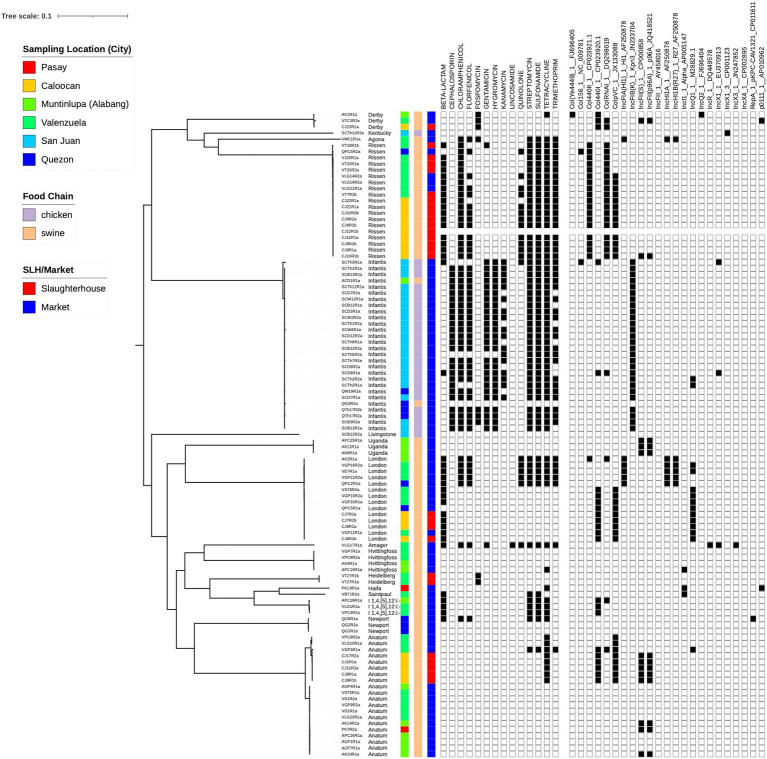
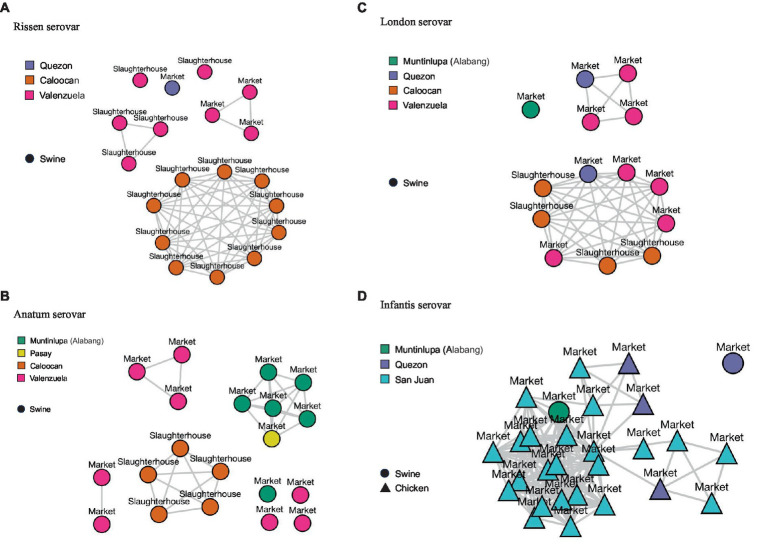
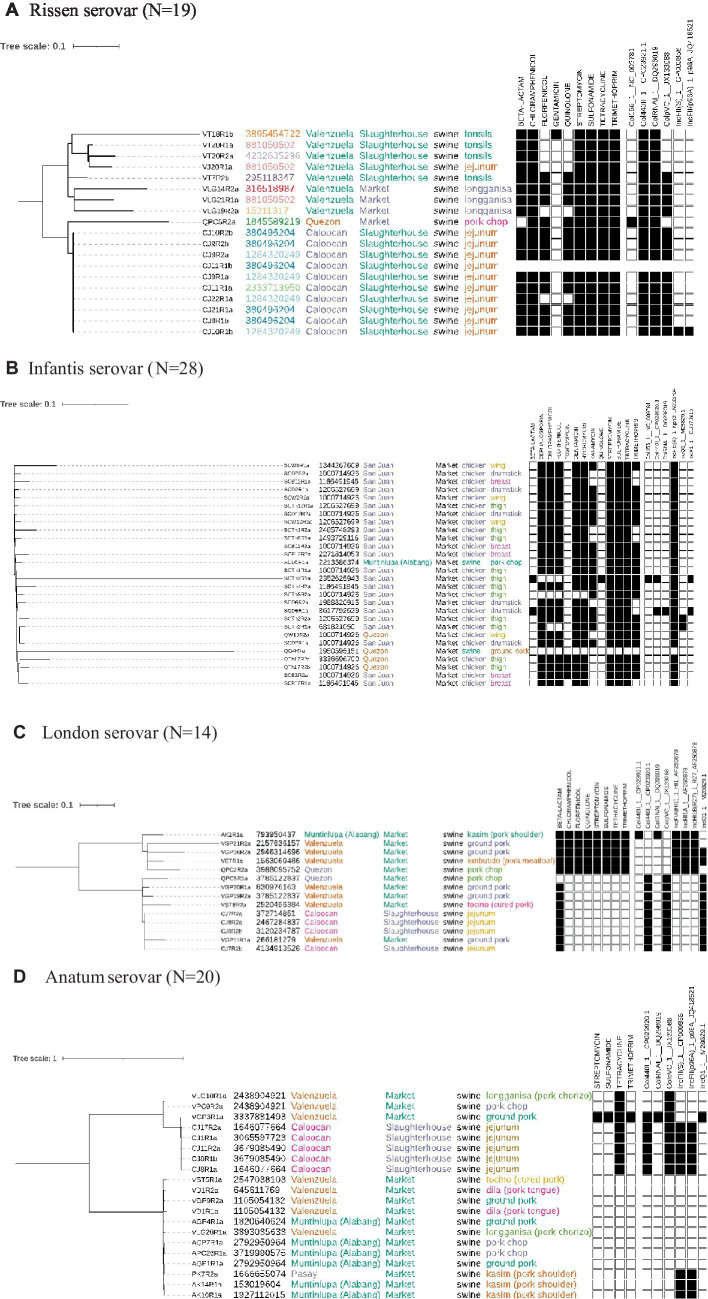
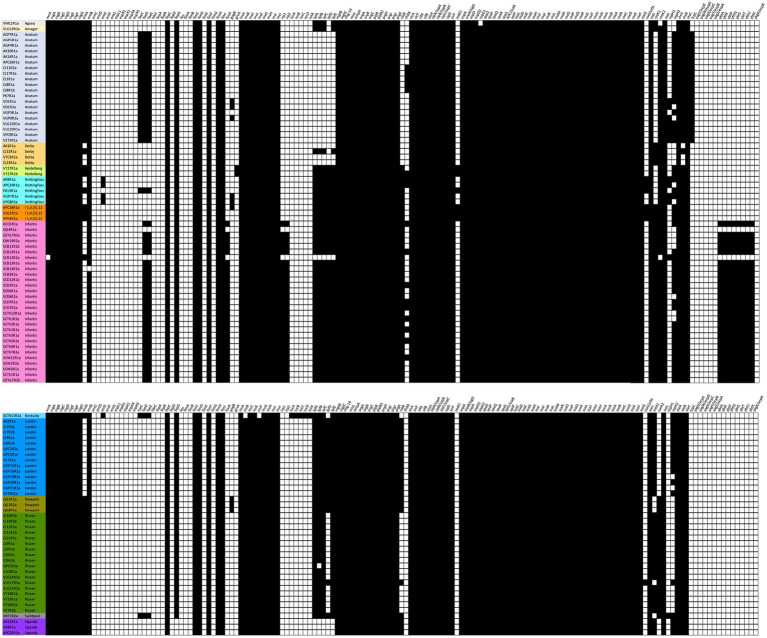
The integration of next-generation sequencing into the identification and characterization of resistant and virulent strains as well as the routine surveillance of foodborne pathogens such as have not yet been accomplished in the Philippines. This study investigated the antimicrobial profiles, virulence, and susceptibility of the 105 isolates from swine and chicken samples obtained from slaughterhouses and public wet markets in Metropolitan Manila using whole-genome sequence analysis. Four predominant serovars were identified in genotypic serotyping, namely, Infantis (26.7%), Anatum (19.1%), Rissen (18.1%), and London (13.3%). Phenotypic antimicrobial resistance (AMR) profiling revealed that 65% of the isolates were resistant to at least one antibiotic, 37% were multidrug resistant (MDR), and 57% were extended-spectrum β-lactamase producers. Bioinformatic analysis revealed that isolates had resistance genes and plasmids belonging to the and plasmid families that confer resistance against tetracycline (64%), sulfonamide (56%), and streptomycin (56%). Further analyses revealed the presence of 155 virulence genes, 42 of which were serovar-specific. The virulence genes primarily code for host immune system modulators, iron acquisition enzyme complexes, host cell invasion proteins, as well as proteins that allow intracellular and intramacrophage survival. This study showed that virulent MDR and several phenotypic and genotypic AMR patterns were present in the food chain. It serves as a foundation to understand the current AMR status in the Philippines food chain and to prompt the creation of preventative measures and efficient treatments against foodborne pathogens.
在菲律宾,尚未实现将下一代测序技术用于耐药和致病菌株的鉴定与特征分析以及食源性病原体(如[未提及具体病原体名称])的常规监测。本研究使用全基因组序列分析,调查了从马尼拉大都会的屠宰场和公共湿市场采集的猪和鸡样本中105株[未提及具体病原体名称]的抗菌谱、毒力和药敏情况。在基因血清型分型中鉴定出四种主要血清型,即婴儿型(26.7%)、鸭甲型(19.1%)、里森型(18.1%)和伦敦型(13.3%)。表型抗菌药物耐药性(AMR)分析显示,65%的分离株对至少一种抗生素耐药,37%为多重耐药(MDR),57%为超广谱β-内酰胺酶产生菌。生物信息学分析表明,分离株具有属于[未提及具体质粒家族名称]和[未提及具体质粒家族名称]质粒家族的耐药基因和质粒,这些基因赋予对四环素(64%)、磺胺类药物(56%)和链霉素(56%)的耐药性。进一步分析发现存在155个毒力基因,其中42个是血清型特异性的。这些毒力基因主要编码宿主免疫系统调节剂、铁获取酶复合物、宿主细胞侵袭蛋白以及允许在细胞内和巨噬细胞内存活的蛋白质。本研究表明,食物链中存在致病的多重耐药[未提及具体病原体名称]以及几种表型和基因型AMR模式。它为了解菲律宾食物链中当前的AMR状况以及推动制定针对食源性病原体的预防措施和有效治疗方法奠定了基础。