STIMULUS (Research and Teaching Neuromodulation Uz Brussel) Research Group, Vrije Universiteit Brussel, Brussels, Belgium.
Department of Neurosurgery, Universitair Ziekenhuis Brussel, Brussels, Belgium.
Front Immunol. 2024 Jan 30;15:1342833. doi: 10.3389/fimmu.2024.1342833. eCollection 2024.
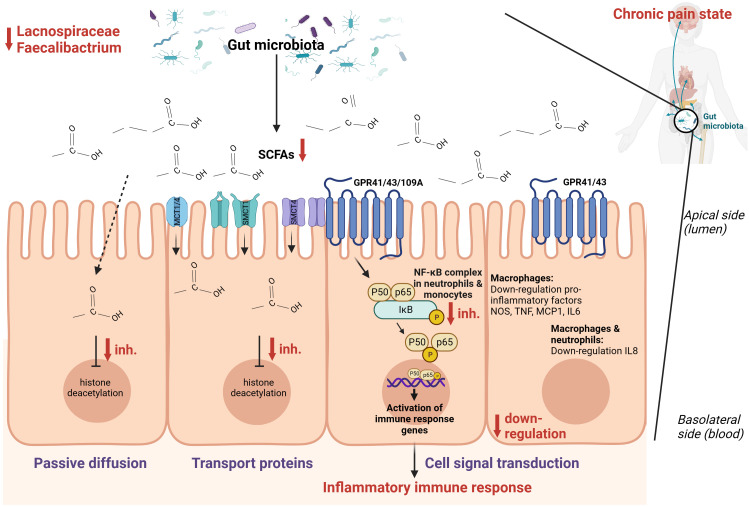
Recent evidence supports the contribution of gut microbiota dysbiosis to the pathophysiology of rheumatic diseases, neuropathic pain, and neurodegenerative disorders. The bidirectional gut-brain communication network and the occurrence of chronic pain both involve contributions of the autonomic nervous system and the hypothalamic pituitary adrenal axis. Nevertheless, the current understanding of the association between gut microbiota and chronic pain is still not clear. Therefore, the aim of this study is to systematically evaluate the existing knowledge about gut microbiota alterations in chronic pain conditions.
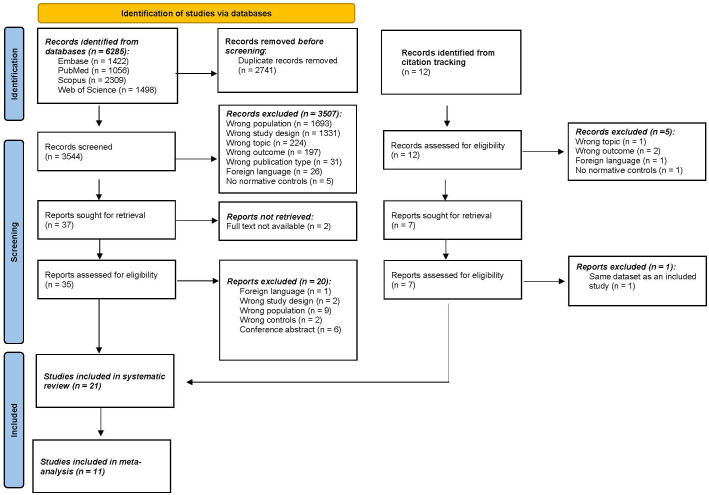
Four databases were consulted for this systematic literature review: PubMed, Web of Science, Scopus, and Embase. The Newcastle-Ottawa Scale was used to assess the risk of bias. The study protocol was prospectively registered at the International prospective register of systematic reviews (PROSPERO, CRD42023430115). Alpha-diversity, β-diversity, and relative abundance at different taxonomic levels were summarized qualitatively, and quantitatively if possible.
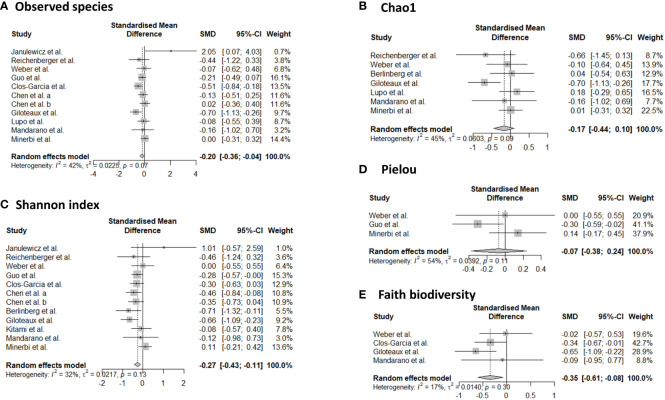
The initial database search identified a total of 3544 unique studies, of which 21 studies were eventually included in the systematic review and 11 in the meta-analysis. Decreases in alpha-diversity were revealed in chronic pain patients compared to controls for several metrics: observed species (SMD= -0.201, 95% CI from -0.04 to -0.36, p=0.01), Shannon index (SMD= -0.27, 95% CI from -0.11 to -0.43, p<0.001), and faith phylogenetic diversity (SMD -0.35, 95% CI from -0.08 to -0.61, p=0.01). Inconsistent results were revealed for beta-diversity. A decrease in the relative abundance of the Lachnospiraceae family, genus and , and species of and , as well as an increase in spp., was revealed in chronic pain patients compared to controls.
Indications for gut microbiota dysbiosis were revealed in chronic pain patients, with non-specific disease alterations of microbes.
https://www.crd.york.ac.uk/prospero/, identifier CRD42023430115.
最近的证据表明,肠道微生物群落失调与风湿性疾病、神经性疼痛和神经退行性疾病的病理生理学有关。双向的肠道-大脑通讯网络和慢性疼痛的发生都涉及自主神经系统和下丘脑-垂体-肾上腺轴的贡献。然而,目前对于肠道微生物群与慢性疼痛之间的关联的理解仍不清楚。因此,本研究旨在系统评估现有关于慢性疼痛状态下肠道微生物群落改变的知识。
本系统文献综述检索了四个数据库:PubMed、Web of Science、Scopus 和 Embase。使用纽卡斯尔-渥太华量表评估偏倚风险。研究方案在国际前瞻性系统评价注册库(PROSPERO、CRD42023430115)中进行了前瞻性注册。定性总结了不同分类水平的 alpha 多样性、beta 多样性和相对丰度,如果可能的话,还进行了定量总结。
最初的数据库搜索共确定了 3544 项独特的研究,其中 21 项研究最终纳入了系统评价,11 项研究纳入了荟萃分析。与对照组相比,慢性疼痛患者的 alpha 多样性呈现出以下几种指标的降低:观察到的物种(SMD=-0.201,95%置信区间为-0.04 至-0.36,p=0.01)、香农指数(SMD=-0.27,95%置信区间为-0.11 至-0.43,p<0.001)和信仰系统发育多样性(SMD=-0.35,95%置信区间为-0.08 至-0.61,p=0.01)。beta 多样性的结果不一致。与对照组相比,慢性疼痛患者中发现lachnospiraceae 科、属和 ,以及物种 和 ,相对丰度降低,而 spp.相对丰度增加。
在慢性疼痛患者中发现了肠道微生物群落失调的迹象,微生物存在非特异性疾病改变。
https://www.crd.york.ac.uk/prospero/,标识符 CRD42023430115。