Department of Animal Reproduction, Gynecology and Obstetrics, Mumbai Veterinary College, Mumbai, Maharashtra, India.
Equus Stud Farm, Pune, Maharashtra, India.
Vet Med Sci. 2024 Mar;10(2):e1369. doi: 10.1002/vms3.1369.
The application of high throughput technologies has enabled unravelling of unique differences between healthy mares and mares with endometritis at transcriptomic and proteomic levels. However, differences in the uterine microbiome are yet to be investigated.
The present study was aimed at evaluating the differences in uterine microbiome between healthy mares and mares with endometritis.
Low-volume lavage (LVL) samples were collected from the uterus of 30 mares classified into healthy (n = 15) and endometritis (n = 15) based on their reproductive history, intrauterine fluid accumulation, gross appearance of LVL samples, endometrial cytology and bacterial culture. The samples were subjected to 16S rRNA sequencing.
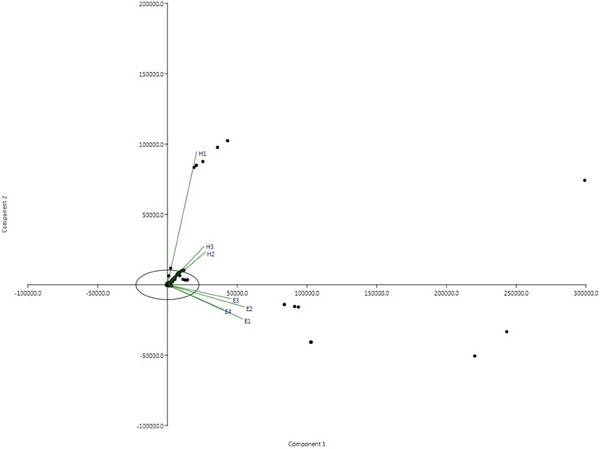
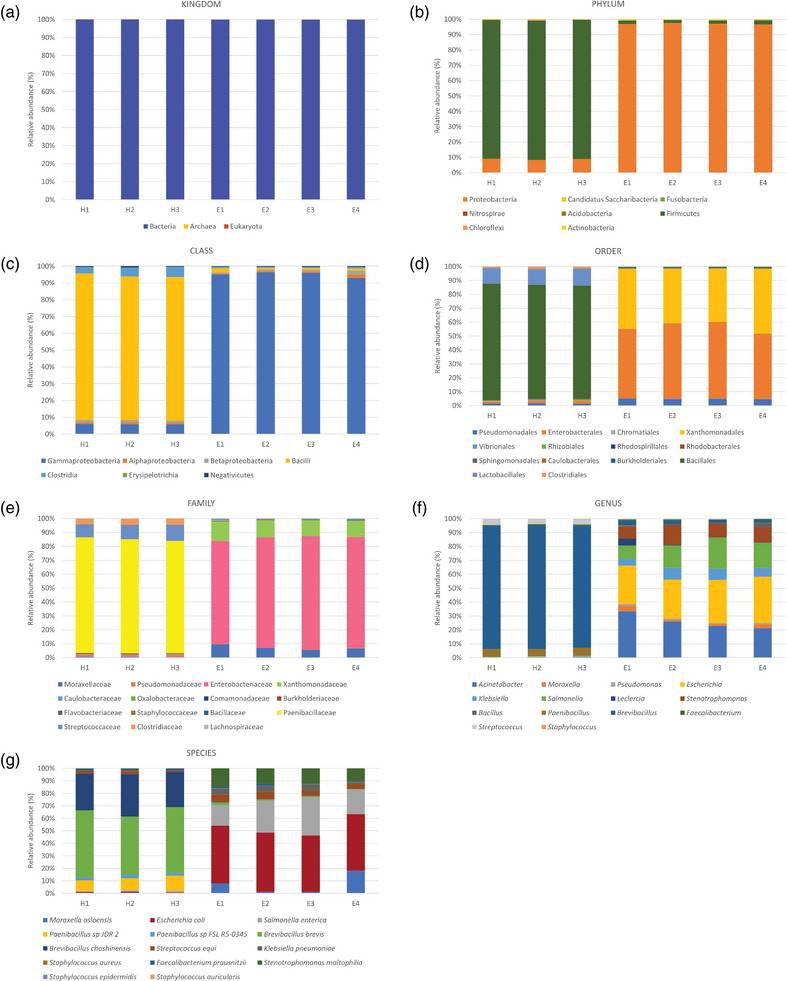
Notable differences in the uterine microbiome were observed between healthy mares and mares with endometritis at various taxonomic levels. In healthy mares, the most abundant phylum, class, order and family were Firmicutes, Bacilli, Bacillales and Paenibacillaceae, respectively. In contrast, the most abundant corresponding taxonomic levels in mares with endometritis were Proteobacteria, Gammaproteobacteria, Enterobacterales and Enterobacteriaceae, respectively. At the genus level, Brevibacillus and Paenibacillus were more abundant in healthy mares, whereas Escherichia, Salmonella and Klebsiella were more abundant in mares with endometritis. In healthy mares, Brevibacillus brevis was the most abundant species, followed by Brevibacillus choshinensis and Paenibacillus sp JDR-2. However, in mares with endometritis, Escherichia coli was the most abundant species, followed by Salmonella enterica and Klebsiella pneumoniae.
These results confirmed the previously reported presence of a uterine microbiome in healthy mares and helped unravel some alterations that occur in mares with endometritis. The findings can potentially help formulate new approaches to prevent or treat equine endometritis.
高通量技术的应用使我们能够在转录组学和蛋白质组学水平上揭示健康母马和子宫内膜炎母马之间的独特差异。然而,子宫微生物组的差异尚未得到研究。
本研究旨在评估健康母马和子宫内膜炎母马的子宫微生物组之间的差异。
根据繁殖史、宫内液体积聚、低容量冲洗(LVL)样本的大体外观、子宫内膜细胞学和细菌培养,将 30 匹母马分为健康(n=15)和子宫内膜炎(n=15)。LVL 样本取自子宫。将样本进行 16S rRNA 测序。
在各种分类水平上,健康母马和子宫内膜炎母马的子宫微生物组存在显著差异。在健康母马中,最丰富的门、纲、目和科分别为厚壁菌门、芽孢杆菌纲、芽孢杆菌目和芽孢杆菌科。相比之下,子宫内膜炎母马中最丰富的相应分类水平分别为变形菌门、γ-变形菌纲、肠杆菌目和肠杆菌科。在属水平上,短芽孢杆菌和类芽孢杆菌在健康母马中更为丰富,而大肠杆菌、沙门氏菌和克雷伯氏菌在子宫内膜炎母马中更为丰富。在健康母马中,短芽孢杆菌是最丰富的物种,其次是地衣芽孢杆菌和类芽孢杆菌。然而,在子宫内膜炎母马中,大肠杆菌是最丰富的物种,其次是肠炎沙门氏菌和肺炎克雷伯菌。
这些结果证实了先前报道的健康母马存在子宫微生物组,并帮助揭示了子宫内膜炎母马中发生的一些变化。这些发现可能有助于制定预防或治疗马属子宫内膜炎的新方法。