Division of Agricultural Science, College of Agriculture and Food Sciences, Florida Agricultural and Mechanical University, Tallahassee, FL 32307, USA.
Department of Animal Sciences, Purdue University, West Lafayette, IN 47907, USA.
J Anim Sci. 2024 Jan 3;102. doi: 10.1093/jas/skae064.
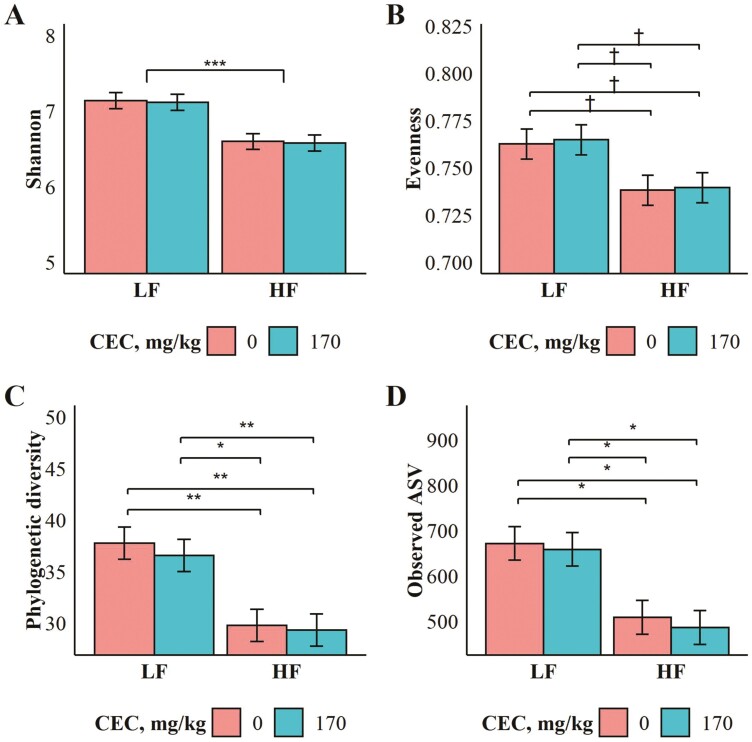
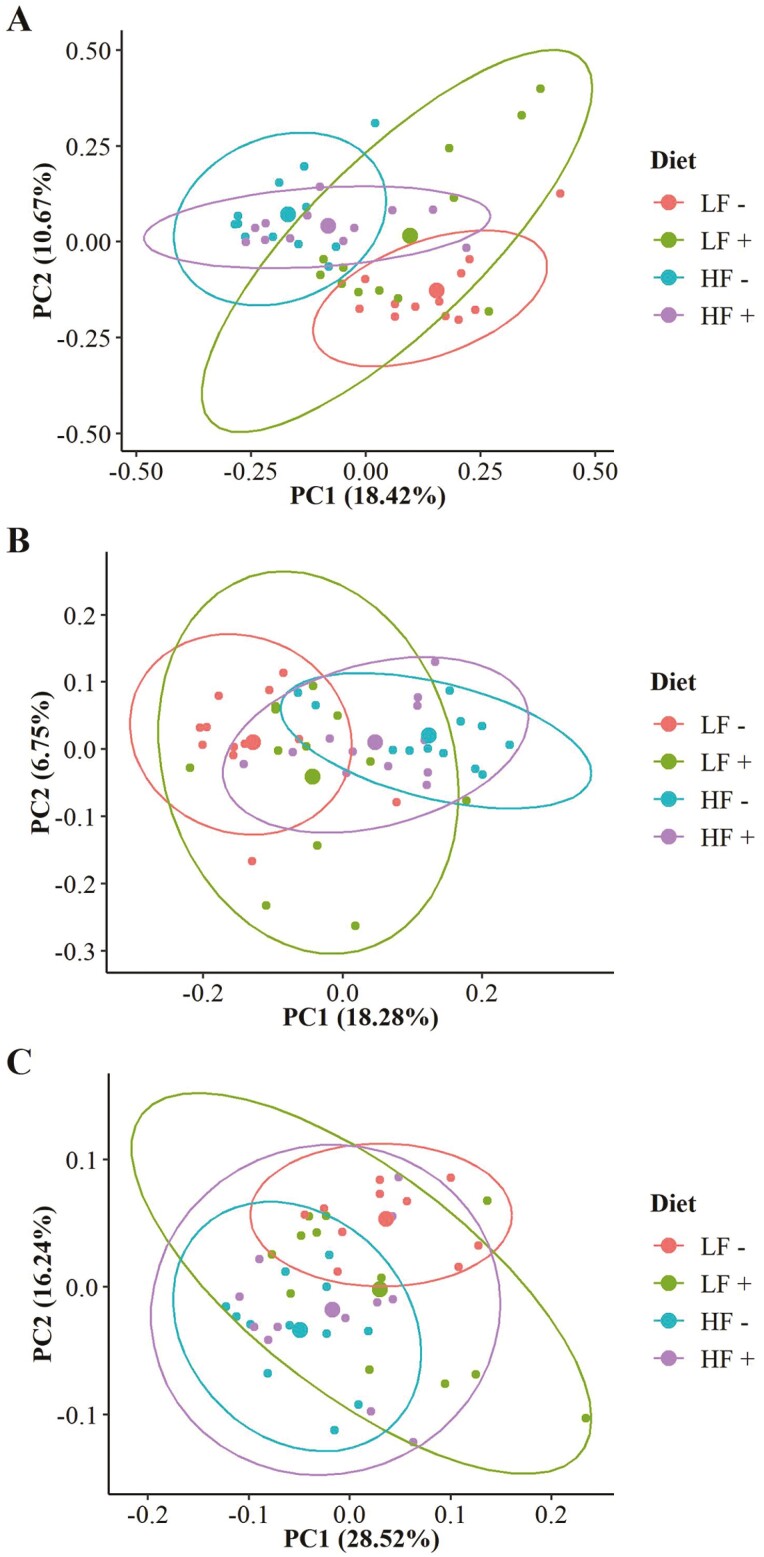
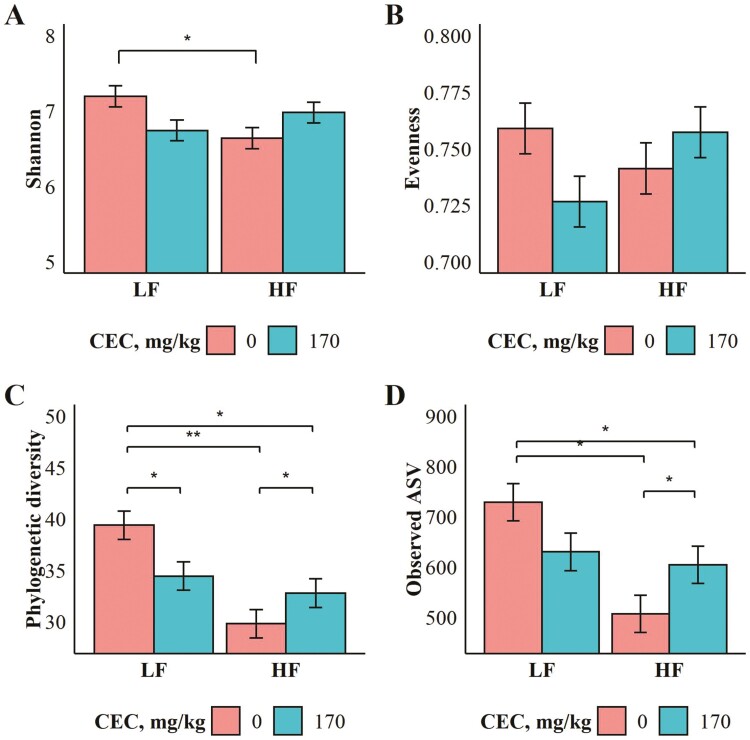
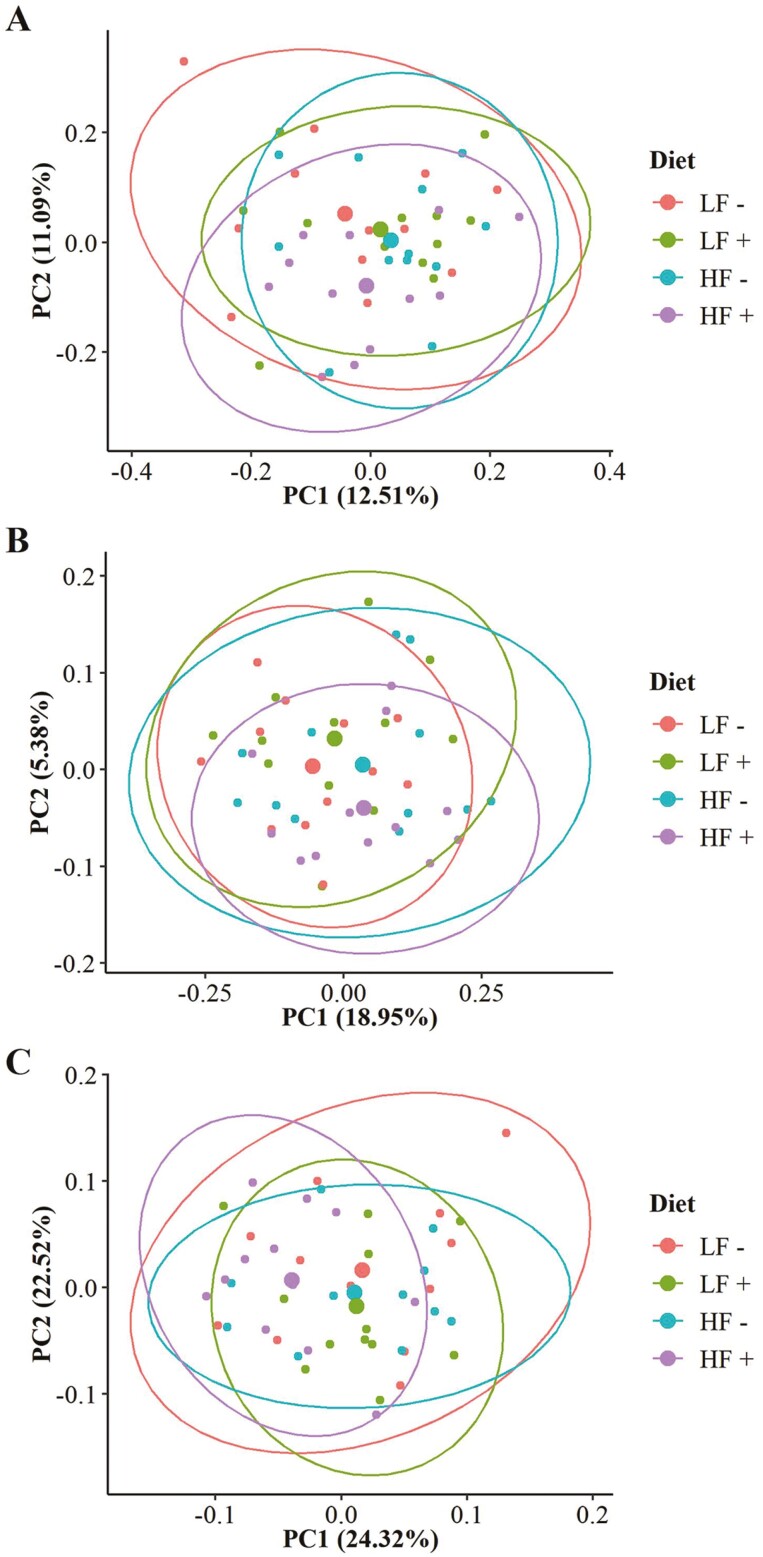
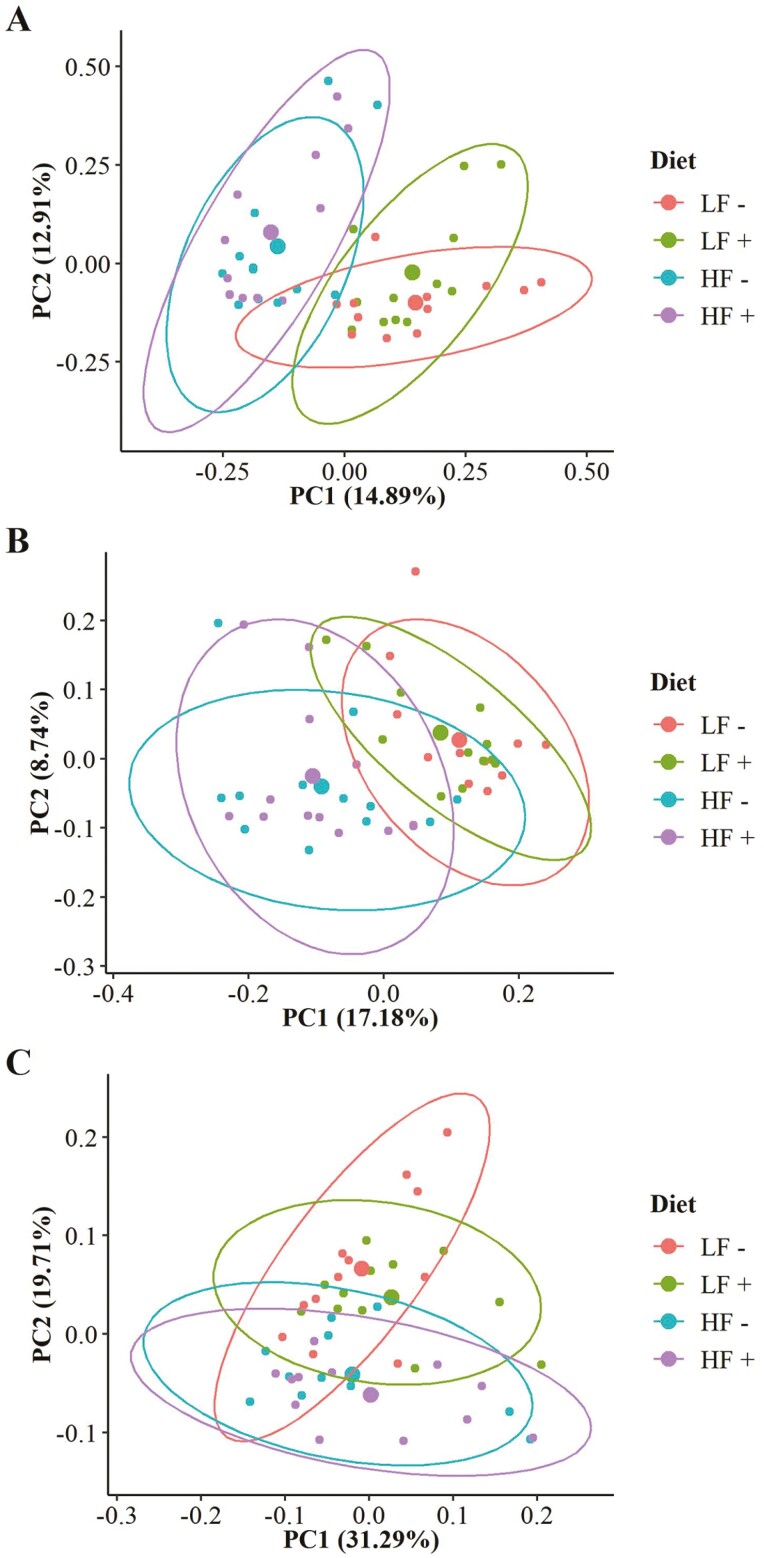
One-hundred-and-ninety-two weanling pigs (6.7 kg body weight) were used to evaluate the impact of a carbohydrases-protease enzyme complex (CPEC) on growth performance, nutrient digestibility, and gut microbiome. Pigs were assigned to one of the four dietary treatments for 42 d according to a 2 × 2 factorial arrangement of diet type (low fiber [LF] or high fiber [HF]) and CPEC supplementation (0 or 170 mg/kg diet). The LF diet was prepared as corn-wheat-based diet while the HF diet was wheat-barley-based and contained wheat middlings and canola meal. Each dietary treatment consisted of 12 replicate pens (six replicates per gender) and four pigs per replicate pen. Over the 42-d period, there was no interaction between diet type and CPEC supplementation on growth performance indices of pigs. Dietary addition of CPEC improved (P < 0.05) the body weight of pigs at days 28 and 42 and the gain-to-feed ratio of pigs from days 0 to 14. During the entire experimental period, dietary CPEC supplementation improved (P < 0.05) the average daily gain and gain-to-feed ratio of pigs. There were interactions between diet type and CPEC supplementation on apparent total tract digestibility (ATTD) of dry matter (DM; P < 0.01), gross energy (GE; P < 0.01), and neutral detergent fiber (NDF; P < 0.05) at d 42. Dietary CPEC addition improved (P < 0.05) ATTD of DM, GE, and NDF in the HF diets. At day 43, dietary CPEC addition resulted in improved (P < 0.05) apparent ileal digestibility (AID) of NDF and interactions (P < 0.05) between diet type and CPEC supplementation on AID of DM and crude fiber. Alpha diversity indices including phylogenetic diversity and observed amplicon sequence variants of fecal microbiome increased (P < 0.05) by the addition of CPEC to the HF diets on day 42. An interaction (P < 0.05) between diet type and CPEC addition on Bray-Curtis dissimilarity index and Unweighted UniFrac distances was observed on day 42. In conclusion, CPEC improved weanling pig performance and feed efficiency, especially in wheat-barley diets, while dietary fiber composition had a more significant impact on fecal microbial communities than CPEC administration. The results of this study underscores carbohydrase's potential to boost pig performance without major microbiome changes.
192 头断奶仔猪(体重 6.7kg)被用于评估碳水化合物酶-蛋白酶复合酶(CPEC)对生长性能、养分消化率和肠道微生物组的影响。根据日粮类型(低纤维 [LF]或高纤维 [HF])和 CPEC 补充(0 或 170mg/kg 日粮)的 2×2 因子设计,将仔猪随机分配到四种日粮处理组中,共 42 天。LF 日粮由玉米-小麦为基础配制而成,而 HF 日粮以小麦-大麦为基础,并含有小麦次粉和油菜粕。每个日粮处理组由 12 个重复栏(每个性别 6 个重复)和每个重复栏中的 4 头猪组成。在 42 天的试验期间,日粮类型和 CPEC 添加之间没有对仔猪的生长性能指标产生互作影响。日粮添加 CPEC 提高了(P<0.05)第 28 天和第 42 天仔猪的体重以及第 0 天至 14 天仔猪的采食量与增重比。在整个试验期间,日粮 CPEC 补充提高了(P<0.05)仔猪的平均日增重和采食量与增重比。日粮类型和 CPEC 添加之间对第 42 天干物质(DM)、总能(GE)和中性洗涤纤维(NDF)的全肠道表观消化率(ATTD)有互作影响(P<0.01)。日粮 CPEC 添加提高了(P<0.05)HF 日粮的 DM、GE 和 NDF 的 ATTD。在第 43 天,日粮 CPEC 添加导致 NDF 的回肠表观消化率(AID)提高(P<0.05),并在日粮类型和 CPEC 添加之间对 DM 和粗饲料的 AID 产生互作影响(P<0.05)。在第 42 天,CPEC 添加提高了粪便微生物组的多样性指数,包括系统发育多样性和观察到的扩增子序列变异,而 HF 日粮的添加效果更为显著。在第 42 天,观察到日粮类型和 CPEC 添加之间的 Bray-Curtis 不相似指数和 Unweighted UniFrac 距离存在互作影响(P<0.05)。总之,CPEC 提高了仔猪的生产性能和饲料效率,特别是在小麦-大麦日粮中,而日粮纤维组成对粪便微生物群落的影响大于 CPEC 处理。这项研究的结果强调了碳水化合物酶在不改变微生物群的情况下提高猪生产性能的潜力。