Petakh Pavlo, Oksenych Valentyn, Kamyshna Iryna, Boisak Iryna, Lyubomirskaya Katerina, Kamyshnyi Oleksandr
Department of Biochemistry and Pharmacology, Uzhhorod National University, Uzhhorod, Ukraine.
Department of Microbiology, Virology, and Immunology, I. Horbachevsky Ternopil National Medical University, Ternopil, Ukraine.
Front Microbiol. 2024 Feb 27;15:1345684. doi: 10.3389/fmicb.2024.1345684. eCollection 2024.
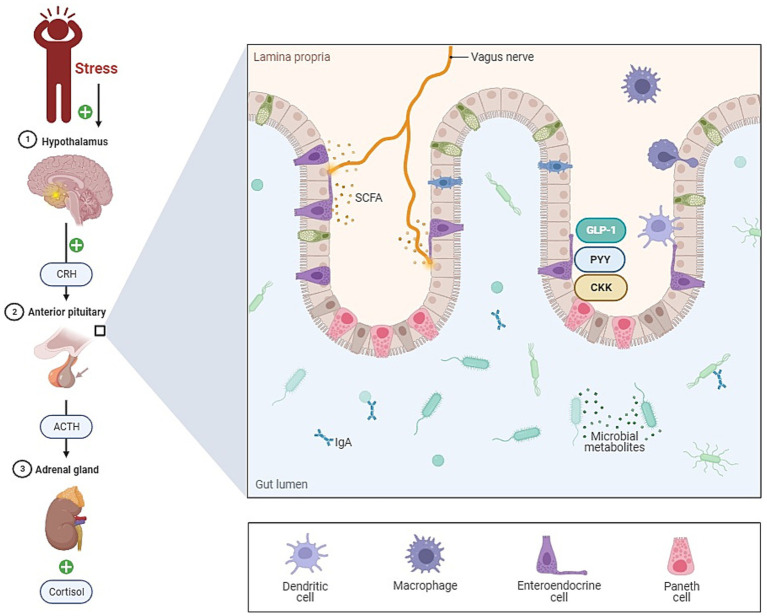
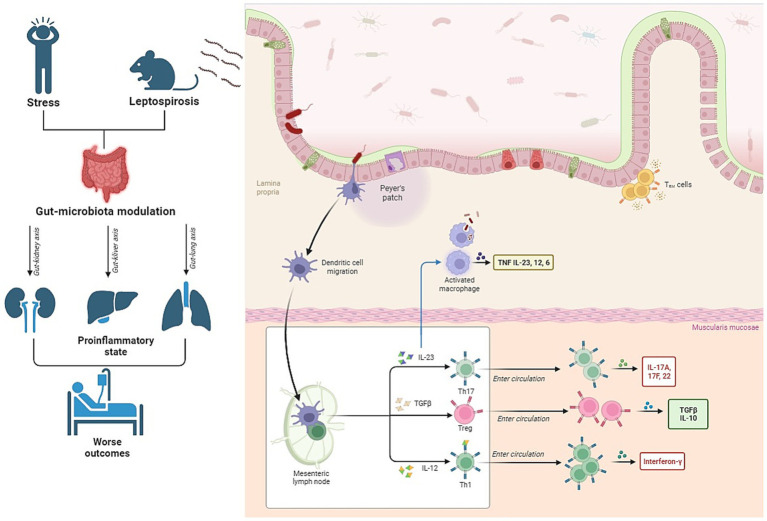
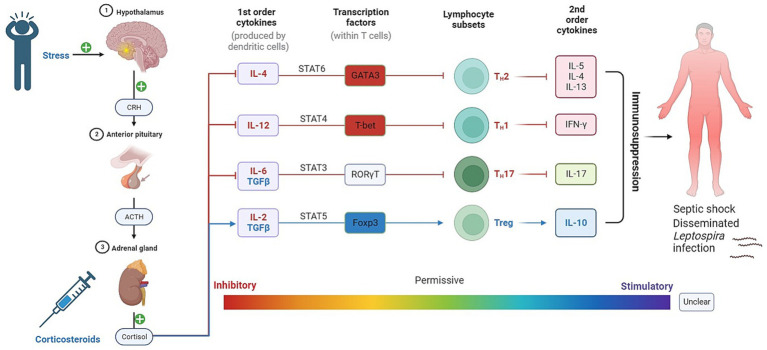
Leptospirosis, a re-emerging zoonotic disease, remains a significant global health concern, especially amid floods and disasters such as the Kakhovka Dam destruction. As is known, the stress that occurs in the conditions of military conflicts among civilian and military personnel significantly affects susceptibility to infectious diseases and possibly even influences their course. This review aims to explore how the gut microbiome and stress mediators (such as catecholamines and corticosteroids) might impact the leptospirosis disease course. The review opens new horizons for research by elucidating the connections between the gut microbiome, stress, and leptospirosis.
钩端螺旋体病是一种再度出现的人畜共患病,仍然是全球重大的健康问题,尤其是在洪水和诸如卡霍夫卡大坝被毁等灾害期间。众所周知,平民和军事人员在军事冲突条件下所面临的压力会显著影响对传染病的易感性,甚至可能影响疾病的进程。本综述旨在探讨肠道微生物群和应激介质(如儿茶酚胺和皮质类固醇)如何可能影响钩端螺旋体病的病程。该综述通过阐明肠道微生物群、应激和钩端螺旋体病之间的联系,为研究开辟了新的视野。