Food Sciences Unit, Department of Life Technologies, University of Turku, Turku, Finland.
Metabolism and Nutrition Research Group, Louvain Drug Research Institute, UCLouvain, Brussels, Belgium.
Gut Microbes. 2022 Jan-Dec;14(1):2102878. doi: 10.1080/19490976.2022.2102878.
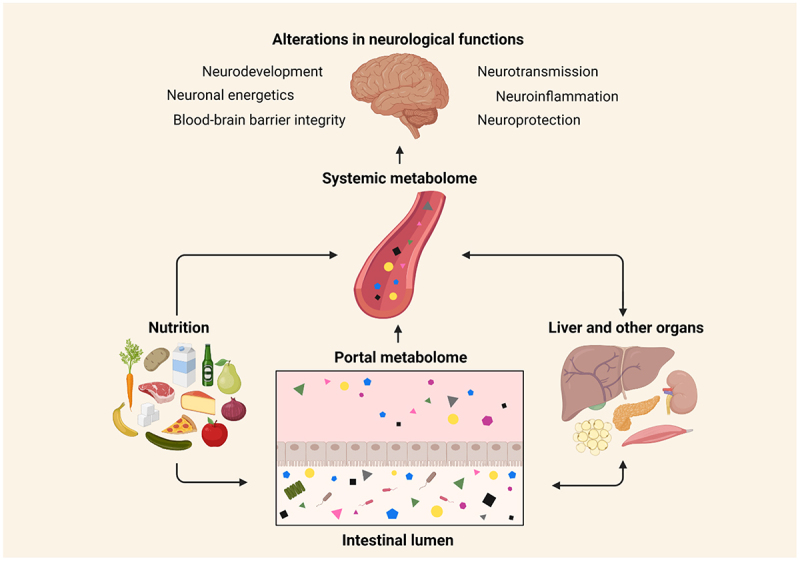
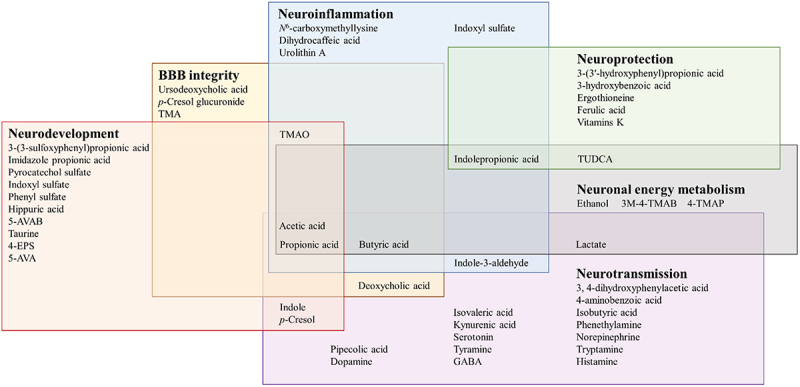
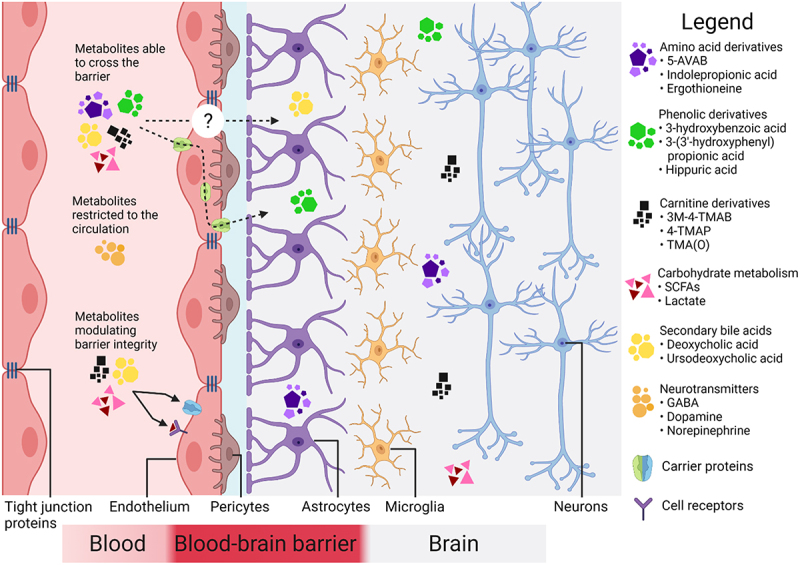
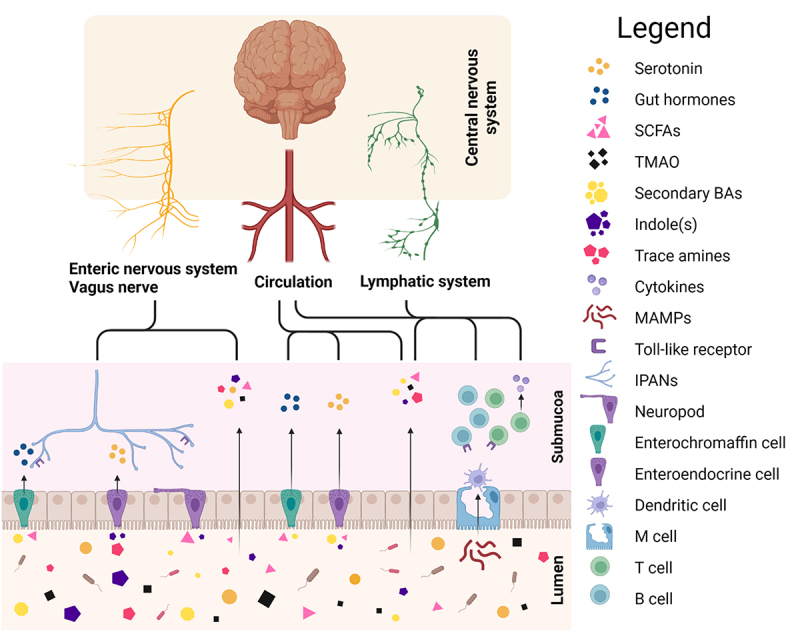
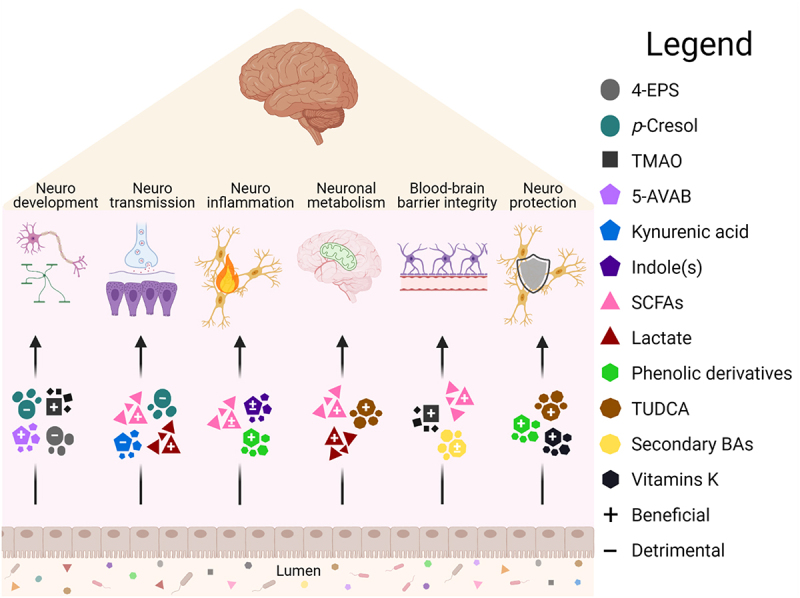
Alterations in the gut microbiota composition have been associated with a range of neurodevelopmental, neurodegenerative, and neuropsychiatric disorders. The gut microbes transform and metabolize dietary- and host-derived molecules generating a diverse group of metabolites with local and systemic effects. The bi-directional communication between brain and the microbes residing in the gut, the so-called gut-brain axis, consists of a network of immunological, neuronal, and endocrine signaling pathways. Although the full variety of mechanisms of the gut-brain crosstalk is yet to be established, the existing data demonstrates that a single metabolite or its derivatives are likely among the key inductors within the gut-brain axis communication. However, more research is needed to understand the molecular mechanisms underlying how gut microbiota associated metabolites alter brain functions, and to examine if different interventional approaches targeting the gut microbiota could be used in prevention and treatment of neurological disorders, as reviewed herein.4-EPS 4-ethylphenylsulfate; 5-AVA(B) 5-aminovaleric acid (betaine); Aβ Amyloid beta protein; AhR Aryl hydrocarbon receptor; ASD Autism spectrum disorder; BBB Blood-brain barrier; BDNF Brain-derived neurotrophic factor; CNS Central nervous system; GABA ɣ-aminobutyric acid; GF Germ-free; MIA Maternal immune activation; SCFA Short-chain fatty acid; 3M-4-TMAB 3-methyl-4-(trimethylammonio)butanoate; 4-TMAP 4-(trimethylammonio)pentanoate; TMA(O) Trimethylamine(--oxide); TUDCA Tauroursodeoxycholic acid; ZO Zonula occludens proteins.
肠道微生物群落的改变与一系列神经发育、神经退行性和神经精神疾病有关。肠道微生物将饮食和宿主来源的分子转化和代谢,产生具有局部和全身作用的多样化代谢物。大脑和肠道中存在的微生物之间的双向通讯,即所谓的“肠-脑轴”,由免疫、神经元和内分泌信号通路组成的网络组成。尽管肠-脑轴通讯的全部机制尚未完全确定,但现有数据表明,单一代谢物或其衍生物可能是肠-脑轴通讯中的关键诱导物之一。然而,需要更多的研究来了解与肠道微生物群相关的代谢物如何改变大脑功能的分子机制,并研究针对肠道微生物群的不同干预方法是否可用于预防和治疗神经障碍,本文对此进行了综述。4-EPS 4-乙基苯磺酸;5-AVA(B)5-氨基戊酸(甜菜碱);Aβ 淀粉样蛋白;AhR 芳香烃受体;ASD 自闭症谱系障碍;BBB 血脑屏障;BDNF 脑源性神经营养因子;CNS 中枢神经系统;GABA ɣ-氨基丁酸;GF 无菌;MIA 母体免疫激活;SCFA 短链脂肪酸;3M-4-TMAB 3-甲基-4-(三甲基铵)丁酸盐;4-TMAP 4-(三甲基铵)戊酸盐;TMA(O) 三甲胺(--氧化物);TUDCA 牛磺熊脱氧胆酸;ZO 紧密连接蛋白。