Jebeli Sadegh Jafari, Aghdam Rouhollah Mehdinavaz, Najjari Aryan, Soltani Reza
School of Metallurgy and Materials Engineering, College of Engineering, University of Tehran, P.O. Box: 11155-4563, Tehran, Iran.
Heliyon. 2024 Mar 26;10(7):e28588. doi: 10.1016/j.heliyon.2024.e28588. eCollection 2024 Apr 15.
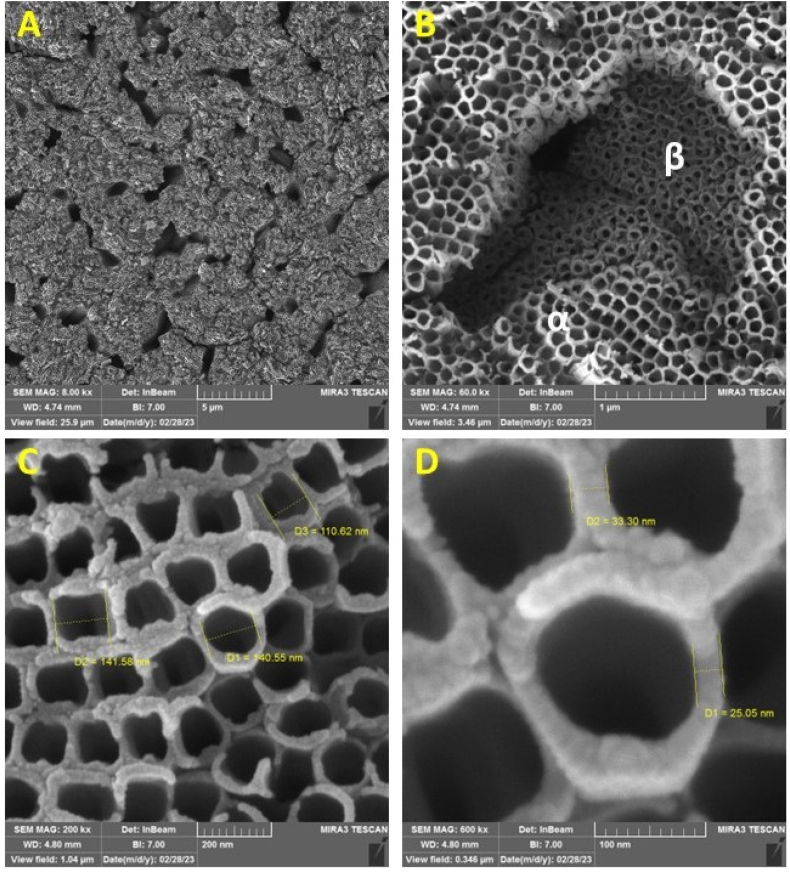
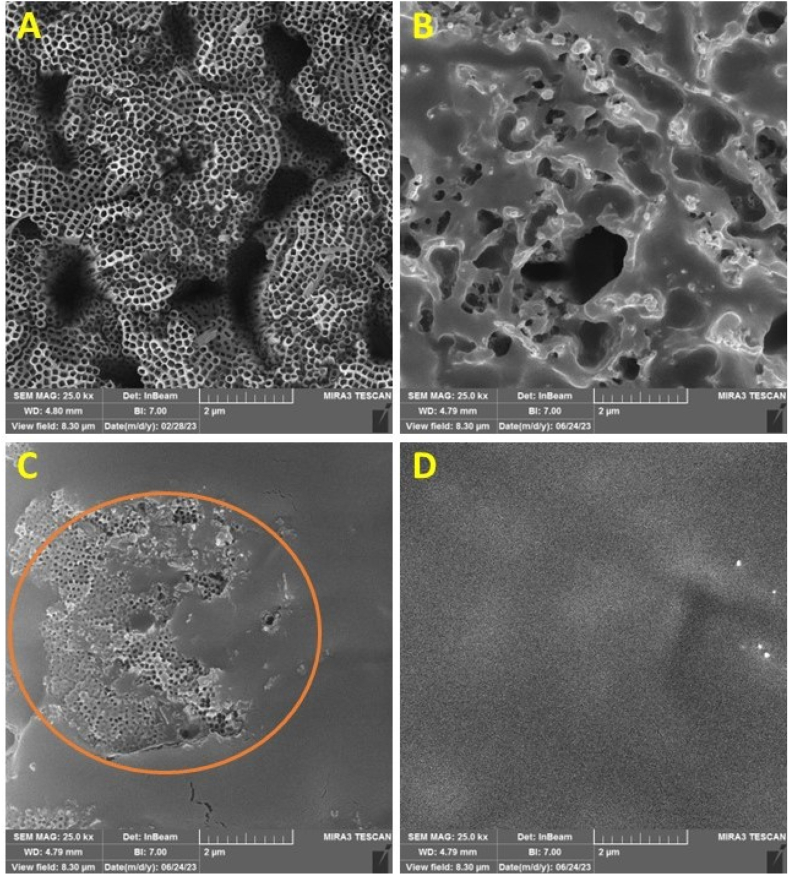
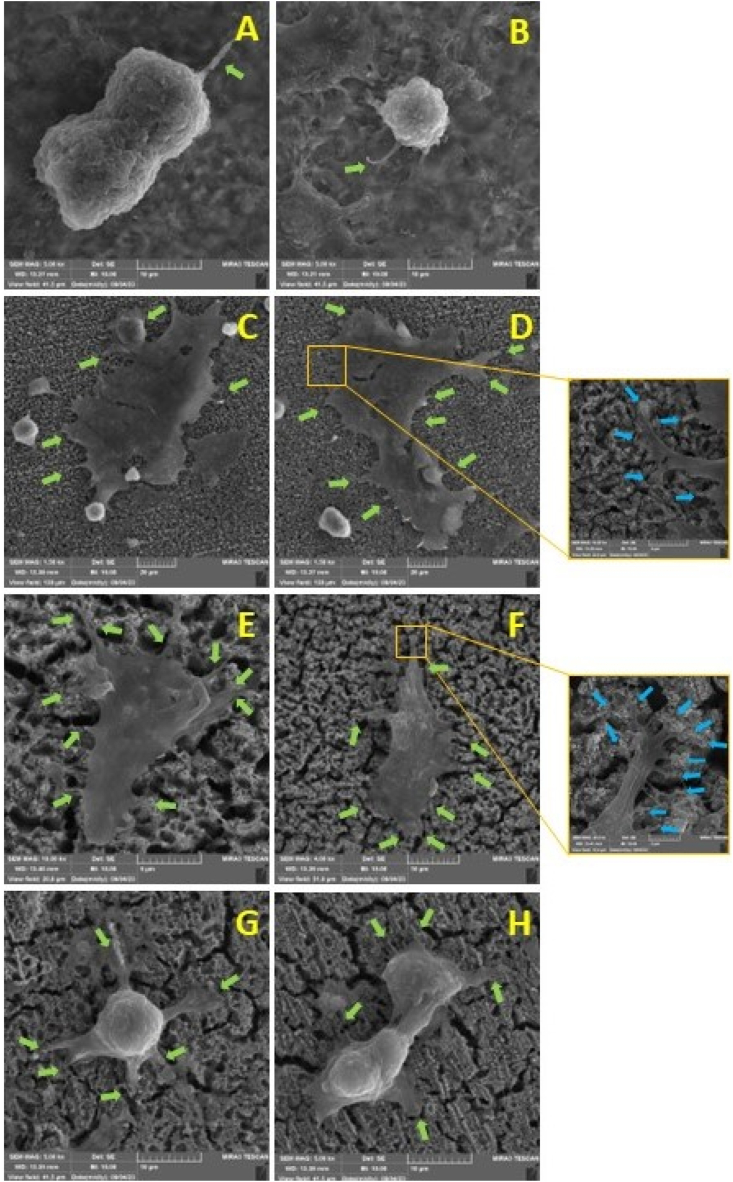
This study involved the incorporation of an antibacterial garlic extract into titanium oxide nanotubes (TNTs) formed via the anodization of Ti6Al4V implants. The garlic extract, obtained through low-temperature extraction aided by ultrasound waves, was loaded into the nanotubes. The presence of the nanotubes was confirmed through X-ray diffraction (XRD), energy-dispersive X-ray spectroscopy (EDS), and scanning electron microscopy (SEM). Fourier-transform infrared spectroscopy (FT-IR) and gas chromatography-mass spectrometry (GC-MS) were used to investigate the presence of bioactive compounds, particularly sulfur compounds responsible for garlic's antibacterial effects. The impact of loading two concentrations (0.1 and 0.2 g per milliliter) of garlic extract on () and () bacteria was examined. Results indicated a decrease in the growth range of from 10 to 10 (CFU/ml) and from 10 to 10 (CFU/ml) upon treatment. Additionally, cell adhesion and viability tests conducted on MG63 cells revealed an 8% increase in cell viability with the 0.1 g per milliliter concentration and a 35% decrease with the 0.2 g per milliliter concentration of garlic extract after 72 h of incubation (They have been evaluated by Microculture tetrazolium (MTT) assay). GC-MS analysis identified the presence of diethyl phthalate compounds in the garlic extract, suggesting a potential correlation with cellular toxicity observed in the sample with the higher concentration (0.2 g per milliliter) of garlic extract. Overall, the TNTs loaded with 0.1 g per milliliter of garlic extract simultaneously demonstrated antibacterial activity, cell viability, adhesion, and growth enhancement.
本研究涉及将抗菌大蒜提取物掺入通过对Ti6Al4V植入物进行阳极氧化形成的二氧化钛纳米管(TNTs)中。通过超声波辅助低温提取获得的大蒜提取物被加载到纳米管中。通过X射线衍射(XRD)、能量色散X射线光谱(EDS)和扫描电子显微镜(SEM)确认了纳米管的存在。利用傅里叶变换红外光谱(FT-IR)和气相色谱-质谱联用(GC-MS)研究生物活性化合物的存在,特别是负责大蒜抗菌作用的含硫化合物。研究了加载两种浓度(每毫升0.1克和0.2克)的大蒜提取物对()和()细菌的影响。结果表明,处理后,(细菌名称未给出)的生长范围从10到10(CFU/ml)以及(细菌名称未给出)从10到10(CFU/ml)有所降低。此外,对MG63细胞进行的细胞黏附和活力测试显示,孵育72小时后,每毫升0.1克浓度的大蒜提取物使细胞活力提高了8%,而每毫升0.2克浓度的大蒜提取物使细胞活力降低了35%(它们已通过微量培养四氮唑(MTT)法进行评估)。GC-MS分析确定大蒜提取物中存在邻苯二甲酸二乙酯化合物 , 这表明与在较高浓度(每毫升0.2克)大蒜提取物样品中观察到的细胞毒性可能存在相关性。总体而言,加载每毫升0.1克大蒜提取物的TNTs同时表现出抗菌活性、细胞活力、黏附性和生长促进作用。