Guan Xiao-Li, Guan Xiao-Ying, Zhang Zheng-Yi
Department of General Medicine, The Second Hospital of Lanzhou University, Lanzhou 730030, Gansu Province, China.
Department of Pathology, The Second Hospital of Lanzhou University, Lanzhou 730030, Gansu Province, China.
World J Gastrointest Oncol. 2024 Mar 15;16(3):630-642. doi: 10.4251/wjgo.v16.i3.630.
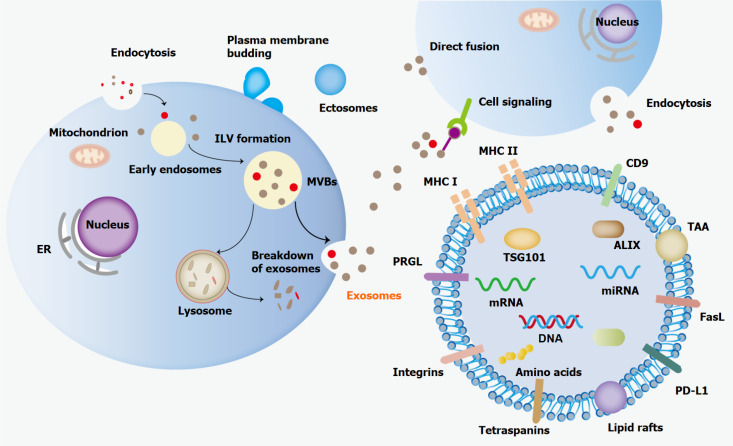
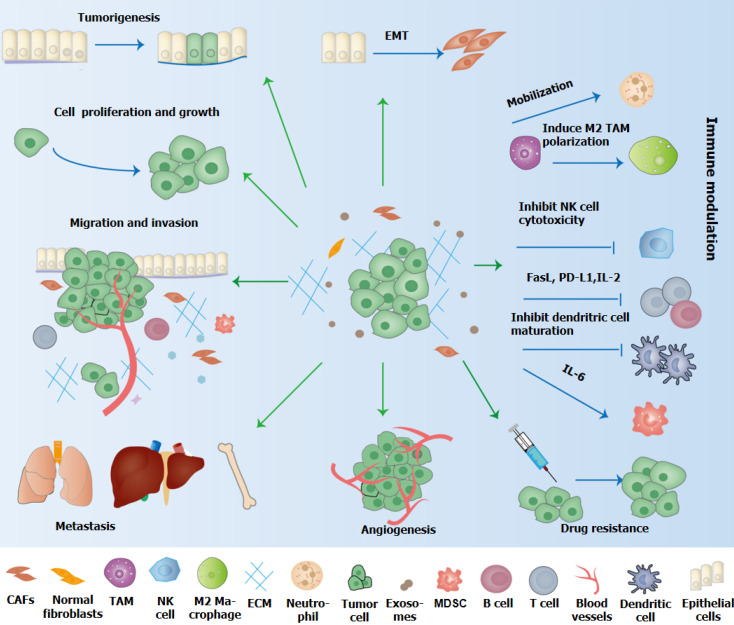
As important messengers of intercellular communication, exosomes can regulate local and distant cellular communication by transporting specific exosomal contents and can also promote or suppress the development and progression of gastric cancer (GC) by regulating the growth and proliferation of tumor cells, the tumor-related immune response and tumor angiogenesis. Exosomes transport bioactive molecules including DNA, proteins, and RNA (coding and noncoding) from donor cells to recipient cells, causing reprogramming of the target cells. In this review, we will describe how exosomes regulate the cellular immune response, tumor angiogenesis, proliferation and metastasis of GC cells, and the role and mechanism of exosome-based therapy in human cancer. We will also discuss the potential application value of exosomes as biomarkers in the diagnosis and treatment of GC and their relationship with drug resistance.
作为细胞间通讯的重要信使,外泌体可通过运输特定的外泌体内容物来调节局部和远距离的细胞通讯,还可通过调节肿瘤细胞生长和增殖、肿瘤相关免疫反应及肿瘤血管生成来促进或抑制胃癌(GC)的发生和发展。外泌体将包括DNA、蛋白质和RNA(编码和非编码)在内的生物活性分子从供体细胞运输到受体细胞,从而导致靶细胞重编程。在本综述中,我们将描述外泌体如何调节细胞免疫反应、肿瘤血管生成、GC细胞的增殖和转移,以及基于外泌体的疗法在人类癌症中的作用和机制。我们还将讨论外泌体作为生物标志物在GC诊断和治疗中的潜在应用价值及其与耐药性的关系。