Lam John V, Lopez Ryan L, Truong Lisa, Tanguay Robyn L
Sinnhuber Aquatic Research Laboratory, Department of Environmental and Molecular Toxicology, Oregon State University, 28645 East Hwy 34, Corvallis, OR 97333, USA.
Toxicol Rep. 2024 Apr 6;12:422-429. doi: 10.1016/j.toxrep.2024.04.002. eCollection 2024 Jun.
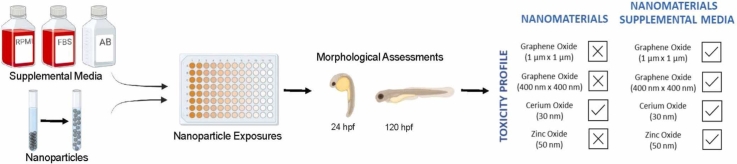
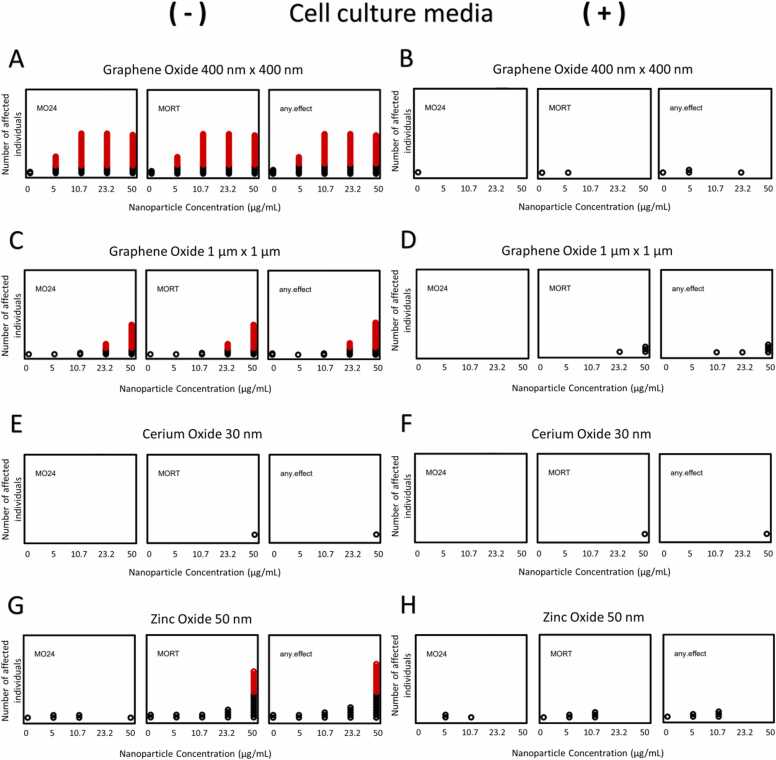
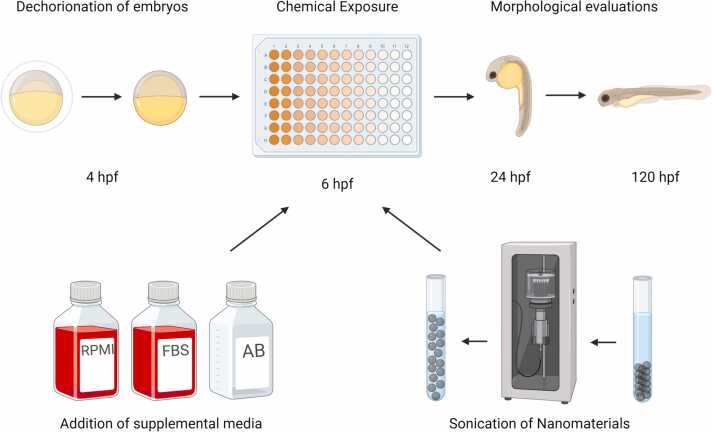
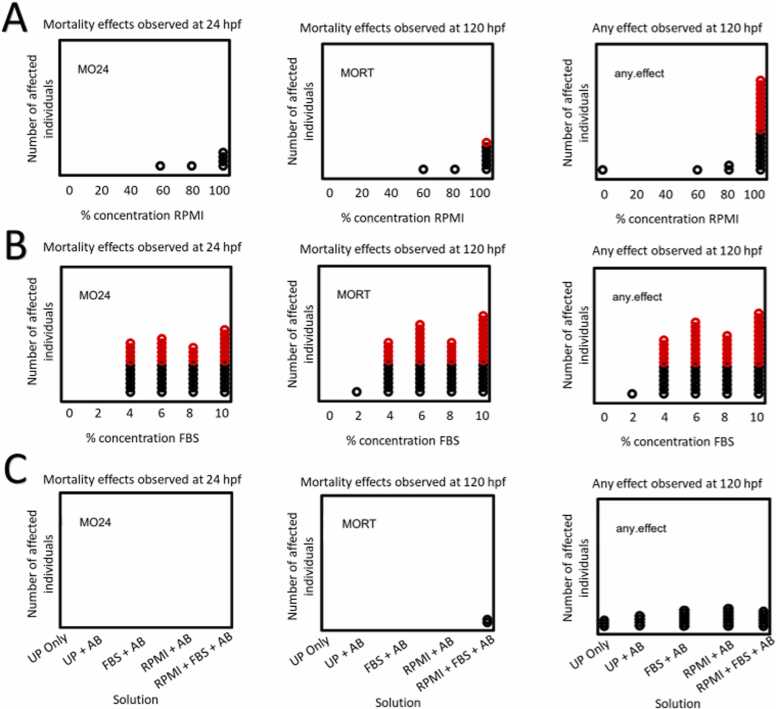
Engineered nanomaterials (ENMs) are ubiquitous in contemporary applications, yet their environmental and human health impacts remain inadequately understood. This study addresses the challenge of identifying potential risks associated with ENM exposure by highlighting the significant variability in existing research methodologies. Without a systematic collection of toxicological data that encompasses standardized materials, relevant platforms, and assays, the task of identifying potential risks linked to ENM exposure becomes an intricate challenge. assessments often use media rich in ionic species, such as RPMI and fetal bovine serum (FBS). Zebrafish embryos, known to develop normally in low-ionic environments, were exposed to Cerium Oxide, Zinc Oxide, and Graphene Oxides in different media at varying concentrations. Here, we discovered that zebrafish embryos tolerated a mix of 80 % RPMI, 2 % FBS, and 1 % antibiotic cocktail. The results revealed that adverse effects observed in zebrafish with certain nanomaterials in Ultra-Pure (UP) water were mitigated in cell culture medium, emphasizing the importance of revisiting previously considered non-toxic materials . The zebrafish results underscore the importance of utilizing a multidimensional platform to gauge the biological activity of nanomaterials accurately.
工程纳米材料(ENMs)在当代应用中无处不在,但其对环境和人类健康的影响仍未得到充分了解。本研究通过强调现有研究方法的显著差异,应对了识别与ENM暴露相关潜在风险的挑战。如果没有系统收集涵盖标准化材料、相关平台和检测方法的毒理学数据,识别与ENM暴露相关的潜在风险的任务将成为一项复杂的挑战。评估通常使用富含离子物种的培养基,如RPMI和胎牛血清(FBS)。已知斑马鱼胚胎在低离子环境中能正常发育,将其暴露于不同培养基中不同浓度的氧化铈、氧化锌和氧化石墨烯中。在此,我们发现斑马鱼胚胎能耐受80% RPMI、2% FBS和1%抗生素混合物。结果表明,在超纯水(UP)中某些纳米材料对斑马鱼观察到的不利影响在细胞培养基中得到缓解,这强调了重新审视先前认为无毒的材料的重要性。斑马鱼实验结果强调了利用多维平台准确评估纳米材料生物活性的重要性。