Rimoldi Simona, Di Rosa Ambra Rita, Armone Rosangela, Chiofalo Biagina, Hasan Imam, Saroglia Marco, Kalemi Violeta, Terova Genciana
Department of Biotechnology and Life Sciences, University of Insubria, 21100 Varese, Italy.
Department of Veterinary Sciences, University of Messina, 98168 Messina, Italy.
Microorganisms. 2024 Apr 6;12(4):744. doi: 10.3390/microorganisms12040744.
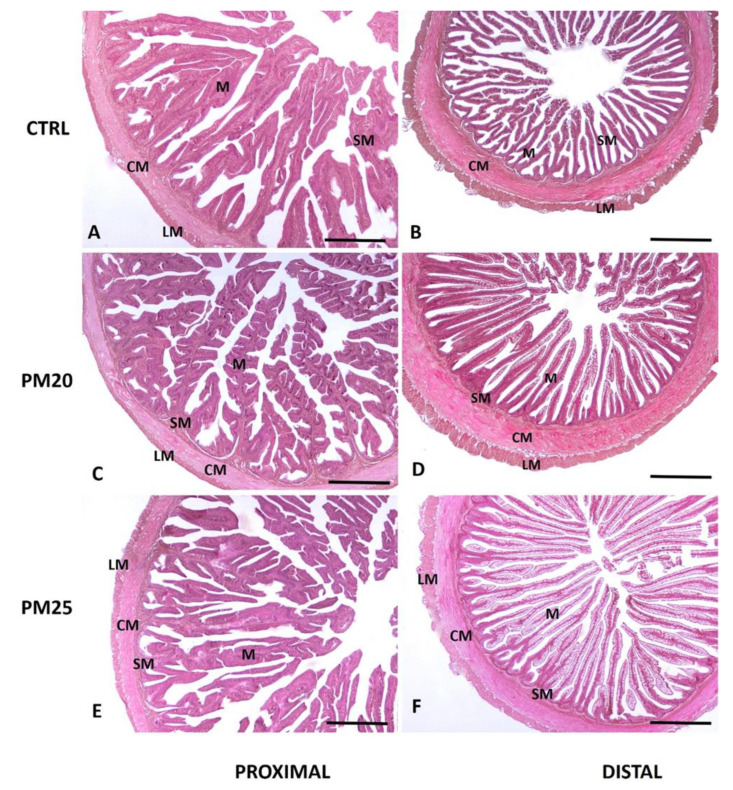
This study addressed the urgent need for sustainable protein sources in aquaculture due to the depletion of marine resources and rising costs. Animal protein sources, particularly poultry by-product meal (PBM) and insect exuviae meal, were investigated as viable alternatives to fishmeal (FM). The research study confirmed the successful replacement of FM with a combination of PBM and insect exuviae meal (up to 50%) in the diet of European seabass without compromising growth, feed conversion, gut health, and liver fat content. In particular, growth was robust with both PBM formulations, with the 25% PBM diet showing better results. Histological examinations showed good gut and liver health, contradicting the concerns of previous studies. This paper emphasizes the importance of holistic analyzes that go beyond growth parameters and include histomorphological investigations. The results show that PBM in combination with insect/exuviae meal is well tolerated by seabass, which is consistent with reports in the literature of it mitigating negative effects on gut health. A detailed analysis of the microbiota revealed a decrease in the Firmicutes/Proteobacteria ratio due to an increase in potentially pathogenic bacteria. However, the formulation containing insect exuviae partially counteracted this effect by preserving the beneficial Lactobacillus and promoting the synthesis of short-chain fatty acids (SCFAs), particularly butyrate. Chitin-rich components from insect exuviae were associated with improved gut health, which was supported by the increased production of SCFAs, which are known for their anti-inflammatory properties. This paper concludes that a combination of PBM and insect/exuviae meal can replace up to 50% of FM in the diet of seabass, supporting sustainable aquaculture practices. Despite some changes in the microbiota, the negative effects are mitigated by the addition of insect exuviae, highlighting their potential as a prebiotic to increase fish productivity and contribute to a circular economy in aquaculture.
由于海洋资源的枯竭和成本的上升,本研究满足了水产养殖对可持续蛋白质来源的迫切需求。研究了动物蛋白来源,特别是家禽副产品粉(PBM)和昆虫蜕皮粉,作为鱼粉(FM)的可行替代品。该研究证实,在欧洲海鲈的日粮中,用PBM和昆虫蜕皮粉的组合(高达50%)成功替代了鱼粉,而不会影响生长、饲料转化率、肠道健康和肝脏脂肪含量。特别是,两种PBM配方的生长都很旺盛,25%PBM日粮的效果更好。组织学检查显示肠道和肝脏健康良好,这与之前研究的担忧相矛盾。本文强调了超越生长参数并包括组织形态学研究的整体分析的重要性。结果表明,海鲈对PBM与昆虫/蜕皮粉的组合耐受性良好,这与文献中关于其减轻对肠道健康负面影响的报道一致。对微生物群的详细分析显示,由于潜在致病菌的增加,厚壁菌门/变形菌门的比例下降。然而,含有昆虫蜕皮粉的配方通过保留有益的乳酸杆菌和促进短链脂肪酸(SCFA),特别是丁酸盐的合成,部分抵消了这种影响。昆虫蜕皮中富含几丁质的成分与改善肠道健康有关,SCFA产量的增加支持了这一点,SCFA以其抗炎特性而闻名。本文得出结论,PBM和昆虫/蜕皮粉的组合可以替代海鲈日粮中高达50%的鱼粉,支持可持续水产养殖实践。尽管微生物群有一些变化,但添加昆虫蜕皮粉减轻了负面影响,突出了它们作为益生元提高鱼类生产力和促进水产养殖循环经济的潜力。