Zhabokritsky Alice, Klein Marina, Loutfy Mona, Guaraldi Giovanni, Andany Nisha, Guillemi Silvia, Falutz Julian, Arbess Gordon, Tan Darrell H S, Walmsley Sharon
Department of Medicine, University Health Network, University of Toronto, Toronto, ON, Canada.
Department of Medicine, McGill University Health Centre, McGill University, Montréal, QC, Canada.
Front Med (Lausanne). 2024 Apr 16;11:1380731. doi: 10.3389/fmed.2024.1380731. eCollection 2024.
The life expectancy of people living with HIV receiving effective combination antiretroviral therapy is approaching that of the general population and non AIDS-defining age-related comorbidities are becoming of greater concern. In order to support healthy aging of this population, we set out to explore the association between multimorbidity (defined as presence of 2 or more non AIDS-defining comorbidities) and quality of life (QoL).
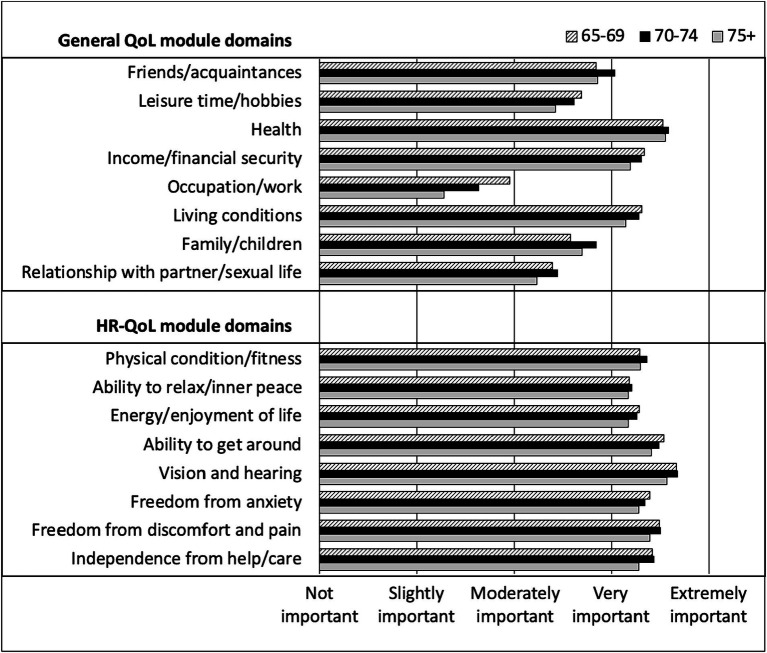
We performed a cross-sectional analysis using data from the Correlates of Healthy Aging in Geriatric HIV (CHANGE HIV) study, a Canadian cohort of people living with HIV age 65 years and older. Study participants completed two QoL modules, the general QoL and health related QoL (HR-QoL).
433 participants were included in the analysis with a median age of 69 years (interquartile range, IQR 67-72). The median number of comorbidities among study participants was 3 (IQR 2-4), with 78% meeting the definition of multimorbidity. General QoL scores (median 66, IQR 58-76) were lower than HR-QoL scores (median 71, IQR 61-83) and were not associated with multimorbidity after adjusting for age, sex, relationship status, household income, exercise, tobacco smoking history, malnutrition, time since HIV diagnosis, and HIV-related stigma. In contrast, multimorbidity was associated with lower HR-QoL (adjusted β = -4.57, 95% CI -8.86, -0.28) after accounting for the same variables. Several social vulnerabilities (not having a partner, low household income), health behaviours (lower engagement in exercise, smoking), and HIV-related factors (HIV stigma, longer time since HIV diagnosis) were also associated with lower QoL.
Overall, our study demonstrated a high burden of multimorbidity among older adults living with HIV in Canada, which has a negative impact on HR-QoL. Interventions aimed at preventing and managing non-AIDS-defining comorbidities should be assessed in people living with HIV to determine whether this can improve their HR-QoL.
接受有效联合抗逆转录病毒治疗的艾滋病毒感染者的预期寿命正在接近普通人群,与年龄相关的非艾滋病定义合并症正变得更令人担忧。为了支持这一人群的健康老龄化,我们着手探讨多重疾病(定义为存在两种或更多种非艾滋病定义合并症)与生活质量(QoL)之间的关联。
我们使用老年艾滋病毒感染者健康老龄化相关性(CHANGE HIV)研究的数据进行了横断面分析,该研究是一个加拿大65岁及以上艾滋病毒感染者队列。研究参与者完成了两个生活质量模块,即总体生活质量和健康相关生活质量(HR-QoL)。
433名参与者纳入分析,中位年龄为69岁(四分位间距,IQR 67-72)。研究参与者的合并症中位数为3(IQR 2-4),78%符合多重疾病的定义。总体生活质量得分(中位数66,IQR 58-76)低于健康相关生活质量得分(中位数71,IQR 61-83),在调整年龄、性别、关系状况、家庭收入、运动、吸烟史、营养不良、自艾滋病毒诊断以来的时间以及与艾滋病毒相关的耻辱感后,总体生活质量得分与多重疾病无关。相比之下,在考虑相同变量后,多重疾病与较低的健康相关生活质量相关(调整后的β=-4.57,95%CI -8.86,-0.28)。一些社会脆弱性(没有伴侣、家庭收入低)、健康行为(运动参与度较低、吸烟)以及与艾滋病毒相关的因素(艾滋病毒耻辱感、自艾滋病毒诊断以来的时间较长)也与较低的生活质量相关。
总体而言,我们的研究表明加拿大老年艾滋病毒感染者中多重疾病负担较高,这对健康相关生活质量有负面影响。应在艾滋病毒感染者中评估旨在预防和管理非艾滋病定义合并症的干预措施,以确定这是否能改善他们的健康相关生活质量。