Instituto da Saúde Coletiva, Universidade Federal da Bahia, Salvador, Bahia, Brasil.
Instituto Gonçalo Moniz, Fundação Oswaldo Cruz, Ministério da Saúde, Salvador, Bahia, Brasil.
PLoS Negl Trop Dis. 2024 May 17;18(5):e0011292. doi: 10.1371/journal.pntd.0011292. eCollection 2024 May.
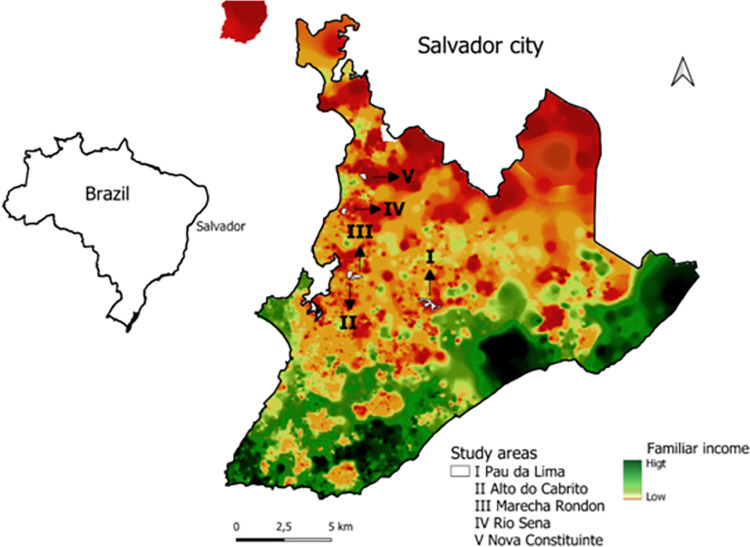
Leptospirosis is a zoonosis caused by pathogenic species of bacteria belonging to the genus Leptospira. Most studies infer the epidemiological patterns of a single serogroup or aggregate all serogroups to estimate overall seropositivity, thus not exploring the risks of exposure to distinct serogroups. The present study aims to delineate the demographic, socioeconomic and environmental factors associated with seropositivity of Leptospira serogroup Icterohaemorraghiae and serogroup Cynopteri in an urban high transmission setting for leptospirosis in Brazil.
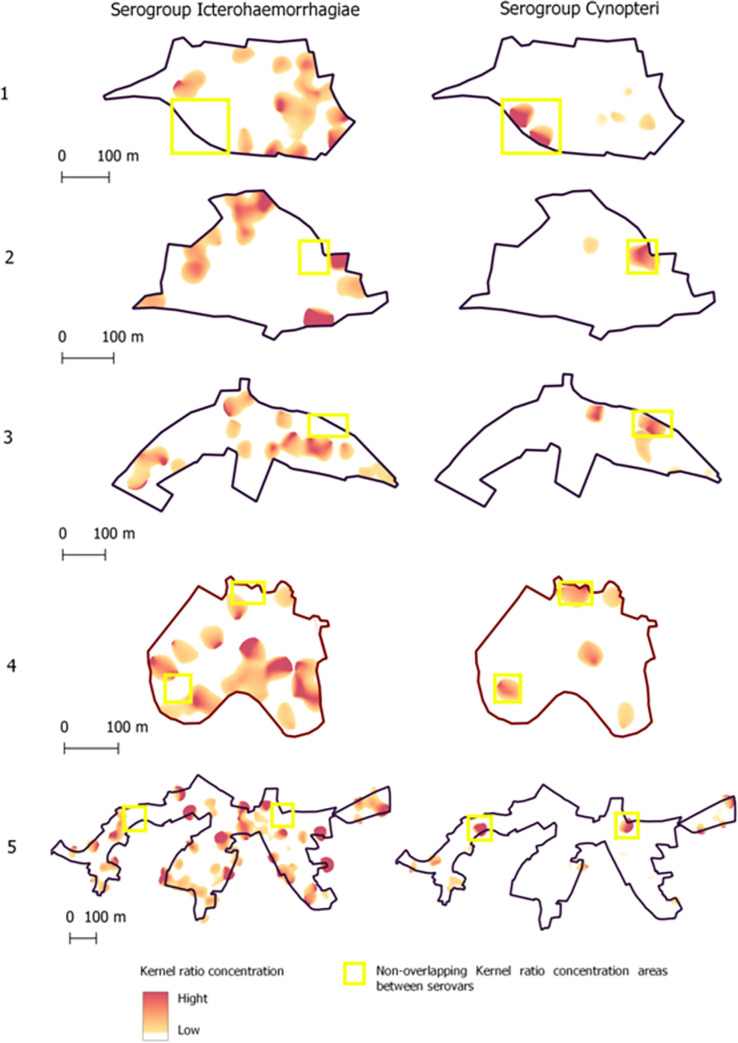
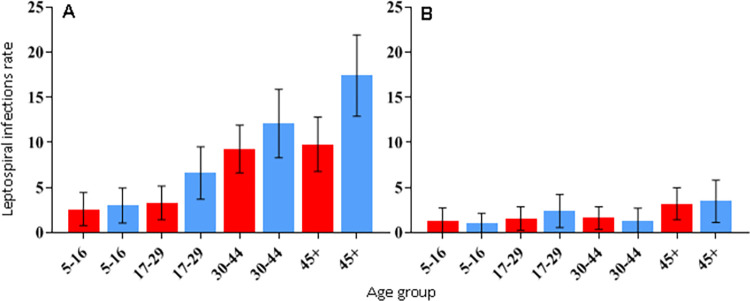
METHODS/PRINCIPAL FINDINGS: We performed a cross-sectional serological study in five informal urban communities in the city of Salvador, Brazil. During the years 2018, 2020 2021, we recruited 2.808 residents and collected blood samples for serological analysis using microagglutination assays. We used a fixed-effect multinomial logistic regression model to identify risk factors associated with seropositivity for each serogroup. Seropositivity to Cynopteri increased with each year of age (OR 1.03; 95% CI 1.01-1.06) and was higher in those living in houses with unplastered walls (exposed brick) (OR 1.68; 95% CI 1.09-2.59) and where cats were present near the household (OR 2.00; 95% CI 1.03-3.88). Seropositivity to Icterohaemorrhagiae also increased with each year of age (OR 1.02; 95% CI 1.01-1.03) and was higher in males (OR 1.51; 95% CI 1.09-2.10), in those with work-related exposures (OR 1.71; 95% CI 1.10-2.66) or who had contact with sewage (OR 1.42; 95% CI 1.00-2.03). Spatial analysis showed differences in distribution of seropositivity to serogroups Icterohaemorrhagiae and Cynopteri within the five districts where study communities were situated.
CONCLUSIONS/SIGNIFICANCE: Our data suggest distinct epidemiological patterns associated with the Icterohaemorrhagiae and Cynopteri serogroups in the urban environment at high risk for leptospirosis and with differences in spatial niches. We emphasize the need for studies that accurately identify the different pathogenic serogroups that circulate and infect residents of low-income areas.
钩端螺旋体病是一种由钩端螺旋体属细菌引起的人畜共患病。大多数研究推断单一血清群的流行病学模式或综合所有血清群来估计总体血清阳性率,因此并未探讨接触不同血清群的风险。本研究旨在描绘巴西一个城市高传播性钩端螺旋体病环境中与血清群 Icterohaemorraghiae 和血清群 Cynopteri 血清阳性相关的人口统计学、社会经济学和环境因素。
方法/主要发现:我们在巴西萨尔瓦多市的五个非正规城市社区进行了横断面血清学研究。在 2018 年、2020 年和 2021 年期间,我们招募了 2808 名居民,并使用微量凝集试验收集血液样本进行血清学分析。我们使用固定效应多项逻辑回归模型来确定与每个血清群血清阳性相关的危险因素。血清群 Cynopteri 的血清阳性率随年龄增长而增加(OR 1.03;95%CI 1.01-1.06),居住在无灰泥墙壁(裸露砖墙)房屋中的人(OR 1.68;95%CI 1.09-2.59)和家中有猫的人(OR 2.00;95%CI 1.03-3.88)血清阳性率更高。血清群 Icterohaemorrhagiae 的血清阳性率也随年龄增长而增加(OR 1.02;95%CI 1.01-1.03),男性(OR 1.51;95%CI 1.09-2.10)、有工作相关暴露(OR 1.71;95%CI 1.10-2.66)或与污水接触的人(OR 1.42;95%CI 1.00-2.03)血清阳性率更高。空间分析显示,在五个研究社区所在的区血清群 Icterohaemorrhagiae 和 Cynopteri 的血清阳性率分布存在差异。
结论/意义:我们的数据表明,在高风险的钩端螺旋体病城市环境中,血清群 Icterohaemorraghiae 和 Cynopteri 与不同的流行病学模式相关,且空间生态位存在差异。我们强调需要研究准确识别循环并感染低收入地区居民的不同致病性血清群。