Department of Rehabilitation Medicine, The First Medical Center of Chinese PLA General Hospital, Beijing, China.
Medical School of Chinese PLA, Beijing, China.
BMC Geriatr. 2024 Jun 4;24(1):491. doi: 10.1186/s12877-024-05064-4.
Early detection of patients at risk of falling is crucial. This study was designed to develop and internally validate a novel risk score to classify patients at risk of falls.
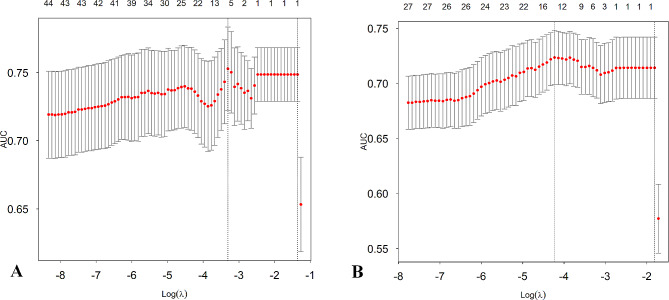
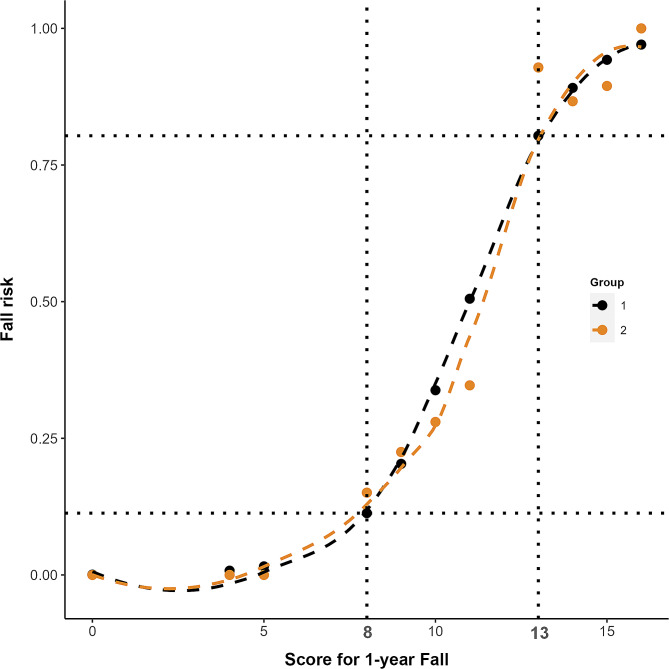
A total of 334 older people from a fall clinic in a medical center were selected. Least absolute shrinkage and selection operator (LASSO) regression was used to minimize the potential concatenation of variables measured from the same patient and the overfitting of variables. A logistic regression model for 1-year fall prediction was developed for the entire dataset using newly identified relevant variables. Model performance was evaluated using the bootstrap method, which included measures of overall predictive performance, discrimination, and calibration. To streamline the assessment process, a scoring system for predicting 1-year fall risk was created.
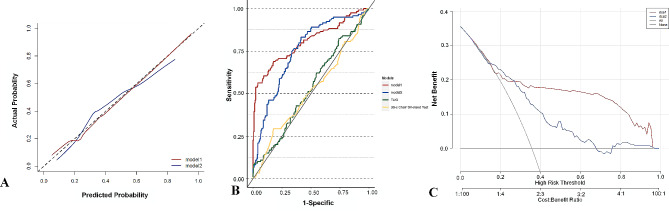
We developed a new model for predicting 1-year falls, which included the FRQ-Q1, FRQ-Q3, and single-leg standing time (left foot). After internal validation, the model showed good discrimination (C statistic, 0.803 [95% CI 0.749-0.857]) and overall accuracy (Brier score, 0.146). Compared to another model that used the total FRQ score instead, the new model showed better continuous net reclassification improvement (NRI) [0.468 (0.314-0.622), P < 0.01], categorical NRI [0.507 (0.291-0.724), P < 0.01; cutoff: 0.200-0.800], and integrated discrimination [0.205 (0.147-0.262), P < 0.01]. The variables in the new model were subsequently incorporated into a risk score. The discriminatory ability of the scoring system was similar (C statistic, 0.809; 95% CI, 0.756-0.861; optimism-corrected C statistic, 0.808) to that of the logistic regression model at internal bootstrap validation.
This study resulted in the development and internal verification of a scoring system to classify 334 patients at risk for falls. The newly developed score demonstrated greater accuracy in predicting falls in elderly people than did the Timed Up and Go test and the 30-Second Chair Sit-Stand test. Additionally, the scale demonstrated superior clinical validity for identifying fall risk.
早期发现有跌倒风险的患者至关重要。本研究旨在开发并内部验证一种新的风险评分系统,以对有跌倒风险的患者进行分类。
从一家医疗中心的跌倒诊所中选择了 334 名老年人。最小绝对收缩和选择算子(LASSO)回归用于最小化从同一患者测量的变量的潜在串联和变量的过度拟合。使用新识别的相关变量为整个数据集开发了 1 年跌倒预测的逻辑回归模型。使用自举方法评估模型性能,该方法包括总体预测性能、区分度和校准度的度量。为简化评估过程,创建了一种预测 1 年跌倒风险的评分系统。
我们开发了一种新的 1 年跌倒预测模型,该模型包括 FRQ-Q1、FRQ-Q3 和单腿站立时间(左脚)。内部验证后,该模型显示出良好的区分度(C 统计量,0.803 [95%CI 0.749-0.857])和整体准确性(Brier 评分,0.146)。与使用总 FRQ 评分的另一个模型相比,新模型显示出更好的连续净重新分类改善(NRI)[0.468(0.314-0.622),P < 0.01]、分类 NRI [0.507(0.291-0.724),P < 0.01;截断值:0.200-0.800]和综合区分度[0.205(0.147-0.262),P < 0.01]。新模型中的变量随后被纳入风险评分中。该评分系统的区分能力与内部自举验证时的逻辑回归模型相似(C 统计量,0.809;95%CI,0.756-0.861;校正后的 C 统计量,0.808)。
本研究开发并内部验证了一种用于对 334 名跌倒风险患者进行分类的评分系统。新开发的评分在预测老年人跌倒方面的准确性高于计时起立行走测试和 30 秒坐站测试。此外,该量表在识别跌倒风险方面具有优越的临床有效性。