• 文献检索
  • 文档翻译
  • 深度研究
  • 学术资讯
  • Suppr Zotero 插件Zotero 插件
  • 邀请有礼
  • 套餐&价格
  • 历史记录
应用&插件
Suppr Zotero 插件Zotero 插件浏览器插件Mac 客户端Windows 客户端微信小程序
定价
高级版会员购买积分包购买API积分包
服务
文献检索文档翻译深度研究API 文档MCP 服务
关于我们
关于 Suppr公司介绍联系我们用户协议隐私条款
关注我们

Suppr 超能文献

核心技术专利:CN118964589B侵权必究
粤ICP备2023148730 号-1Suppr @ 2026

文献检索

告别复杂PubMed语法,用中文像聊天一样搜索,搜遍4000万医学文献。AI智能推荐,让科研检索更轻松。

立即免费搜索

文件翻译

保留排版,准确专业,支持PDF/Word/PPT等文件格式,支持 12+语言互译。

免费翻译文档

深度研究

AI帮你快速写综述,25分钟生成高质量综述,智能提取关键信息,辅助科研写作。

立即免费体验

人工智能在医学教育中的作用:冷却效应和 STARA 意识的调节作用。

AI in medical education: the moderating role of the chilling effect and STARA awareness.

机构信息

School of Public Health, Dalian Medical University, Dalian, China.

Dalian Medical University, Dalian, China.

出版信息

BMC Med Educ. 2024 Jun 7;24(1):644. doi: 10.1186/s12909-024-05627-4.

DOI:10.1186/s12909-024-05627-4
PMID:38849847
原文链接:https://pmc.ncbi.nlm.nih.gov/articles/PMC11162079/
Abstract

BACKGROUND

The rapid growth of artificial intelligence (AI) technologies has been driven by the latest advances in computing power. Although, there exists a dearth of research on the application of AI in medical education.

METHODS

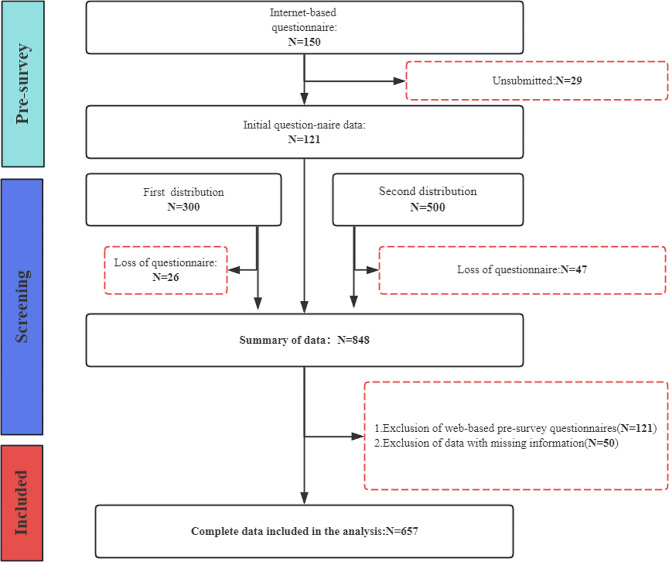
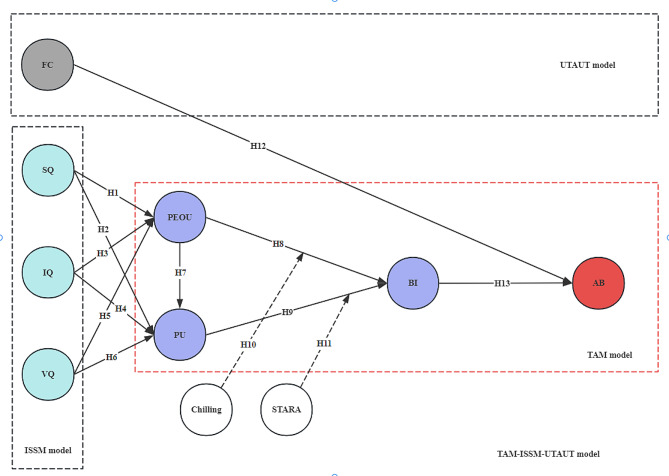
this study is based on the TAM-ISSM-UTAUT model and introduces STARA awareness and chilling effect as moderating variables. A total of 657 valid questionnaires were collected from students of a medical university in Dalian, China, and data were statistically described using SPSS version 26, Amos 3.0 software was used to validate the research model, as well as moderated effects analysis using Process (3.3.1) software, and Origin (2021) software.

RESULTS

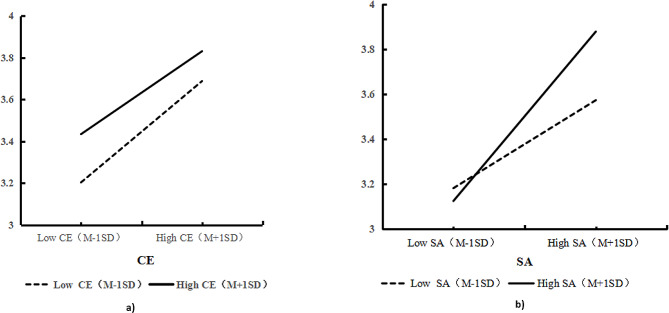
The findings reveal that both information quality and perceived usefulness are pivotal factors that positively influence the willingness to use AI products. It also uncovers the moderating influence of the chilling effect and STARA awareness.

CONCLUSIONS

This suggests that enhancing information quality can be a key strategy to encourage the widespread use of AI products. Furthermore, this investigation offers valuable insights into the intersection of medical education and AI use from the standpoint of medical students. This research may prove to be pertinent in shaping the promotion of Medical Education Intelligence in the future.

摘要

背景

人工智能 (AI) 技术的快速发展得益于计算能力的最新进展。尽管如此,关于人工智能在医学教育中的应用的研究仍然很少。

方法

本研究基于 TAM-ISSM-UTAUT 模型,并引入 STARA 意识和冷却效应作为调节变量。共从中国大连一所医科大学的学生中收集了 657 份有效问卷,并使用 SPSS 版本 26 对数据进行了统计描述,使用 Amos 3.0 软件验证研究模型,以及使用 Process(3.3.1)软件和 Origin(2021)软件进行调节效应分析。

结果

研究结果表明,信息质量和感知有用性都是积极影响人工智能产品使用意愿的关键因素。它还揭示了冷却效应和 STARA 意识的调节作用。

结论

这表明提高信息质量可以成为鼓励广泛使用人工智能产品的关键策略。此外,本研究从医学生的角度探讨了医学教育和人工智能使用的交叉点,为未来医学教育智能的推广提供了有价值的见解。
https://cdn.ncbi.nlm.nih.gov/pmc/blobs/16ce/11162079/21f502489121/12909_2024_5627_Fig6_HTML.jpg
https://cdn.ncbi.nlm.nih.gov/pmc/blobs/16ce/11162079/b2b3e98b4c54/12909_2024_5627_Fig1_HTML.jpg
https://cdn.ncbi.nlm.nih.gov/pmc/blobs/16ce/11162079/ce15e8980b87/12909_2024_5627_Fig2_HTML.jpg
https://cdn.ncbi.nlm.nih.gov/pmc/blobs/16ce/11162079/5704993fd889/12909_2024_5627_Fig3_HTML.jpg
https://cdn.ncbi.nlm.nih.gov/pmc/blobs/16ce/11162079/3e509d703a49/12909_2024_5627_Fig4_HTML.jpg
https://cdn.ncbi.nlm.nih.gov/pmc/blobs/16ce/11162079/887fd683dd1c/12909_2024_5627_Fig5_HTML.jpg
https://cdn.ncbi.nlm.nih.gov/pmc/blobs/16ce/11162079/21f502489121/12909_2024_5627_Fig6_HTML.jpg
https://cdn.ncbi.nlm.nih.gov/pmc/blobs/16ce/11162079/b2b3e98b4c54/12909_2024_5627_Fig1_HTML.jpg
https://cdn.ncbi.nlm.nih.gov/pmc/blobs/16ce/11162079/ce15e8980b87/12909_2024_5627_Fig2_HTML.jpg
https://cdn.ncbi.nlm.nih.gov/pmc/blobs/16ce/11162079/5704993fd889/12909_2024_5627_Fig3_HTML.jpg
https://cdn.ncbi.nlm.nih.gov/pmc/blobs/16ce/11162079/3e509d703a49/12909_2024_5627_Fig4_HTML.jpg
https://cdn.ncbi.nlm.nih.gov/pmc/blobs/16ce/11162079/887fd683dd1c/12909_2024_5627_Fig5_HTML.jpg
https://cdn.ncbi.nlm.nih.gov/pmc/blobs/16ce/11162079/21f502489121/12909_2024_5627_Fig6_HTML.jpg

相似文献

1
AI in medical education: the moderating role of the chilling effect and STARA awareness.人工智能在医学教育中的作用:冷却效应和 STARA 意识的调节作用。
BMC Med Educ. 2024 Jun 7;24(1):644. doi: 10.1186/s12909-024-05627-4.
2
Assessing AI Awareness and Identifying Essential Competencies: Insights From Key Stakeholders in Integrating AI Into Medical Education.评估人工智能意识和确定基本能力:将人工智能融入医学教育的主要利益相关者的见解。
JMIR Med Educ. 2024 Jun 12;10:e58355. doi: 10.2196/58355.
3
Users' continuance intention towards an AI painting application: An extended expectation confirmation model.用户对 AI 绘画应用的持续使用意愿:扩展期望确认模型。
PLoS One. 2024 May 15;19(5):e0301821. doi: 10.1371/journal.pone.0301821. eCollection 2024.
4
Medical students' attitude towards artificial intelligence: a multicentre survey.医学生对人工智能的态度:一项多中心调查。
Eur Radiol. 2019 Apr;29(4):1640-1646. doi: 10.1007/s00330-018-5601-1. Epub 2018 Jul 6.
5
An explanatory study of factors influencing engagement in AI education at the K-12 Level: an extension of the classic TAM model.K-12 阶段人工智能教育参与影响因素的解释性研究:经典 TAM 模型的扩展。
Sci Rep. 2024 Jun 17;14(1):13922. doi: 10.1038/s41598-024-64363-3.
6
Psychosocial Factors Affecting Artificial Intelligence Adoption in Health Care in China: Cross-Sectional Study.影响中国医疗保健领域人工智能采用的社会心理因素:横断面研究
J Med Internet Res. 2019 Oct 17;21(10):e14316. doi: 10.2196/14316.
7
Assessment of Awareness, Perceptions, and Opinions towards Artificial Intelligence among Healthcare Students in Riyadh, Saudi Arabia.沙特阿拉伯利雅得的医疗保健专业学生对人工智能的认知、看法和意见评估。
Medicina (Kaunas). 2023 Apr 24;59(5):828. doi: 10.3390/medicina59050828.
8
Radiography students' perceptions of artificial intelligence in medical imaging.放射医学专业学生对医学影像人工智能的认知。
J Med Imaging Radiat Sci. 2024 Jun;55(2):258-263. doi: 10.1016/j.jmir.2024.02.014. Epub 2024 Feb 24.
9
AI in medical education: medical student perception, curriculum recommendations and design suggestions.人工智能在医学教育中的应用:医学生的认知、课程推荐和设计建议。
BMC Med Educ. 2023 Nov 9;23(1):852. doi: 10.1186/s12909-023-04700-8.
10
AI-Enabled Medical Education: Threads of Change, Promising Futures, and Risky Realities Across Four Potential Future Worlds.人工智能辅助医学教育:四大潜在未来世界中的变革脉络、美好前景和风险现实。
JMIR Med Educ. 2023 Dec 25;9:e50373. doi: 10.2196/50373.

引用本文的文献

1
Status and perceptions of ChatGPT utilization among medical students: a survey-based study.医学生对ChatGPT应用的现状与认知:一项基于调查的研究。
BMC Med Educ. 2025 Jun 4;25(1):831. doi: 10.1186/s12909-025-07438-7.
2
Assessing ChatGPT adoption in Jordanian medical education: a UTAUT model approach.评估约旦医学教育中ChatGPT的采用情况:基于UTAUT模型的方法。
BMC Med Educ. 2025 May 22;25(1):750. doi: 10.1186/s12909-025-07336-y.
3
Exploring the role of moxibustion robots in teaching: a cross-sectional study.探索艾灸机器人在教学中的作用:一项横断面研究。

本文引用的文献

1
Artificial intelligence and medical education: application in classroom instruction and student assessment using a pharmacology & therapeutics case study.人工智能与医学教育:在药理学与治疗学案例研究中的课堂教学及学生评估应用
BMC Med Educ. 2024 Apr 22;24(1):431. doi: 10.1186/s12909-024-05365-7.
2
Integrating ChatGPT in Medical Education: Adapting Curricula to Cultivate Competent Physicians for the AI Era.将ChatGPT整合到医学教育中:调整课程以培养适应人工智能时代的合格医生。
Cureus. 2023 Aug 6;15(8):e43036. doi: 10.7759/cureus.43036. eCollection 2023 Aug.
3
AI and Medical Education - A 21st-Century Pandora's Box.
BMC Med Educ. 2025 Jan 13;25(1):58. doi: 10.1186/s12909-025-06669-y.
4
Acceptance of artificial intelligence in university contexts: A conceptual analysis based on UTAUT2 theory.大学环境中对人工智能的接受度:基于UTAUT2理论的概念分析
Heliyon. 2024 Sep 29;10(19):e38315. doi: 10.1016/j.heliyon.2024.e38315. eCollection 2024 Oct 15.
人工智能与医学教育——一个21世纪的潘多拉魔盒。
N Engl J Med. 2023 Aug 3;389(5):385-387. doi: 10.1056/NEJMp2304993. Epub 2023 Jul 29.
4
Application of Artificial Intelligence in Medical Education: Current Scenario and Future Perspectives.人工智能在医学教育中的应用:现状与未来展望
J Adv Med Educ Prof. 2023 Jul;11(3):133-140. doi: 10.30476/JAMP.2023.98655.1803.
5
"Extending the Technology Acceptance Model (TAM) to Predict University Students' Intentions to Use Metaverse-Based Learning Platforms".扩展技术接受模型(TAM)以预测大学生使用基于元宇宙的学习平台的意愿
Educ Inf Technol (Dordr). 2023 Apr 28:1-33. doi: 10.1007/s10639-023-11816-3.
6
The State of Artificial Intelligence in Nursing Education: Past, Present, and Future Directions.人工智能在护理教育中的应用:过去、现在和未来方向。
Int J Environ Res Public Health. 2023 Mar 10;20(6):4884. doi: 10.3390/ijerph20064884.
7
Acceptance of e-learning in higher education: The role of task-technology fit with the information systems success model.高等教育中对电子学习的接受度:任务-技术匹配与信息系统成功模型的作用。
Heliyon. 2023 Mar;9(3):e13751. doi: 10.1016/j.heliyon.2023.e13751. Epub 2023 Feb 18.
8
The influencing factors of digital health passport adoption and acceptance during COVID-19 in Saudi Arabia.沙特阿拉伯在新冠疫情期间数字健康护照采用与接受的影响因素
Digit Health. 2022 Dec 4;8:20552076221142668. doi: 10.1177/20552076221142668. eCollection 2022 Jan-Dec.
9
Dear Medical Students - Artificial Intelligence is Not Taking Away a Radiologist's Job.致医学生——人工智能不会抢走放射科医生的饭碗。
Curr Probl Diagn Radiol. 2023 Jan-Feb;52(1):1-5. doi: 10.1067/j.cpradiol.2022.08.001. Epub 2022 Aug 24.
10
Exploring Factors of the Willingness to Accept AI-Assisted Learning Environments: An Empirical Investigation Based on the UTAUT Model and Perceived Risk Theory.探索接受人工智能辅助学习环境意愿的影响因素:基于UTAUT模型和感知风险理论的实证研究
Front Psychol. 2022 Jun 24;13:870777. doi: 10.3389/fpsyg.2022.870777. eCollection 2022.