Khojah Hanan, Ahmed Shaima R, Alharbi Shahad Y, AlSabeelah Kholood K, Alrayyes Hatham Y, Almusayyab Kadi B, Alrawiliy Shahad R, Alshammari Raghad M, Qasim Sumera
Department of Pharmacognosy, College of Pharmacy, Jouf University, Sakaka 72341, Saudi Arabia.
Department of Pharmacology, College of Pharmacy, Jouf University, Sakaka 72341, Saudi Arabia.
Saudi Pharm J. 2024 Jul;32(7):102107. doi: 10.1016/j.jsps.2024.102107. Epub 2024 May 25.
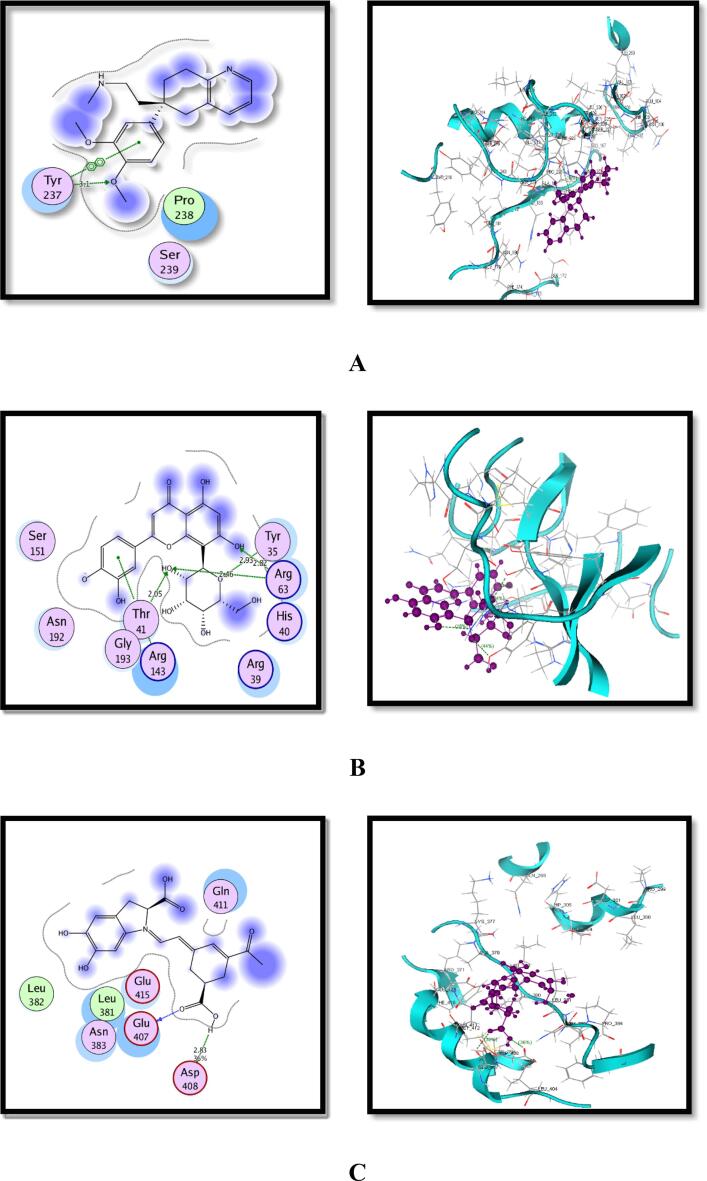
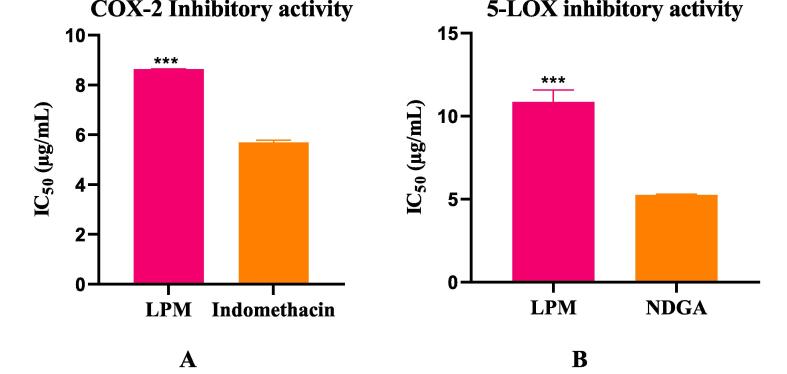
Aging is a natural process that occurs in all living organisms. Particularly, the skin embodies aging since it serves as a barrier between the body and its surroundings. Previously, we reported the wound healing effect of and identified compounds therein. The study aims to explore the skin anti-aging properties of the plant extract. To that effect, the antioxidant potential of methanolic extract (LPM) was assessed using two complementary DPPH and FRAP assays. The enzyme inhibitory effect of the extract on collagenase, elastase, hyaluronidase, and tyrosinase was evaluated to assess the direct skin anti-aging effects. Similarly, the anti-inflammatory activity was evaluated to explore the indirect anti-aging effects via the assessment of extract inhibitory effects on cyclooxygenase-2 (COX-2) and 5-lipoxygenase (5-LOX). In addition, ADMET and molecular docking studies were performed to explore the interaction mechanisms of identified compounds in LPM with target enzymes. LPM demonstrated significant antioxidant activity in DPPH (IC = 29.08 µg/mL) and FRAP (1214.67 µM FeSO4/g extract) assays. Plant extract showed significant inhibition of collagenase, elastase, hyaluronidase, and tyrosinase (IC = 52.68, 43.76, 31.031, and 37.13 µg/mL, respectively). The extract demonstrated significant COX-2 and 5-LOX inhibition capacity with IC values of 8.635 and 10.851 µg/mL, respectively. The molecular docking study revealed the high potential of the identified compounds to bind to the active sites of enzymes crucially involved in the skin aging process. ADMET analysis of the compounds revealed their good absorption, distribution, and metabolism profiles, and they were found to be safe as well. Study findings suggest as a promising source for the development of natural skin anti-aging and antioxidant compounds. This, in turn, may facilitate its incorporation into cosmetic formulations after further investigation.
衰老 是 所有 生物体 都会 发生 的 自然 过程 。 特别 是 , 皮肤 体现 了 衰老 , 因为 它 是 身体 与其 周围 环境 之间 的 屏障 。 此前 , 我们 报道 了 [具体内容未提及] 的 伤口 愈合 效果 并 鉴定 了 其中 的 化合物 。 该 研究 旨在 探索 植物 提取物 的 皮肤 抗 衰老 特性 。 为此 , 使用 两种 互补 的 DPPH 和 FRAP 测定 法 评估 了 [具体植物名称未提及] 甲醇 提取物 (LPM) 的 抗氧化 潜力 。 评估 了 提取物 对 胶原酶 、 弹性蛋白酶 、 透明质酸酶 和 酪氨酸酶 的 酶 抑制 作用 , 以 评估 其 直接 的 皮肤 抗 衰老 效果 。 同样 , 通过 评估 提取物 对 环氧化酶 -2 (COX-2) 和 5- 脂氧合酶 (5-LOX) 的 抑制 作用 来 评估 其 抗炎 活性 , 以 探索 间接 的 抗 衰老 效果 。 此外 , 进行 了 ADMET 和 分子 对接 研究 以 探索 LPM 中 鉴定 的 化合物 与 靶 酶 的 相互作用 机制 。 LPM 在 DPPH (IC = 29.08 µg/mL) 和 FRAP (1214.67 µM FeSO4/g 提取物 ) 测定 中 表现 出 显著 的 抗氧化 活性 。 植物 提取物 对 胶原酶 、 弹性蛋白酶 、 透明质酸酶 和 酪氨酸酶 表现 出 显著 的 抑制 作用 (IC 分别 为 52.68 、 43.76 、 31.031 和 37.13 µg/mL) 。 提取物 对 COX-2 和 5-LOX 表现 出 显著 的 抑制 能力 , IC 值 分别 为 8.635 和 10.851 µg/mL 。 分子 对接 研究 揭示 了 鉴定 的 化合物 与 皮肤 衰老 过程 中 关键 涉及 的 酶 的 活性 位点 结合 的 高 潜力 。 对 化合物 的 ADMET 分析 揭示 了 它们 良好 的 吸收 、 分布 和 代谢 特征 , 并且 发现 它们 也是 安全 的 。 研究 结果 表明 [具体植物名称未提及] 是 开发 天然 皮肤 抗 衰老 和 抗氧化 化合物 的 有 前景 的 来源 。 这 反过来 可能 有助于 在 进一步 研究 后 将 其 添加 到 化妆品 配方 中 。
最后一句中“探索LPM中鉴定的化合物与靶酶的相互作用机制”原文为“explore the interaction mechanisms of identified compounds in LPM with target enzymes”,根据中文表达习惯调整了语序