Aromalab, illycaffè S.p.A., Area Science Park, Località Padriciano 99, 34149 Trieste, Italy.
Department of Chemical and Pharmaceutical Sciences, University of Trieste, Via Giorgieri 1, 34127 Trieste, Italy.
Int J Mol Sci. 2024 May 31;25(11):6096. doi: 10.3390/ijms25116096.
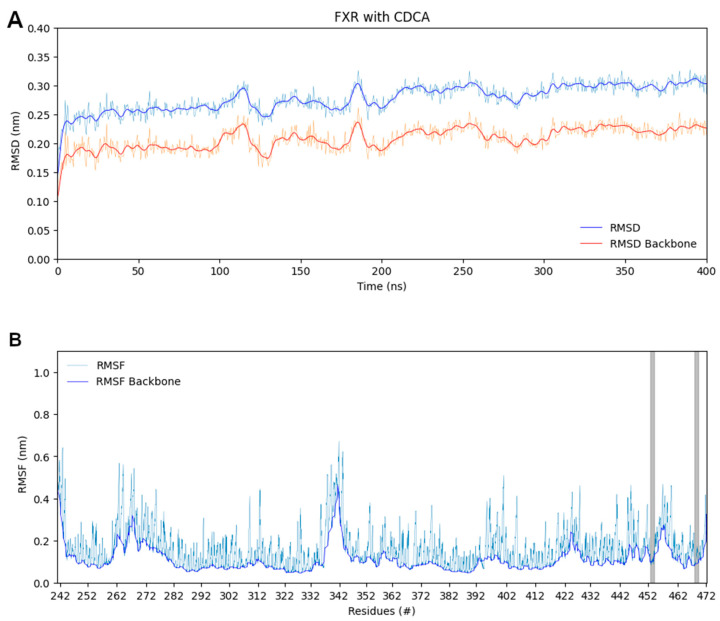
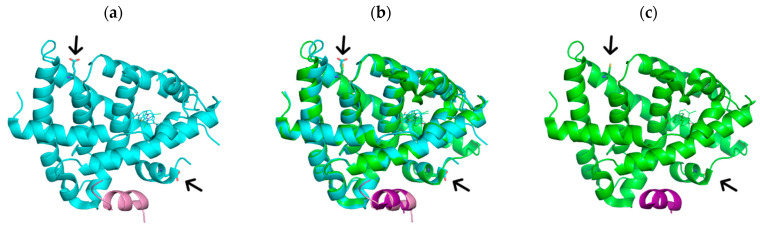
The diterpene cafestol represents the most potent cholesterol-elevating compound known in the human diet, being responsible for more than 80% of the effect of coffee on serum lipids, with a mechanism still not fully clarified. In the present study, the interaction of cafestol and 16--methylcafestol with the stabilized ligand-binding domain (LBD) of the Farnesoid X Receptor was evaluated by fluorescence and circular dichroism. Fluorescence quenching was observed with both cafestol and 16--methylcafestol due to an interaction occurring in the close environment of the tryptophan W454 residue of the protein, as confirmed by docking and molecular dynamics. A conformational change of the protein was also observed by circular dichroism, particularly for cafestol. These results provide evidence at the molecular level of the interactions of FXR with the coffee diterpenes, confirming that cafestol can act as an agonist of FXR, causing an enhancement of the cholesterol level in blood serum.
咖啡醇是一种二萜类化合物,是人类饮食中已知的最强胆固醇升高物质,对血清脂质的影响超过 80%,其作用机制尚未完全阐明。在本研究中,通过荧光和圆二色性评估了咖啡醇和 16--甲基咖啡醇与法尼醇 X 受体(FXR)稳定配体结合域(LBD)的相互作用。由于与蛋白质的色氨酸 W454 残基在近环境中发生相互作用,观察到咖啡醇和 16--甲基咖啡醇的荧光猝灭,这一点通过对接和分子动力学得到了证实。圆二色性也观察到了蛋白质构象的变化,特别是对咖啡醇。这些结果从分子水平上提供了 FXR 与咖啡二萜相互作用的证据,证实咖啡醇可以作为 FXR 的激动剂,导致血清胆固醇水平升高。