Musquez Morgan, Rasmussen Erin B
Psychology Department, Idaho State University, 921 South 8th Avenue, Pocatello, ID 83209 USA.
Perspect Behav Sci. 2024 Jul 2;47(2):393-416. doi: 10.1007/s40614-024-00409-1. eCollection 2024 Jun.
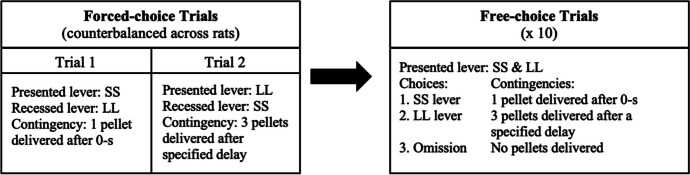
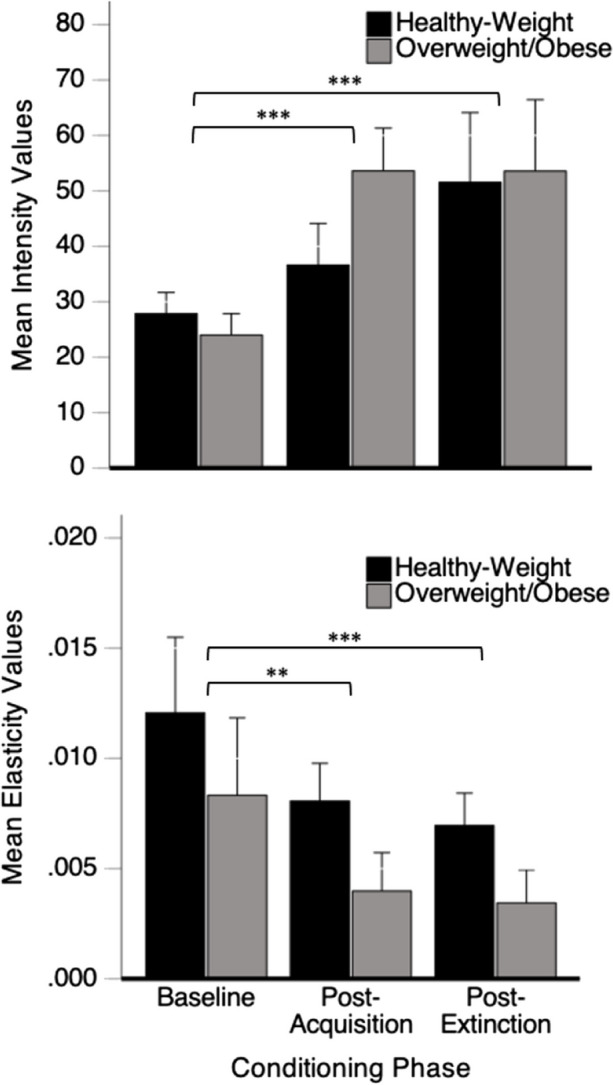
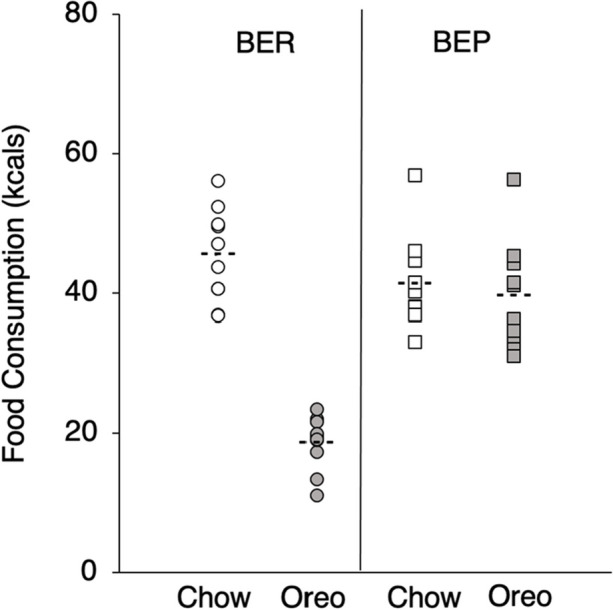
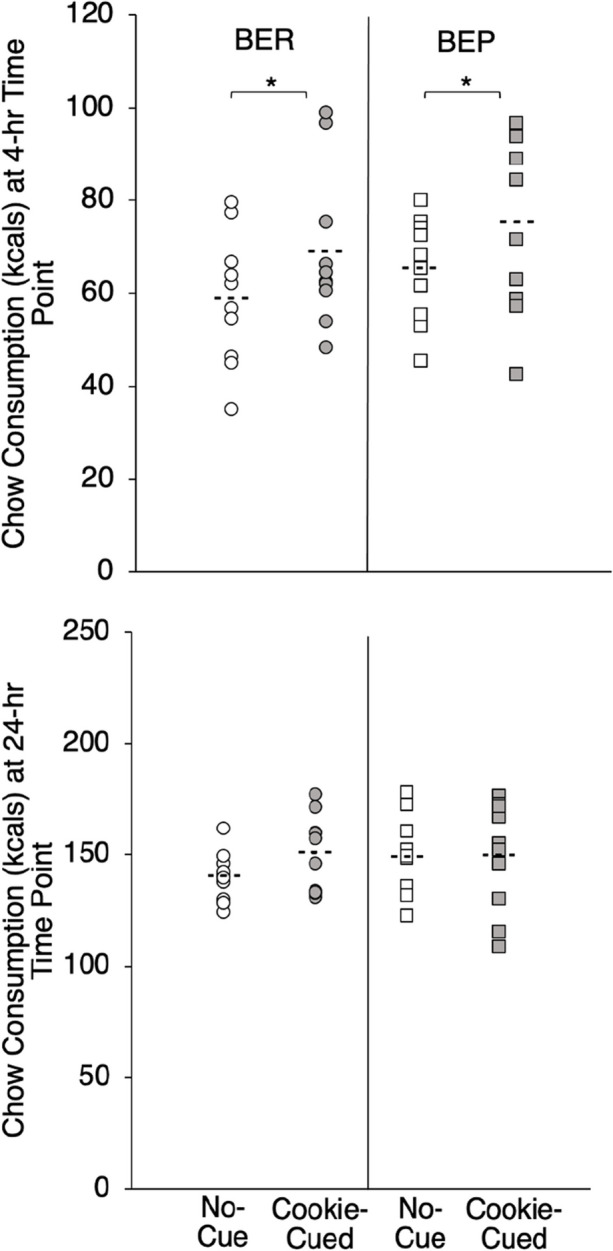
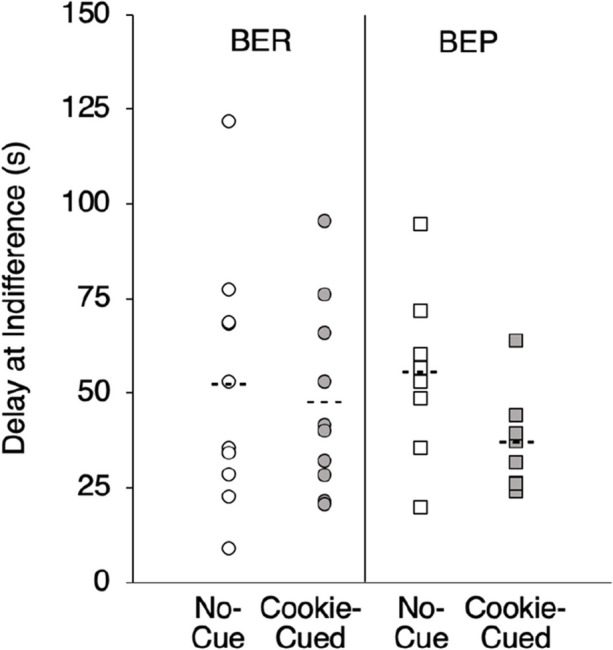
Food cue reactivity, or behavioral sensitivity to conditioned food cues, is an eating pattern observed in those with obesity and binge-eating disorder. The reinforcer pathology model, which characterizes overconsumption of a reinforcer such as food may be relevant to food cue reactivity, especially in those with obesity and binge-eating disorder. The reinforcer pathology model posits that steep delay discounting (DD) and demand elasticity are processes involved in the overconsumption of food. Two of our recent studies examine the extent to which reactivity to conditioned food cues may be involved in food reinforcer pathologies. First, food cues were conditioned with Oreo cookies with binge-eating prone (BEP) and binge-eating resistant (BER) rats. Delay discounting was compared before and after conditioning. Food cues induced steeper DD for rats, though BEP rats showed some evidence for greater sensitivity to this effect than BER rats, albeit this difference was not significant. Second, healthy-weight humans and humans with overweight/obese BMI underwent conditioning of visual cues paired with M&M candies. After acquisition, cues induced greater demand intensity and inelasticity for food compared to baseline. Participants with overweight/obese BMI, compared to controls, also showed some evidence for greater sensitivity to this change ininelasticity compared to healthy-weight participants, but this difference was also not significant. Food cues, then, may induce changes in DD and economic demand, supporting the relevance of reinforcer pathologies.
食物线索反应性,即对条件性食物线索的行为敏感性,是在肥胖症和暴饮暴食症患者中观察到的一种饮食模式。强化物病理模型描述了对食物等强化物的过度消费,可能与食物线索反应性相关,尤其是在肥胖症和暴饮暴食症患者中。强化物病理模型认为,陡峭的延迟折扣(DD)和需求弹性是食物过度消费所涉及的过程。我们最近的两项研究考察了对条件性食物线索的反应性在多大程度上可能与食物强化物病理有关。首先,用奥利奥饼干对有暴饮暴食倾向(BEP)和抗暴饮暴食(BER)的大鼠进行食物线索条件化。比较了条件化前后的延迟折扣。食物线索使大鼠的延迟折扣更陡峭,尽管BEP大鼠比BER大鼠对这种效应表现出更高的敏感性,但这种差异并不显著。其次,对体重正常的人和体重超重/肥胖的人进行与M&M's巧克力豆配对的视觉线索条件化。习得后,线索与基线相比,对食物产生了更高的需求强度和非弹性。与对照组相比,体重超重/肥胖的参与者与体重正常的参与者相比,对这种非弹性变化也表现出更高的敏感性,但这种差异也不显著。因此,食物线索可能会引起延迟折扣和经济需求的变化,支持强化物病理的相关性。