Zhou Yun, Gao Yueyang, Yao Nannan, Lu Guozhi, Dong Chuyu, Wang Kexin, Zhang Junfeng, Sun Jing, Li Ke, Li Xueping
College of Clinical Medicine, Xi'an Medical University, Xi'an, China.
The Second College of Clinical Medicine, Xi'an Medical University, Xi'an, China.
Front Bioeng Biotechnol. 2024 Jul 22;12:1439883. doi: 10.3389/fbioe.2024.1439883. eCollection 2024.
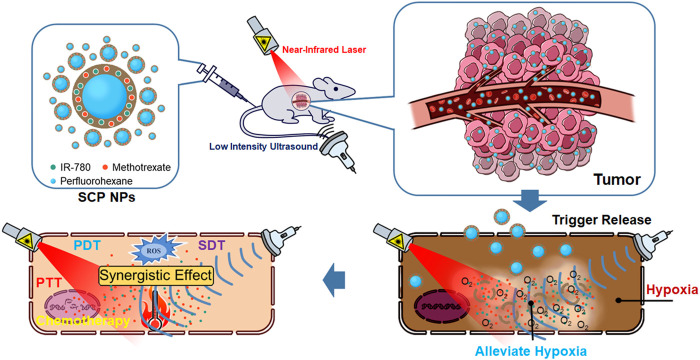
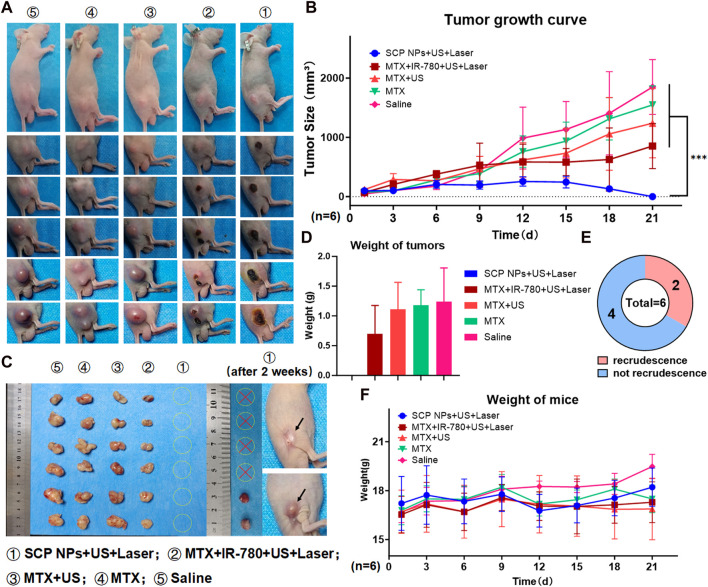
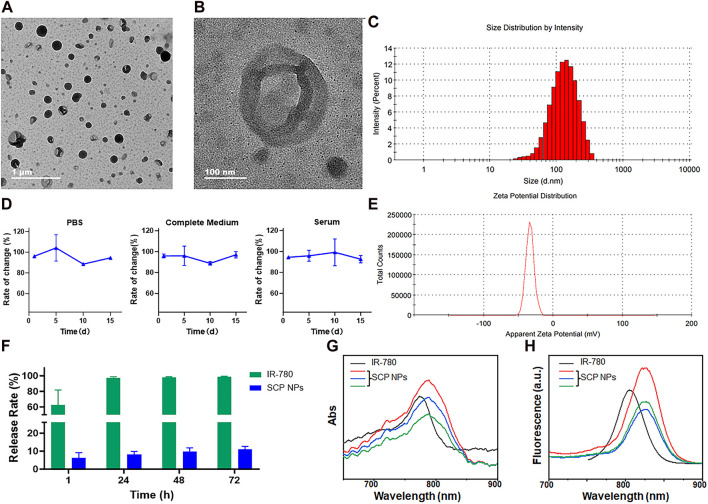
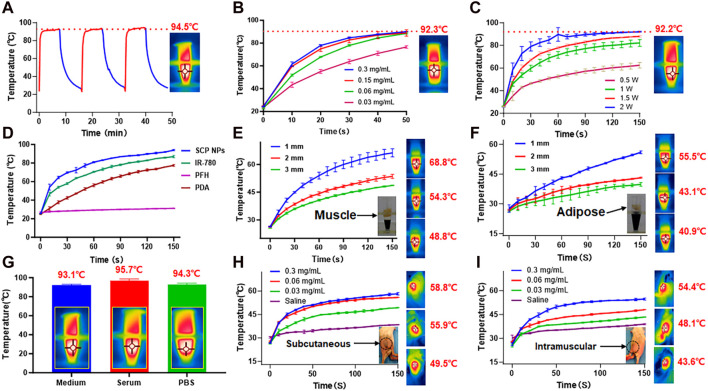
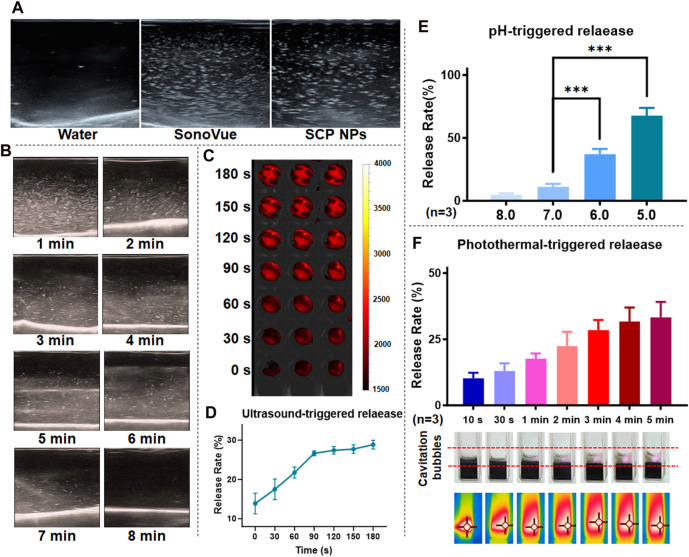
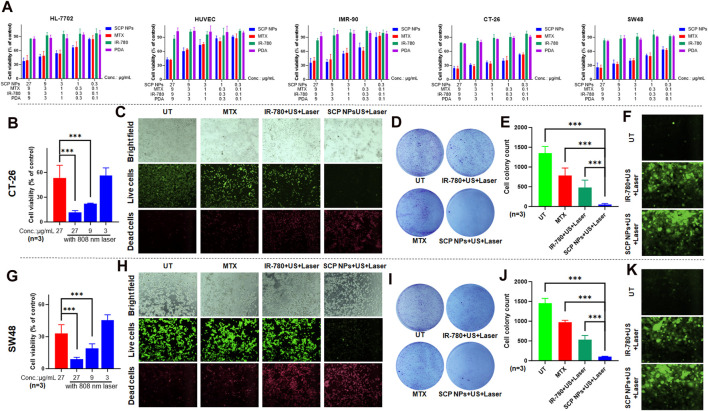
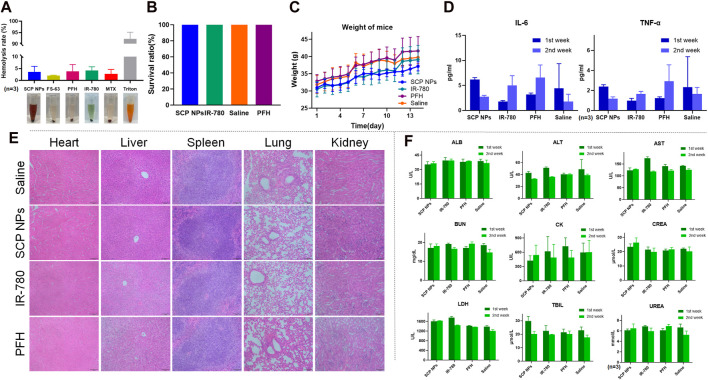
Most colon cancer patients are diagnosed at an advanced stage, with a grim prognosis. In clinical, various combination therapies have been employed to enhance the efficacy of colon cancer treatment. The essence of combined treatment is the judicious selection and combination of various treatment units. Phototherapy (PT), sonodynamic therapy (SDT), and chemotherapy are treatment modalities that rely on the active molecules to treat tumors, and have been demonstrated to synergistically enhance tumor treatment efficacy. However, the differences in the metabolism of active molecules and hypoxic microenvironment of tumors have limited the synergistic effects of the aforementioned methods. To address this significant issue, in this study, we utilized polydopamine (PDA) as the encapsulated material to form a rigid shell that contains the therapeutic molecules IR-780 and methotrexate (MTX) on the surface of perfluorohexane (PFH) microdroplets through self-assembling method to develop an SDT/chemotherapy/PT combined nanoparticles (SCP NPs). Transmission electron microscopy (TEM) revealed that the nanoparticles exhibited a hollow shell structure, with an average size of approximately 100 nm. SCP NPs have excellent stability and biocompatibility in both and . The absorption and emission spectrum of the loaded IR-780 did not exhibit any significant shift, and the photothermal temperature rose to 92°C. Their ultrasonic cavitation effect was good and their cell inhibitory effect of MTX was maintained. SCP NPs can achieve multi-modal triggered release through ultrasound, laser irradiation, and pH, ensuring a simultaneous accumulation of therapeutic molecules in the tumor area and effectively alleviating tumor hypoxia. Additionally, both the near-infrared fluorescence (NIF) signal and the ultrasonic cavitation signal of the nanoparticles can be utilized for tracking and monitoring treatment efficacy. Most notably, SCP NPs exhibited outstanding synergistic treatment effects at low intervention levels, resulting in a 67% cure rate of tumors. These results provide an experimental basis for developing the new clinical treatments for colon cancer.
大多数结肠癌患者在晚期被诊断出来,预后严峻。在临床上,已采用各种联合疗法来提高结肠癌治疗的疗效。联合治疗的本质是对各种治疗单元进行明智的选择和组合。光疗(PT)、声动力疗法(SDT)和化疗是依靠活性分子来治疗肿瘤的治疗方式,并且已被证明可协同提高肿瘤治疗疗效。然而,活性分子的代谢差异和肿瘤的缺氧微环境限制了上述方法的协同作用。为了解决这一重要问题,在本研究中,我们利用聚多巴胺(PDA)作为包封材料,通过自组装方法在全氟己烷(PFH)微滴表面形成一个含有治疗分子IR-780和甲氨蝶呤(MTX)的刚性壳,以开发一种SDT/化疗/PT联合纳米颗粒(SCP NPs)。透射电子显微镜(TEM)显示,纳米颗粒呈现空心壳结构,平均尺寸约为100纳米。SCP NPs在[具体环境1]和[具体环境2]中均具有出色的稳定性和生物相容性。负载的IR-780的吸收和发射光谱没有出现任何显著偏移,光热温度升至92°C。它们的超声空化效果良好,MTX的细胞抑制作用得以维持。SCP NPs可通过超声、激光照射和pH实现多模态触发释放,确保治疗分子在肿瘤区域同时积累,并有效缓解肿瘤缺氧。此外,纳米颗粒的近红外荧光(NIF)信号和超声空化信号均可用于跟踪和监测治疗效果。最值得注意的是,SCP NPs在低干预水平下表现出出色的协同治疗效果,肿瘤治愈率达67%。这些结果为开发结肠癌的新型临床治疗方法提供了实验依据。