Zuo Ya-Feng, Liu Xin-Qiu, Meng Xiang-Song, Wang Meng-Hu, Tang Jian, Hu Ting-Ting, Wang Wen-Jian, Zhang Wei, Wu De-Ling
School of Chinese Medicine, Bozhou University, Bozhou 236800, China.
Key Laboratory of Chinese Medicine Materials Research of Anhui Higher Education Institutes, Bozhou University, Bozhou 236800, China.
Heliyon. 2024 Jul 23;10(15):e35095. doi: 10.1016/j.heliyon.2024.e35095. eCollection 2024 Aug 15.
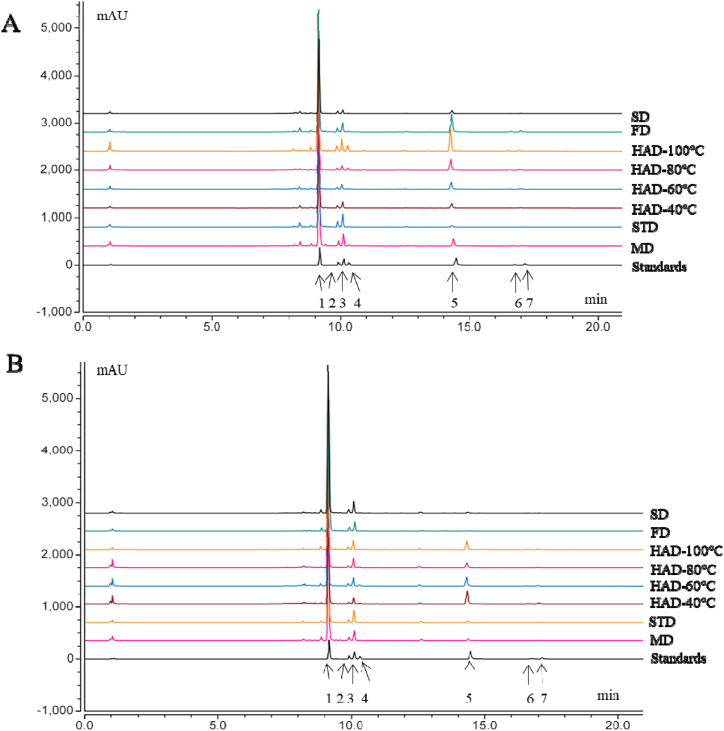
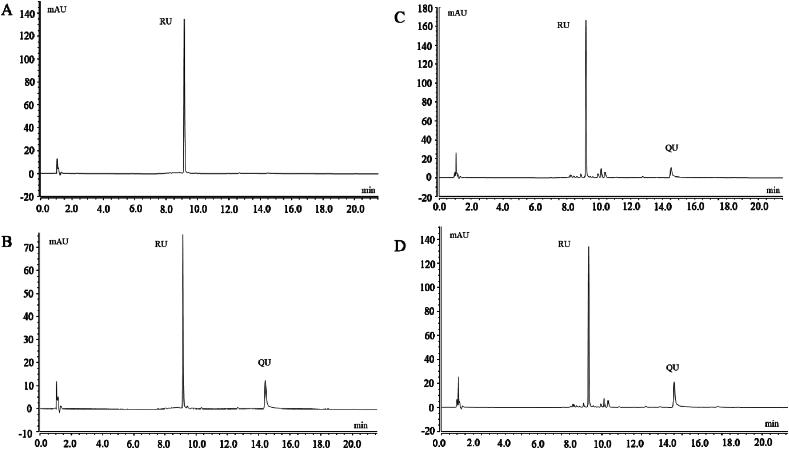
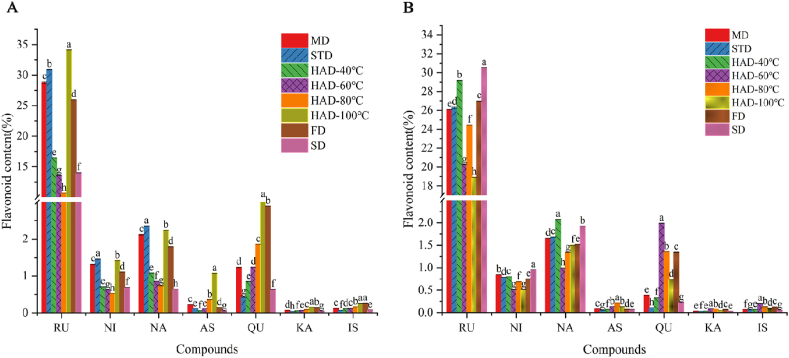
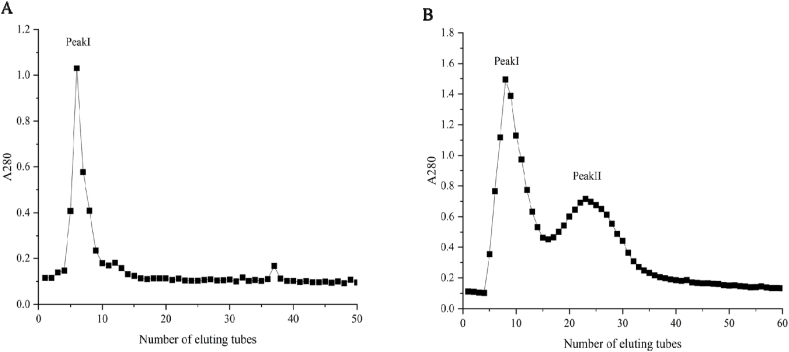
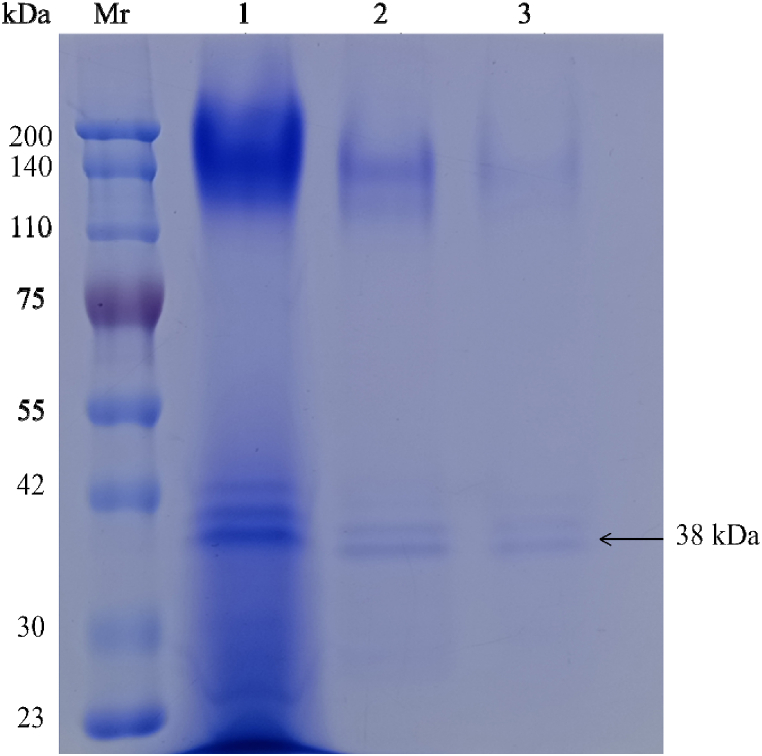
Traditionally, fresh flowers (SJF) and flowers buds (SJFB) are dried prior to further processing and use. Here, we investigated the ways in which drying techniques, including sun drying (SD), steam drying (STD), microwave drying (MD), hot air drying (HAD, 40 °C, 60 °C, 80 °C, 100 °C), and freeze drying (FD), alter the flavonoid composition of freshly-harvested SJF and SJFB. The flavonoid content of dried samples was determined by Ultra High Performance Liquid Chromatography-Diode Array Detector (UPLC-DAD). Overall, different drying techniques had significantly different effects on the RU content, ranging from 10.63 % (HAD-80 °C) to 34.13 % (HAD-100 °C) in SJF and from 18.91 % (HAD-100 °C) to 29.16 % (HAD-40 °C) and 30.53 % (SD) in SJFB. To clarify the mechanism by which drying affects the RU content of flowers, we studied the activity of a rutin-hydrolyzing enzyme (RHE) isolated from SJF and SJFB using multiple separation and assay methods. According to the Sodium Dodecyl Sulfate-Polyacrylamide Gel Electrophoresis (SDS-PAGE) results, the apparent molecular weight of the purified RHE was approximately 38 kDa. According to UPLC-DAD, RHE catalyzes the production of quercetin (QU) from rutin (RU), but not from other flavonoid glycosides. Drying fresh SJF and SJFB at low and high temperatures can inhibit RHE activity and prevent RU hydrolysis. Therefore, subjecting freshly-harvest SJF to HAD-100 °C, and freshly-harvest SJFB to SD or HAD-40 °C, can greatly increase the RU content. In particular, HAD is viable for large-scale application due to its simplicity and industrial feasibility.
传统上,鲜花(SJF)和花蕾(SJFB)在进一步加工和使用之前需进行干燥处理。在此,我们研究了包括晒干(SD)、蒸汽干燥(STD)、微波干燥(MD)、热风干燥(HAD,40℃、60℃、80℃、100℃)和冷冻干燥(FD)在内的干燥技术对刚采收的SJF和SJFB中黄酮类化合物组成的影响。干燥样品中的黄酮类化合物含量通过超高效液相色谱 - 二极管阵列检测器(UPLC - DAD)测定。总体而言,不同干燥技术对芦丁(RU)含量有显著不同的影响,在SJF中,RU含量范围为10.63%(80℃热风干燥)至34.13%(100℃热风干燥);在SJFB中,RU含量范围为18.91%(100℃热风干燥)至29.16%(40℃热风干燥)以及30.53%(晒干)。为阐明干燥影响花中RU含量的机制,我们使用多种分离和测定方法研究了从SJF和SJFB中分离出的芦丁水解酶(RHE)的活性。根据十二烷基硫酸钠 - 聚丙烯酰胺凝胶电泳(SDS - PAGE)结果,纯化后的RHE的表观分子量约为38 kDa。根据UPLC - DAD分析,RHE催化芦丁(RU)生成槲皮素(QU),但不催化其他黄酮糖苷生成QU。低温和高温干燥新鲜的SJF和SJFB可抑制RHE活性并防止RU水解。因此,将刚采收的SJF进行100℃热风干燥,将刚采收的SJFB进行晒干或40℃热风干燥,可大幅提高RU含量。特别是,热风干燥因其简单性和工业可行性而适用于大规模应用。