Aziz Tarique, Niraj Mukesh K, Kumar Shishir, Kumar Rajendra, Parveen Hina
Biochemistry, Rajendra Institute of Medical Sciences, Ranchi, IND.
Physiology, Rajendra Institute of Medical Sciences, Ranchi, IND.
Cureus. 2024 Aug 28;16(8):e68002. doi: 10.7759/cureus.68002. eCollection 2024 Aug.
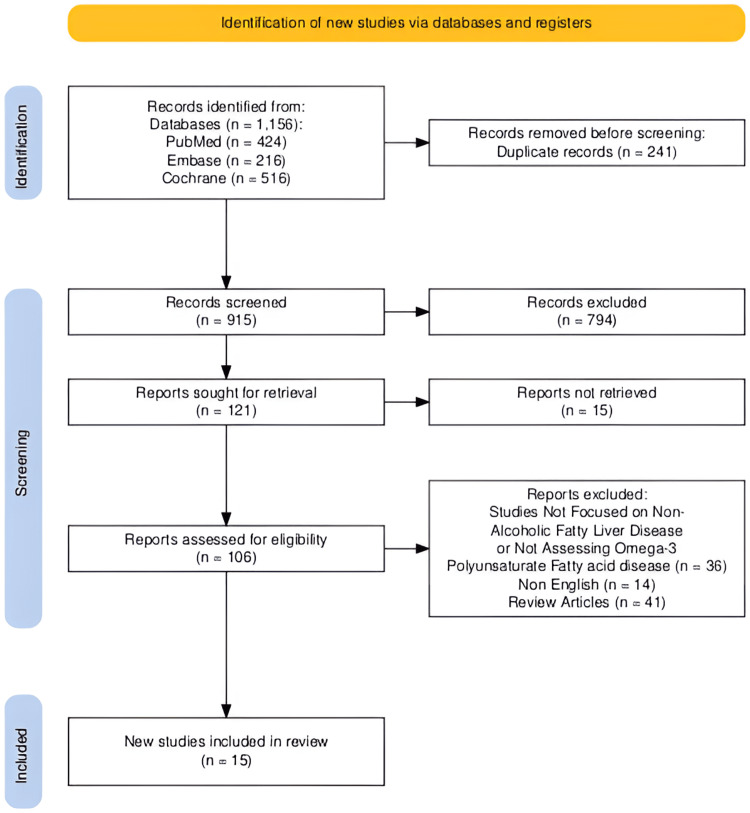
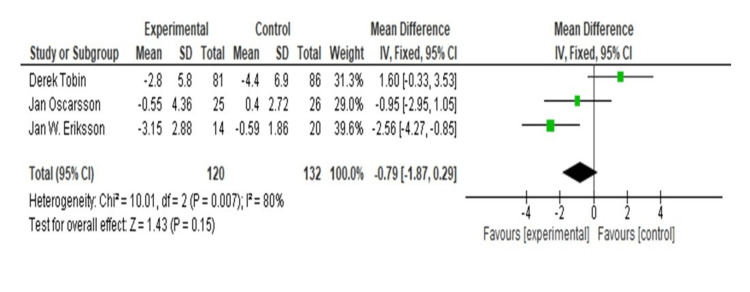
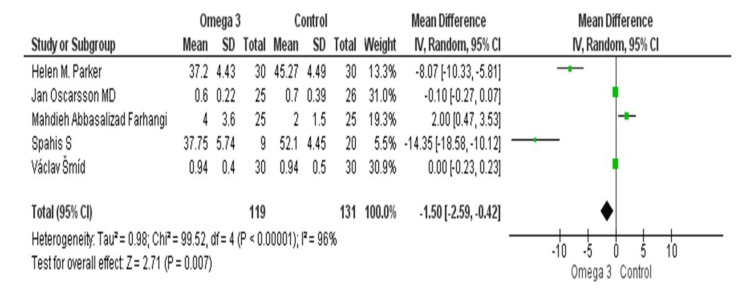
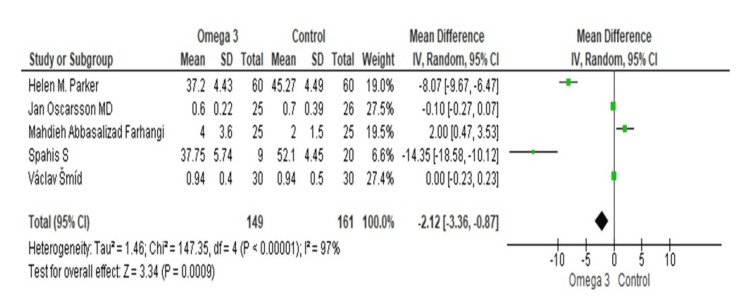
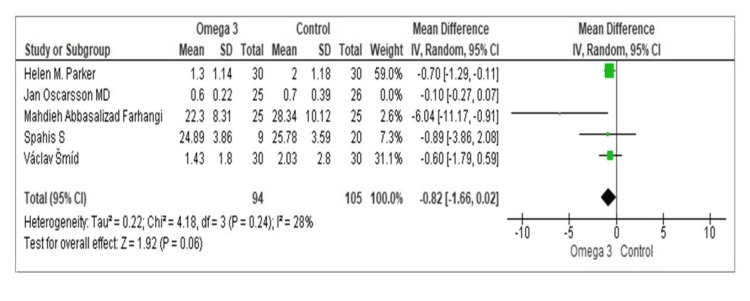
Non-alcoholic fatty liver disease (NAFLD) is a prevalent liver disorder characterized by excessive hepatic fat accumulation without alcohol intake. It can progress to non-alcoholic steatohepatitis, increasing the risk of cirrhosis and liver failure. This study aims to evaluate the efficacy of omega-3 polyunsaturated fatty acids (n-3 PUFAs) in treating NAFLD. A systematic review and meta-analysis was conducted including studies published from January 2018 to June 2023. Databases searched included PubMed, Embase, Cochrane Library, and ClinicalTrials.gov. Inclusion criteria comprised randomized controlled trials and cohort studies involving human subjects or animal models with NAFLD. Data were extracted and analyzed to assess the impact of omega-3 PUFAs on liver fat, hepatic enzymes, and serum lipid profiles using RevMan 5.4. A total of 15 studies met the inclusion criteria. Omega-3 supplementation significantly decreased alanine aminotransferase (ALT) (mean difference = -2.12, 95% confidence interval (CI) = -3.36, -0.87) and aspartate aminotransferase (AST) (mean difference = -1.50, 95% CI = -2.59, -0.42). Gamma-glutamyl transferase levels showed a trend toward reduction (mean difference = -0.82, 95% CI = -1.66, 0.02). Serum lipid profiles improved significantly with reductions in triglycerides, low-density lipoprotein, and total cholesterol along with significant reductions in AST, ALT, and alkaline phosphatase in animal models. Omega-3 PUFAs appear to offer beneficial effects on liver enzymes, serum lipid profiles, and anthropometric indices in NAFLD patients. While their impact on liver fat content remains uncertain, omega-3 supplementation could serve as a valuable adjunct treatment for enhancing metabolic profiles and liver function in NAFLD patients.
非酒精性脂肪性肝病(NAFLD)是一种常见的肝脏疾病,其特征是在无酒精摄入的情况下肝脏脂肪过度堆积。它可进展为非酒精性脂肪性肝炎,增加肝硬化和肝衰竭的风险。本研究旨在评估ω-3多不饱和脂肪酸(n-3 PUFAs)治疗NAFLD的疗效。进行了一项系统评价和荟萃分析,纳入了2018年1月至2023年6月发表的研究。检索的数据库包括PubMed、Embase、Cochrane图书馆和ClinicalTrials.gov。纳入标准包括涉及人类受试者或NAFLD动物模型的随机对照试验和队列研究。使用RevMan 5.4提取和分析数据,以评估ω-3多不饱和脂肪酸对肝脏脂肪、肝酶和血脂谱的影响。共有15项研究符合纳入标准。补充ω-3显著降低了丙氨酸氨基转移酶(ALT)(平均差异=-2.12,95%置信区间(CI)=-3.36,-0.87)和天冬氨酸氨基转移酶(AST)(平均差异=-1.50,95%CI=-2.59,-0.42)。γ-谷氨酰转移酶水平呈下降趋势(平均差异=-0.82,95%CI=-1.66,0.02)。动物模型中的血脂谱显著改善,甘油三酯、低密度脂蛋白和总胆固醇降低,同时AST、ALT和碱性磷酸酶也显著降低。ω-3多不饱和脂肪酸似乎对NAFLD患者的肝酶、血脂谱和人体测量指标有有益影响。虽然它们对肝脏脂肪含量的影响仍不确定,但补充ω-3可作为一种有价值的辅助治疗方法,用于改善NAFLD患者的代谢状况和肝功能。