Department of Agricultural Microbiology, Faculty of Agriculture, Ain Shams University, Hadayek Shoubra, PO Box 68, Cairo, 11241, Egypt.
Sci Rep. 2024 Oct 9;14(1):23615. doi: 10.1038/s41598-024-72598-3.
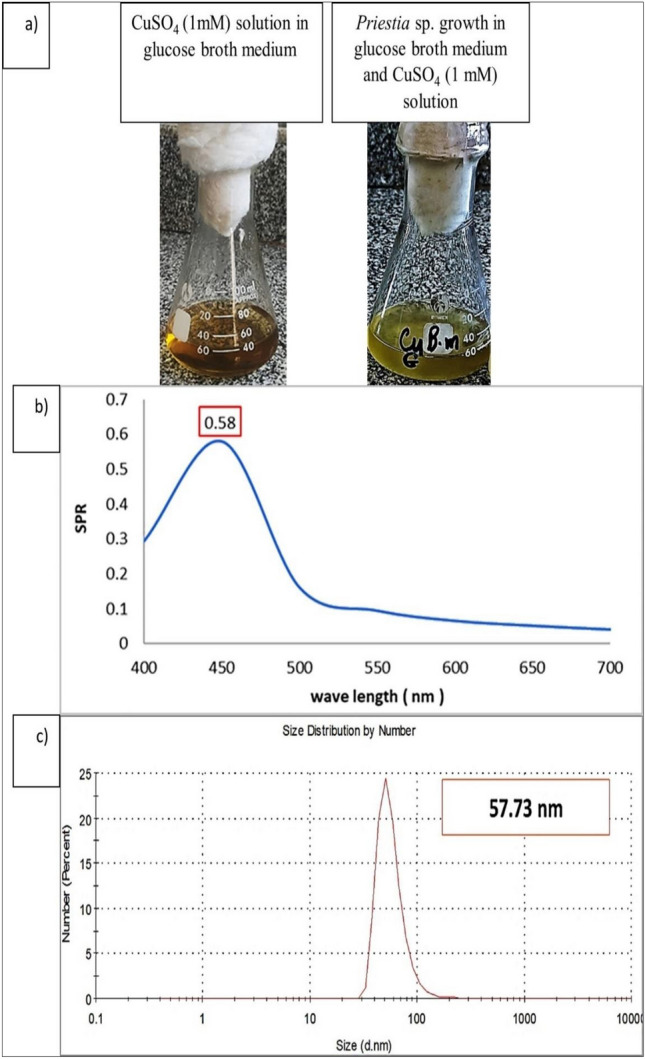
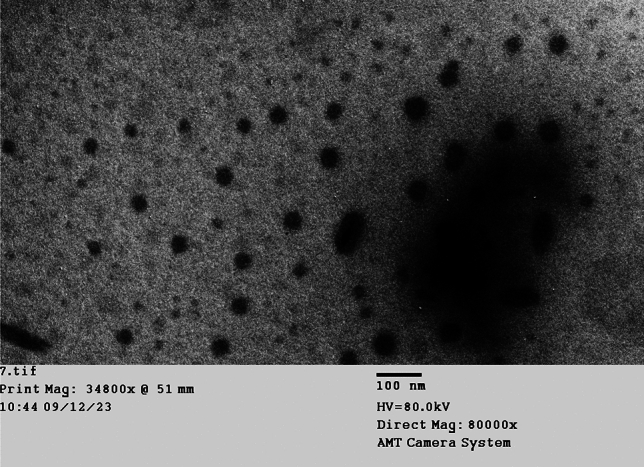
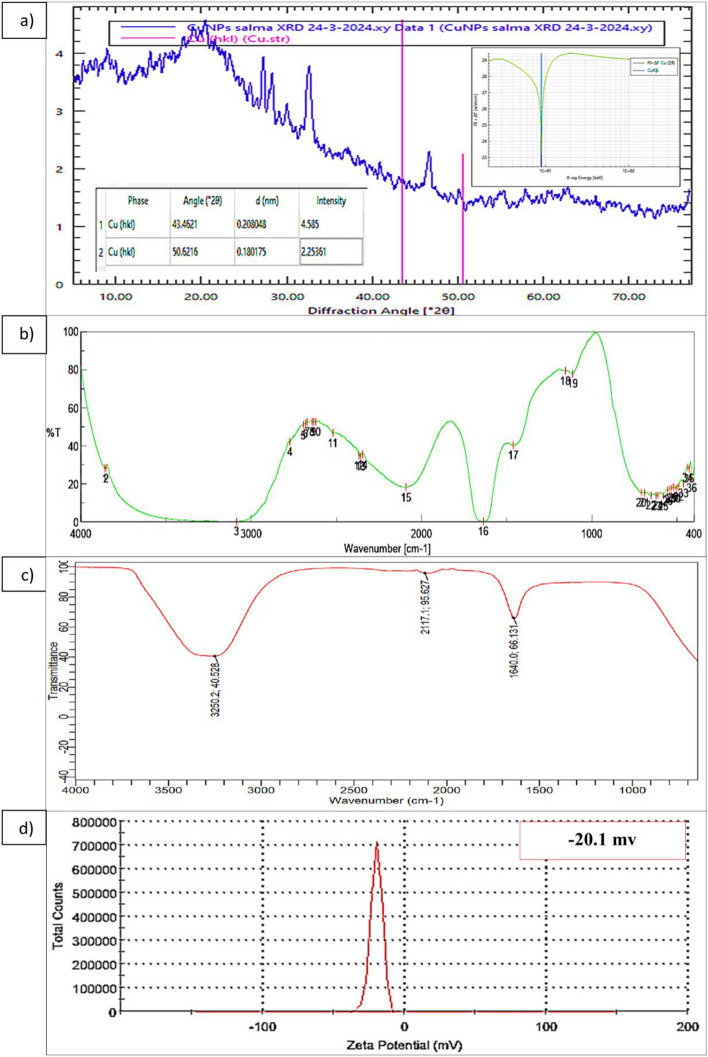
The growth of material science and technology places high importance on creating better processes for synthesizing copper nanoparticles. Thus, an easy, ecological, and benign process for producing copper nanoparticles (CuNPs) has been developed using Priestia sp. bacteria utilizing a variety of low-cost agro-industrial wastes and byproducts. The biosynthesis of CuNPs was conducted using glucose medium and copper ions salt solution, then it was replaced by utilizing low-cost agro-industrial wastes. UV-visible spectroscopy, dynamic light scattering (DLS), X-ray diffraction (XRD), High-resolution transmission electron microscope (HR-TEM), Attenuated Total Reflectance and Fourier transform infrared (ATR-FTIR), and zeta potential were used to characterize the biosynthesized CuNPs. The cytotoxicity of CuNPs using Vero -CCL-81 cell lines, and antibacterial and antitumor properties using human colon epithelial colorectal adenocarcinoma Caco-2-HTB-37 cell lines were assessed. The UV-visible and DLS studies revealed CuNPs formation, with a maximum concentration of 6.19 ppm after 48 h, as indicated by a 0.58 Surface plasmon resonance (SPR) within 450 nm and 57.73 nm particle size. The 16S rRNA gene analysis revealed that Priestia sp. isolate is closely related to Priestia megaterium and has been deposited in the NCBI GenBank with accession number AMD 2024. The biosynthesis with various agro-industrial wastes indicated blackstrap sugar cane molasses being the most effective for reducing CuNPs size to 3.12 nm owing to various reducing and stabilizing active compounds. The CuNPs were free of contaminants, with a sphere-shaped structure and a cytotoxicity assessment with an IC of 367.27 μg/mL. The antibacterial activity exhibited by the most susceptible bacteria were Bacillus cereus ATCC 11788 and Staphylococcus aureus ATCC 6538 with inhibition zones of 26.0 mm and 28.0 mm, respectively. The antitumor effect showed an IC dose of 175.36 μg/mL. Based on the findings, the current work sought to lower product costs and provide a practical solution to the environmental contamination issues brought on by the buildup of agricultural wastes. In addition, the obtained CuNPs could be applied in many fields such as pharmaceuticals, water purification, and agricultural applications as future aspects.
利用 Priestia 细菌利用各种低成本的农业工业废物和副产品,为合成铜纳米粒子(CuNPs)开发出一种简单、生态和良性的工艺,这对材料科学和技术的发展具有重要意义。利用葡萄糖培养基和铜离子盐溶液进行铜纳米粒子的生物合成,然后用低成本的农业工业废物代替。采用紫外可见分光光度法、动态光散射(DLS)、X 射线衍射(XRD)、高分辨率透射电子显微镜(HR-TEM)、衰减全反射和傅里叶变换红外(ATR-FTIR)和zeta 电位对生物合成的 CuNPs 进行了表征。利用 Vero-CCL-81 细胞系评估了 CuNPs 的细胞毒性,利用人结肠上皮结直肠腺癌 Caco-2-HTB-37 细胞系评估了抗菌和抗肿瘤特性。紫外可见和 DLS 研究表明,CuNPs 的形成,在 48 小时后达到 6.19ppm 的最大浓度,在 450nm 处有 0.58 个表面等离子体共振(SPR)和 57.73nm 的粒径。16S rRNA 基因分析表明,Priestia sp.分离株与 Priestia megaterium 密切相关,并已在 NCBI GenBank 中以 AMD 2024 登录号保存。用各种农业工业废物进行生物合成表明,黑糖蜜是最有效的,因为它含有各种还原和稳定活性化合物,可将 CuNPs 的尺寸减小到 3.12nm。CuNPs 不含污染物,具有球形结构,细胞毒性评估 IC 为 367.27μg/ml。最敏感的细菌是蜡状芽孢杆菌 ATCC 11788 和金黄色葡萄球菌 ATCC 6538,抑菌圈分别为 26.0mm 和 28.0mm,表现出抗菌活性。抗肿瘤作用显示 IC 剂量为 175.36μg/ml。基于这些发现,本工作旨在降低产品成本,并为解决农业废物堆积带来的环境污染问题提供实际解决方案。此外,所获得的 CuNPs 可应用于许多领域,如制药、水净化和农业应用等未来方面。