Department of Biology, Parand Branch, Islamic Azad University, Parand, Iran.
Cellular and Molecular Research Center, Qom University of Medical Sciences, Qom, Iran.
Sci Rep. 2023 Feb 24;13(1):3256. doi: 10.1038/s41598-023-30436-y.
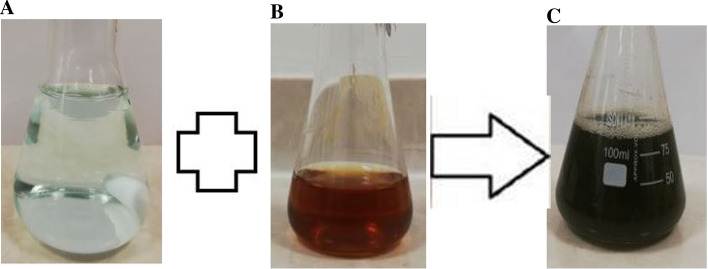
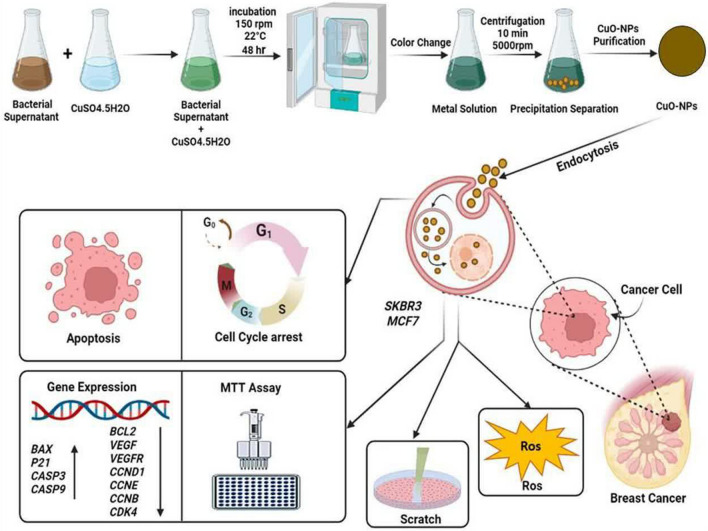
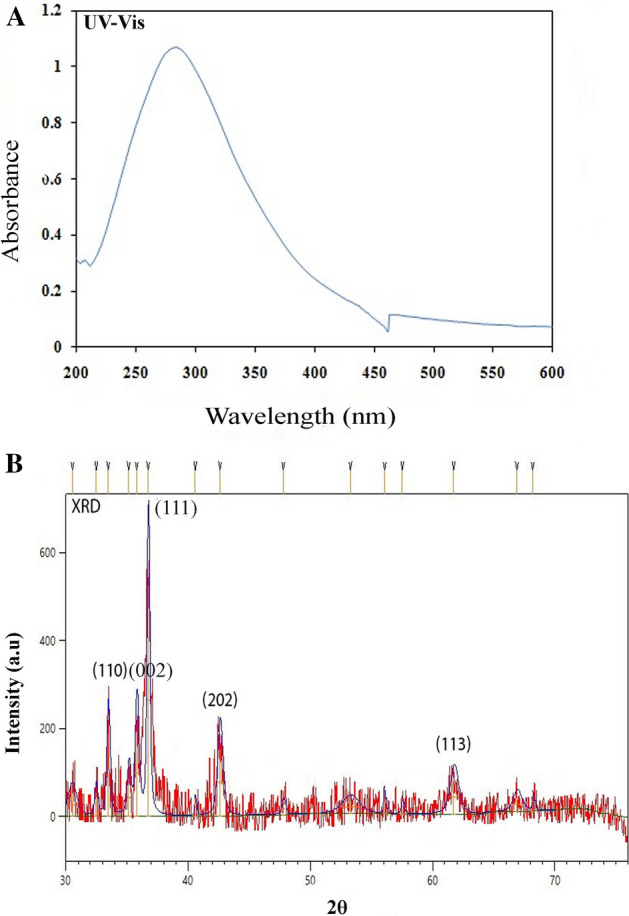
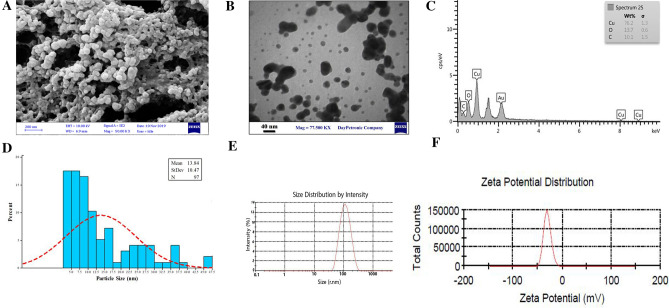
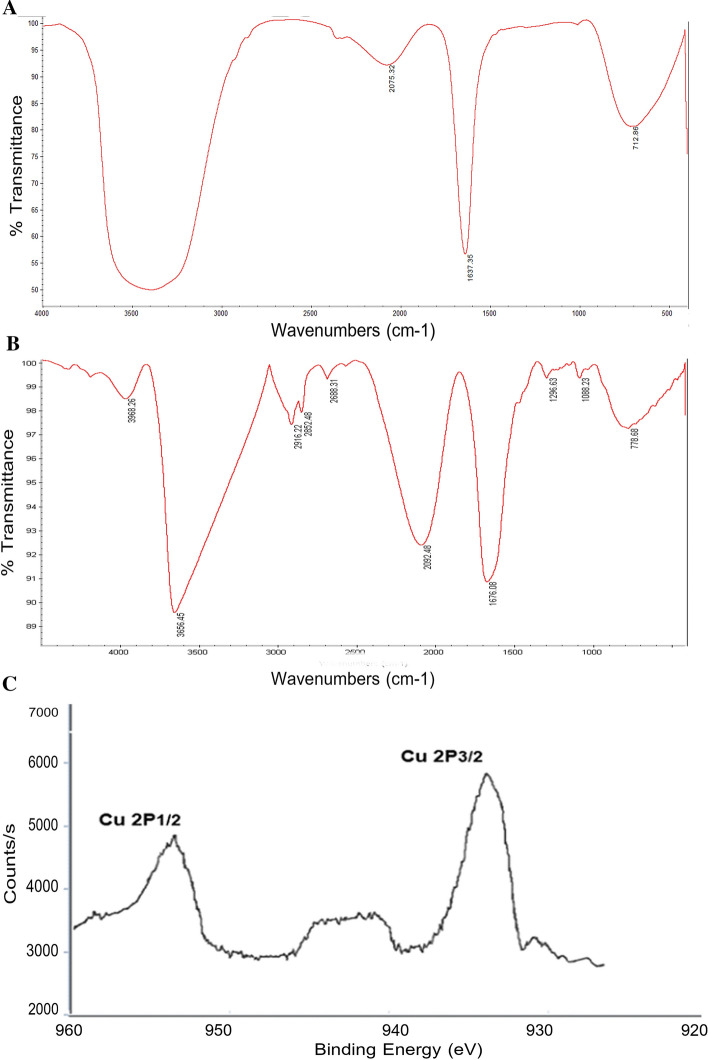
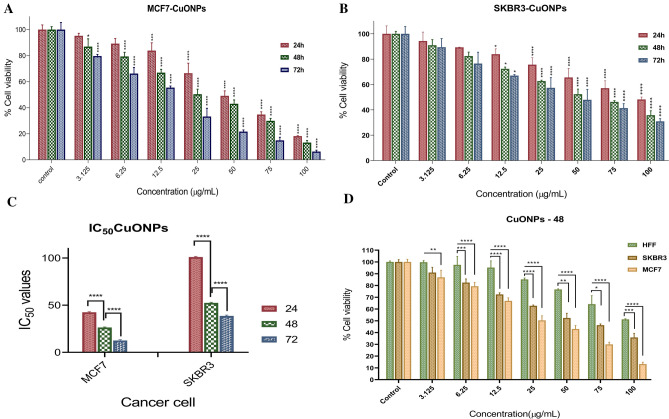
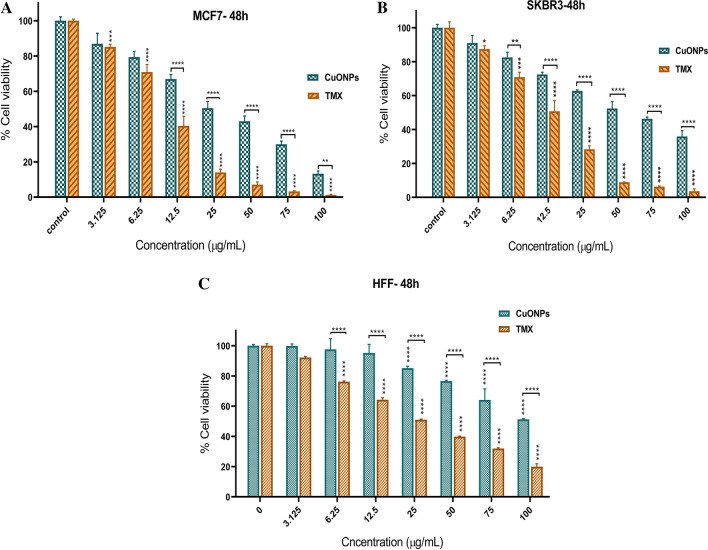
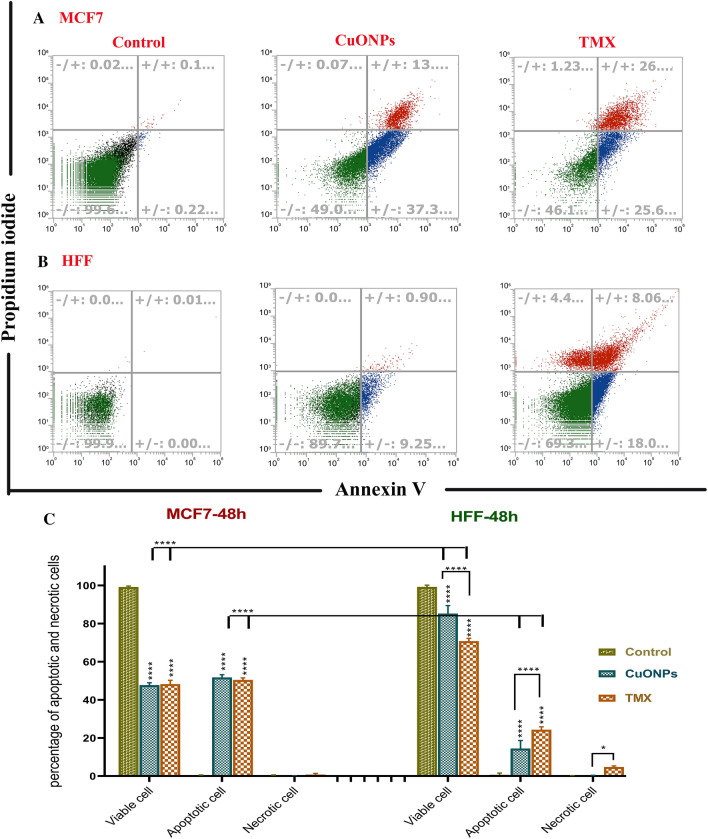
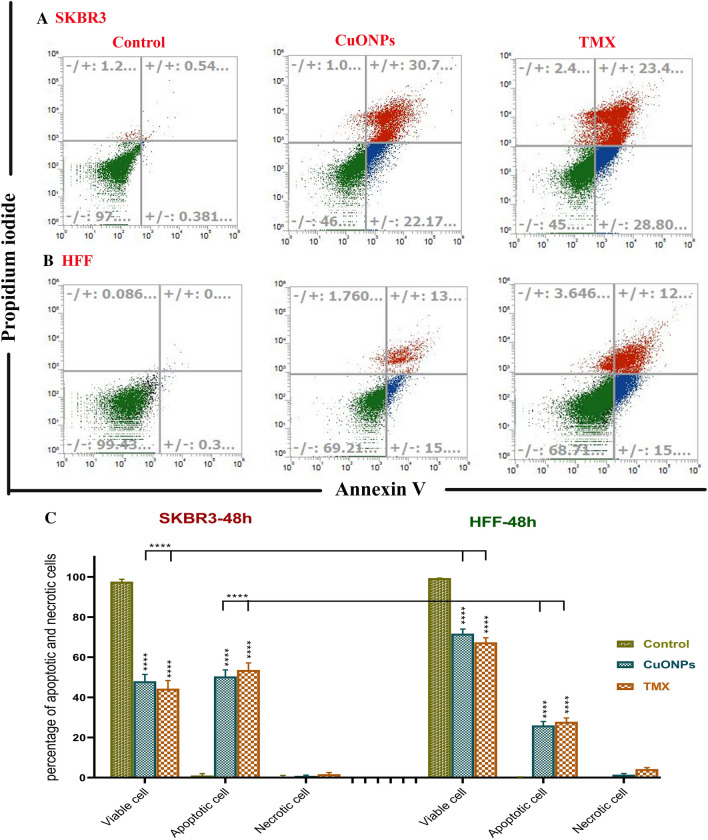
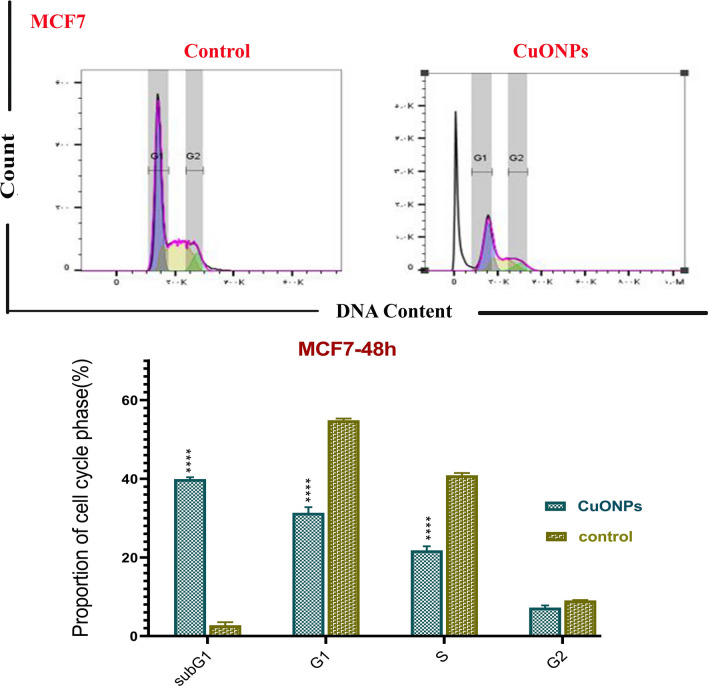
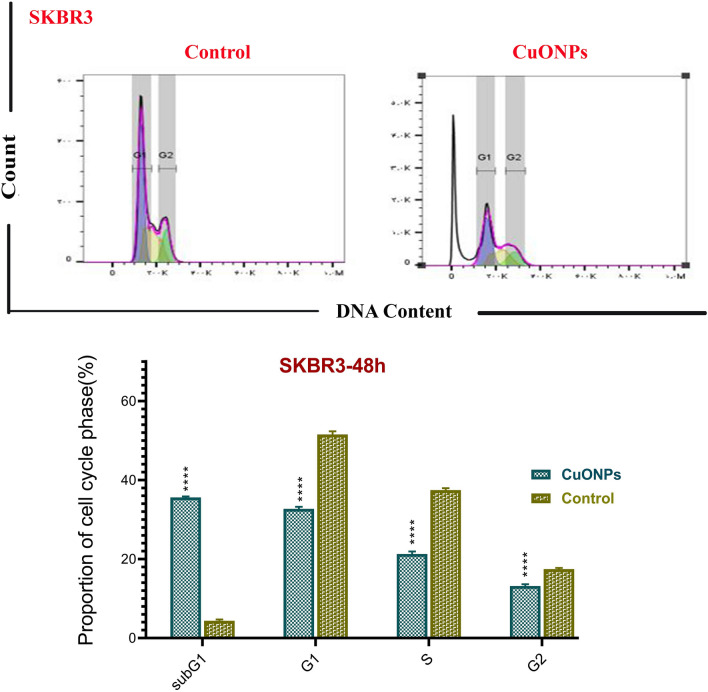
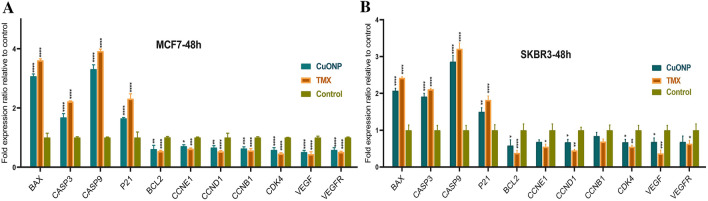
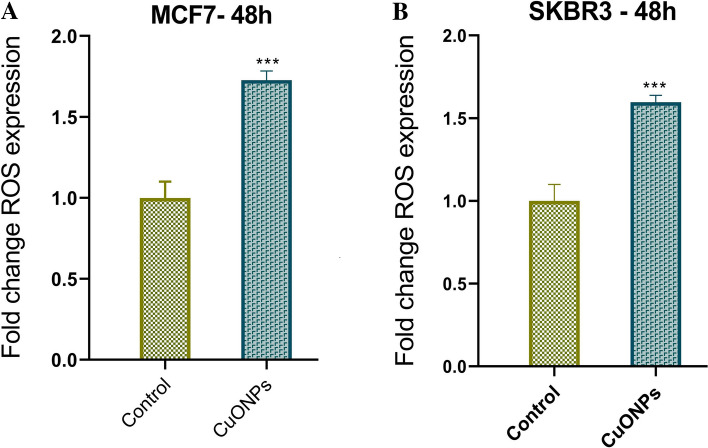
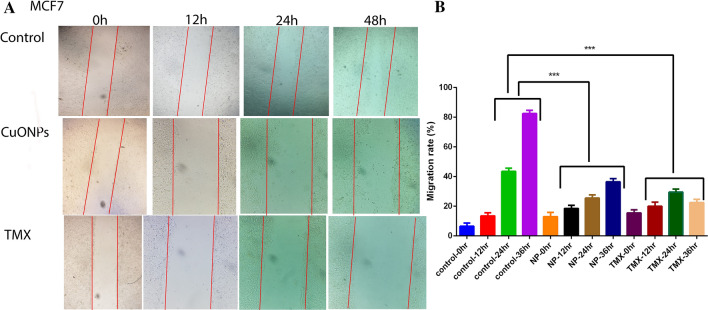
The present study examined the anticancer capabilities of Bacillus coagulans supernatant-produced copper oxide nanoparticles (BC-CuONPs) on MCF-7 and SKBR3 cancer cells. The X-ray diffraction, ultraviolet-visible spectroscopy, Fourier-transform infrared spectroscopy, X-ray photoelectron spectroscopy, transmission electron microscopy, field-emission scanning electron microscopy, energy-dispersive X-ray, dynamic light scattering, and zeta potential techniques were used to characterize BC-CuONPs. This study also investigated the cellular and molecular processes of NPs' anti-proliferative and apoptotic properties on human breast cancer cells and compared them to the commercial pharmaceutical tamoxifen. The size of the spherical NP was from 5 to 47 nm with negative zeta potential. The MTT results showed the great cytotoxic effect of BC-CuONPs against breast cancer cells. The BC-CuONPs inhibited the growth of breast cancer cells in a time- and dose-dependent manner. The up-regulation of BCL2-associated X (BAX), cyclin dependent kinase inhibitor 1A (P21), Caspase 3 (CASP3), and Caspase 9 (CASP9), the down-regulation of BCL2 apoptosis regulator (BCL2), Annexin V-FITC/propidium iodide, and reactive oxygen species (ROS) generation results suggested that BC-CuONPs had a significant apoptotic impact when compared to the control. Scratch tests and vascular endothelial growth factor receptor gene (VEGF) down-regulation demonstrated that BC-CuONPs had anti-metastatic activity. The cell cycle analysis and down-regulation of Cyclin D1 (CCND1) and cyclin dependent kinase 4 (CDK4) revealed that cancer cells were arrested in the sub-G1 phase. Finally, the results showed that the secondary metabolites in the supernatant of Bacillus coagulans could form CuONPs, and biogenic BC-CuONPs showed anti-metastasis and anticancer properties on breast cancer cells while having less adverse effects on normal cells. Therefore, the synthesized CuONPs using B. coagulans supernatant can be shown as a potential candidate for a new therapeutic strategy in cancer management.
本研究考察了凝结芽孢杆菌上清液产生的氧化铜纳米粒子(BC-CuONPs)对 MCF-7 和 SKBR3 癌细胞的抗癌能力。使用 X 射线衍射、紫外-可见光谱、傅里叶变换红外光谱、X 射线光电子能谱、透射电子显微镜、场发射扫描电子显微镜、能量色散 X 射线、动态光散射和 Zeta 电位技术对 BC-CuONPs 进行了表征。本研究还研究了纳米粒子对人乳腺癌细胞的抗增殖和凋亡特性的细胞和分子过程,并将其与商业药物他莫昔芬进行了比较。球形 NP 的尺寸为 5 至 47nm,具有负 Zeta 电位。MTT 结果表明 BC-CuONPs 对乳腺癌细胞具有很强的细胞毒性作用。BC-CuONPs 以时间和剂量依赖的方式抑制乳腺癌细胞的生长。BCL2 相关 X(BAX)、细胞周期蛋白依赖性激酶抑制剂 1A(P21)、Caspase 3(CASP3)和 Caspase 9(CASP9)的上调,BCL2 凋亡调节剂(BCL2)、Annexin V-FITC/碘化丙啶和活性氧(ROS)生成的下调表明,与对照组相比,BC-CuONPs 具有显著的凋亡作用。划痕试验和血管内皮生长因子受体基因(VEGF)下调表明,BC-CuONPs 具有抗转移活性。细胞周期分析和细胞周期蛋白 D1(CCND1)和细胞周期蛋白依赖性激酶 4(CDK4)的下调表明,癌细胞被阻滞在 sub-G1 期。最后,结果表明,凝结芽孢杆菌上清液中的次生代谢物可以形成 CuONPs,生物生成的 BC-CuONPs 对乳腺癌细胞表现出抗转移和抗癌特性,而对正常细胞的不良反应较小。因此,使用凝结芽孢杆菌上清液合成的 CuONPs 可以作为癌症管理中一种新的治疗策略的潜在候选物。