Exercise & Sport Nutrition Lab, Department of Kinesiology and Sports Management, Texas A&M University, College Station, TX 77843, USA.
Nutrients. 2024 Oct 6;16(19):3391. doi: 10.3390/nu16193391.
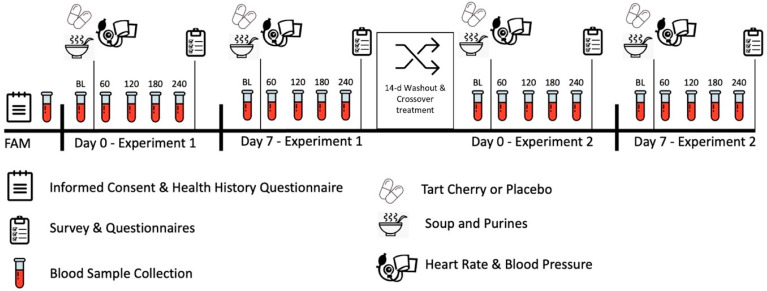
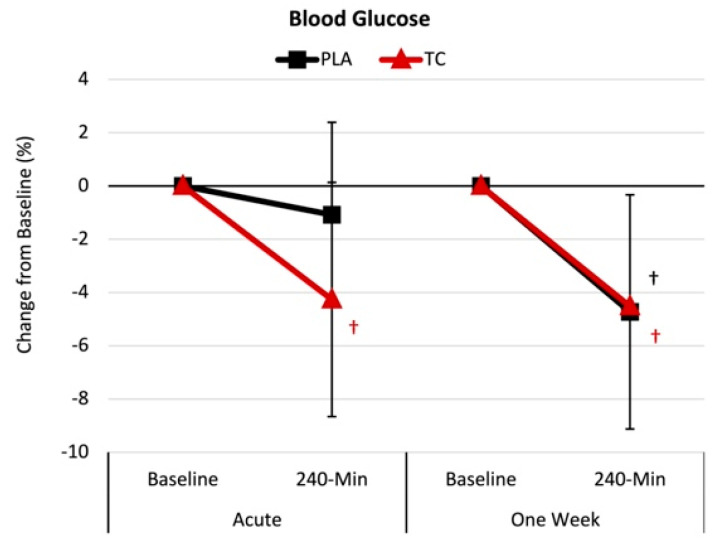
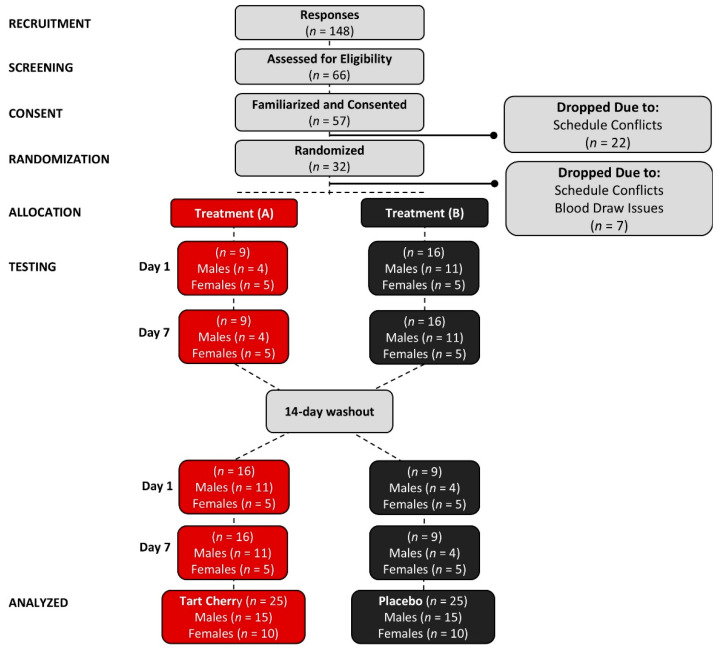
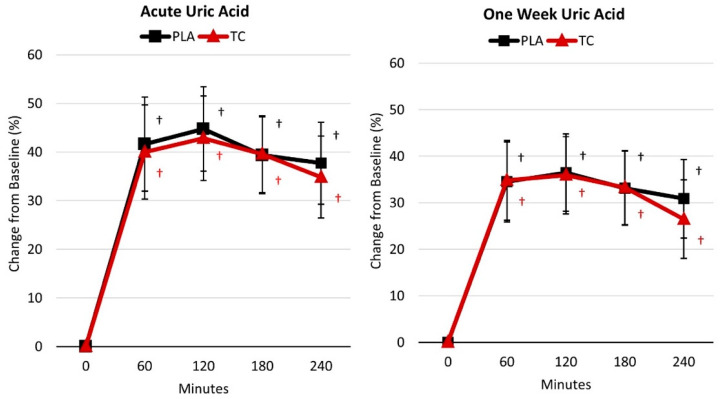
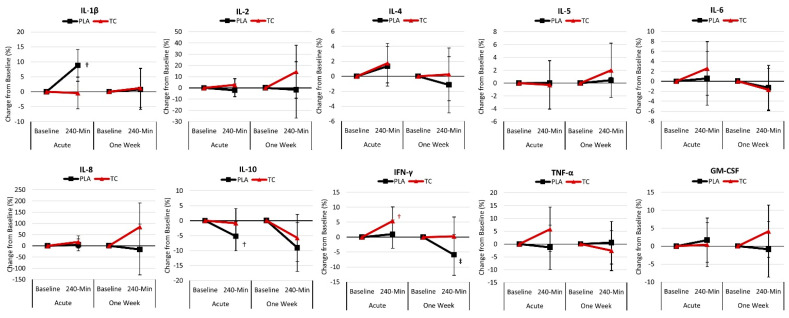
Metabolic conditions, such as gout, can result from elevated uric acid (UA) levels. Consuming high-purine meals increases UA levels. Therefore, people with hyperuricemia typically must avoid ingesting such foods. Polyphenols have been shown to reduce uric acid levels and tart cherries (TCs) are a rich source of phenolic and anthocyanin compounds. This proof-of-concept study evaluated whether ingesting TCs with a purine-rich meal affects the uricemic response. A total of 25 adults (15 males and 10 females, 85.0 ± 17 kg, 40.6 ± 9 years, 29.1 ± 4.9 kg/m) with elevated fasting UA levels (5.8 ± 1.3 mg/dL) donated a fasting blood sample. In a randomized, double-blind, crossover, placebo-controlled, counterbalanced manner, participants ingested capsules containing 960 mg of a placebo (PLA) or concentrated TC powder containing 20.7 mg of proanthocyanins with a serving of hot soup (10 g of carbohydrate, 2 g protein, and 1 g fat) containing 3 g of purines (1 g of adenosine 5'-monophosphate, 1 g of disodium 5'-guanylate, and 1 g of disodium 5'-inosinate). Blood samples were obtained at 0, 60, 120, 180, and 240 min after ingestion to assess changes in uric acid levels and pharmacokinetic profiles. Cell blood counts, a comprehensive metabolic panel, cytokines, inflammatory markers, and subjective side effects ratings were analyzed on baseline (0 min) and post-treatment (240 min) samples. Participants continued consuming two capsules/day of the assigned treatment for one week and then repeated the experiment. Participants observed a 14-day washout and then repeated the experiment while ingesting the alternate treatment. Data were analyzed using general linear model (GLM) statistics with repeated measures, pairwise comparisons, and percentage change from baseline with 95% confidence intervals (CIs). No statistically significant interaction effects or differences between treatments were seen in uric acid levels or PK profiles. Analysis of percent changes from baseline revealed that TC ingestion reduced the blood glucose levels following the ingestion of the high-purine meal (-4.2% [-7.7, -0.7], = 0017). Additionally, there was some evidence that TC ingestion attenuated the increase from baseline in IL-1β and IL-10 and increased INF-γ. No significant differences were seen in the remaining health markers or subjective side effects ratings. Acute and one-week TC supplementation did not affect the uricemic response to ingesting a high-purine meal in individuals with mildly elevated UA levels. However, there was some evidence that TC supplementation may blunt the glycemic response to ingesting a meal and influence some inflammatory cytokines. Registered clinical trial NCT04837274.
代谢性疾病,如痛风,可能是由于尿酸(UA)水平升高引起的。食用高嘌呤食物会增加 UA 水平。因此,高尿酸血症患者通常必须避免摄入此类食物。多酚已被证明可以降低尿酸水平,而樱桃(TCs)是酚类和花青素化合物的丰富来源。这项概念验证研究评估了在富含嘌呤的膳食中摄入 TCs 是否会影响尿酸反应。
共有 25 名成年人(15 名男性和 10 名女性,85.0 ± 17 kg,40.6 ± 9 岁,29.1 ± 4.9 kg/m)空腹 UA 水平升高(5.8 ± 1.3 mg/dL),捐献了空腹血样。采用随机、双盲、交叉、安慰剂对照、均衡设计,参与者服用含有 960 毫克安慰剂(PLA)或 20.7 毫克原花青素的浓缩 TCs 粉末胶囊,与一碗热汤(10 克碳水化合物、2 克蛋白质和 1 克脂肪)一起服用)含有 3 克嘌呤(1 克腺苷 5'-单磷酸、1 克 5'-鸟苷二钠和 1 克 5'-肌苷二钠)。摄入后 0、60、120、180 和 240 分钟采集血样,以评估尿酸水平和药代动力学特征的变化。在基线(0 分钟)和治疗后(240 分钟)样本上分析血细胞计数、综合代谢小组、细胞因子、炎症标志物和主观副作用评分。参与者继续每天服用两次指定的治疗药物,持续一周,然后重复实验。参与者观察了 14 天的洗脱期,然后在摄入替代治疗的同时重复实验。使用具有重复测量、成对比较和 95%置信区间(CI)的基线百分比变化的一般线性模型(GLM)统计分析数据。
在尿酸水平或 PK 特征方面,未观察到治疗之间存在统计学显著的相互作用效应或差异。对基线百分比变化的分析表明,TC 摄入可降低高嘌呤膳食摄入后血糖水平(-4.2%[-7.7,-0.7], = 0.017)。此外,有证据表明 TC 摄入可减弱基线时 IL-1β 和 IL-10 的升高,并增加 INF-γ。其余健康标志物或主观副作用评分未见显著差异。
急性和一周的 TC 补充剂补充不会影响轻度升高 UA 水平个体摄入高嘌呤膳食后的尿酸反应。然而,有证据表明 TC 补充剂可能会减弱进食后血糖反应,并影响一些炎症细胞因子。已注册的临床试验 NCT04837274。