Vo Hanh Hong-Phuc, Nguyen Thuan Minh, Bui Khoi Anh, Yoo Myungsik
Department of Electronic Engineering, Soongsil University, Seoul 06978, Republic of Korea.
School of Electronic Engineering, Soongsil University, Seoul 06978, Republic of Korea.
Sensors (Basel). 2024 Oct 10;24(20):6529. doi: 10.3390/s24206529.
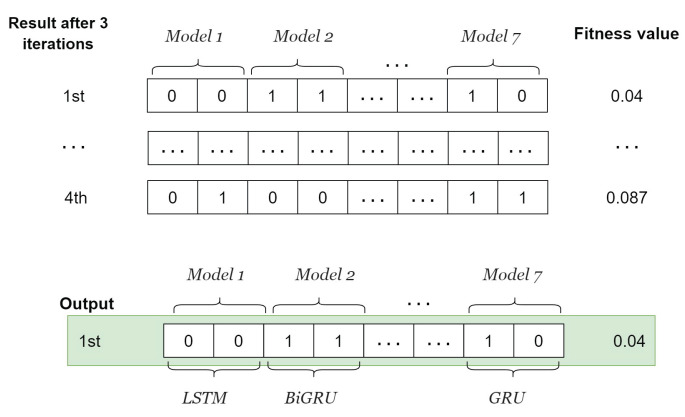
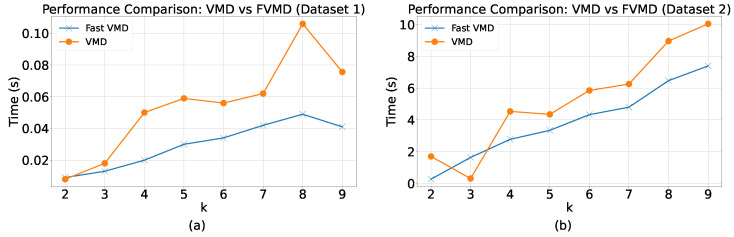
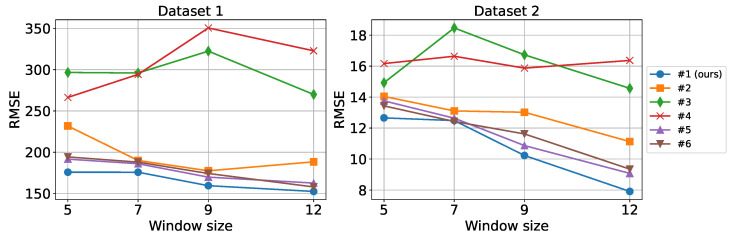
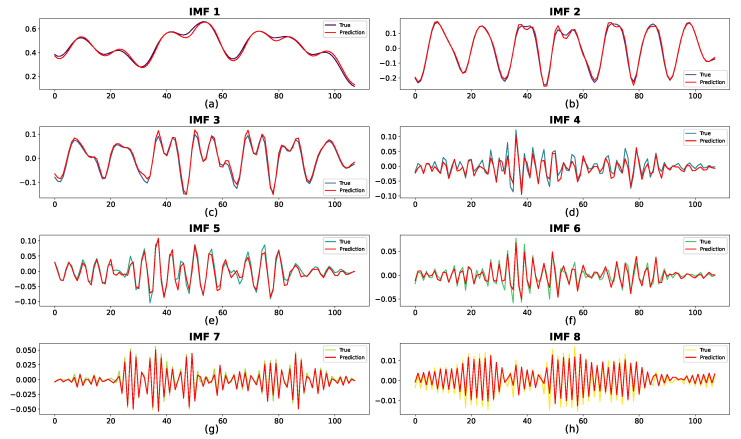
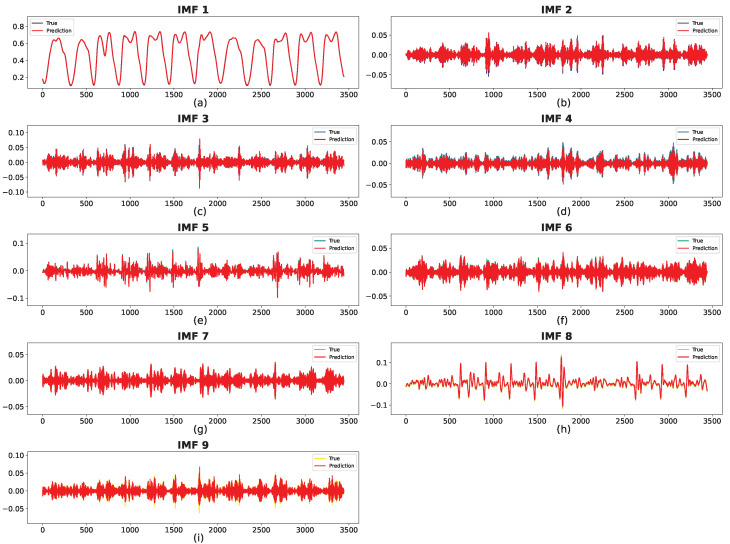
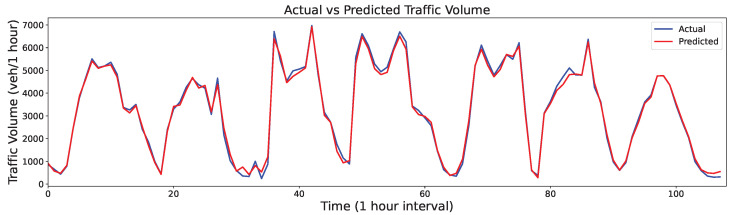
This study proposes a novel hybrid method, FVMD-WOA-GA, for enhancing traffic flow prediction in 5G-enabled intelligent transportation systems. The method integrates fast variational mode decomposition (FVMD) with optimization techniques, namely, the whale optimization algorithm (WOA) and genetic algorithm (GA), to improve the accuracy of overall traffic flow based on models tailored for each decomposed sub-sequence. The selected predictive models-long short-term memory (LSTM), bidirectional LSTM (BiLSTM), gated recurrent unit (GRU), and bidirectional GRU (BiGRU)-were considered to capture diverse temporal dependencies in traffic data. This research explored a multi-stage approach, where the decomposition, optimization, and selection of models are performed systematically to improve prediction performance. Experimental validation on two real-world traffic datasets further underscores the method's efficacy, achieving root mean squared errors (RMSEs) of 152.43 and 7.91 on the respective datasets, which marks improvements of 3.44% and 12.87% compared to the existing methods. These results highlight the ability of the FVMD-WOA-GA approach to improve prediction accuracy significantly, reduce inference time, enhance system adaptability, and contribute to more efficient traffic management.
本研究提出了一种新颖的混合方法FVMD-WOA-GA,用于增强5G智能交通系统中的交通流量预测。该方法将快速变分模态分解(FVMD)与优化技术(即鲸鱼优化算法(WOA)和遗传算法(GA))相结合,基于为每个分解子序列量身定制的模型提高整体交通流量预测的准确性。所选用的预测模型——长短期记忆(LSTM)、双向长短期记忆(BiLSTM)、门控循环单元(GRU)和双向门控循环单元(BiGRU)——旨在捕捉交通数据中不同的时间依赖性。本研究探索了一种多阶段方法,其中模型的分解、优化和选择是系统进行的,以提高预测性能。在两个真实世界交通数据集上的实验验证进一步强调了该方法的有效性,在各自数据集上分别实现了152.43和7.91的均方根误差(RMSE),与现有方法相比分别提高了3.44%和12.87%。这些结果突出了FVMD-WOA-GA方法显著提高预测准确性、减少推理时间、增强系统适应性以及有助于实现更高效交通管理的能力。