
来自塔里木盆地的耐旱药用植物罗布麻的染色体水平基因组组装
Chromosome-scale genome assembly of Apocynum pictum, a drought-tolerant medicinal plant from the Tarim Basin.
作者信息
Xie Wenlong, Bai Baowei, Wang Yanqin
机构信息
College of Life Science and Technology, Tarim University, Xingfu Road, Alar 843300, Xinjiang, P.R. China.
Xinjiang Production & Construction Corps Key Laboratory of Protection and Utilization of Biological Resources in the Tarim Basin, Tarim University, Alar 843300, Xinjiang, P.R. China.
出版信息
G3 (Bethesda). 2024 Nov 5;14(12). doi: 10.1093/g3journal/jkae237.
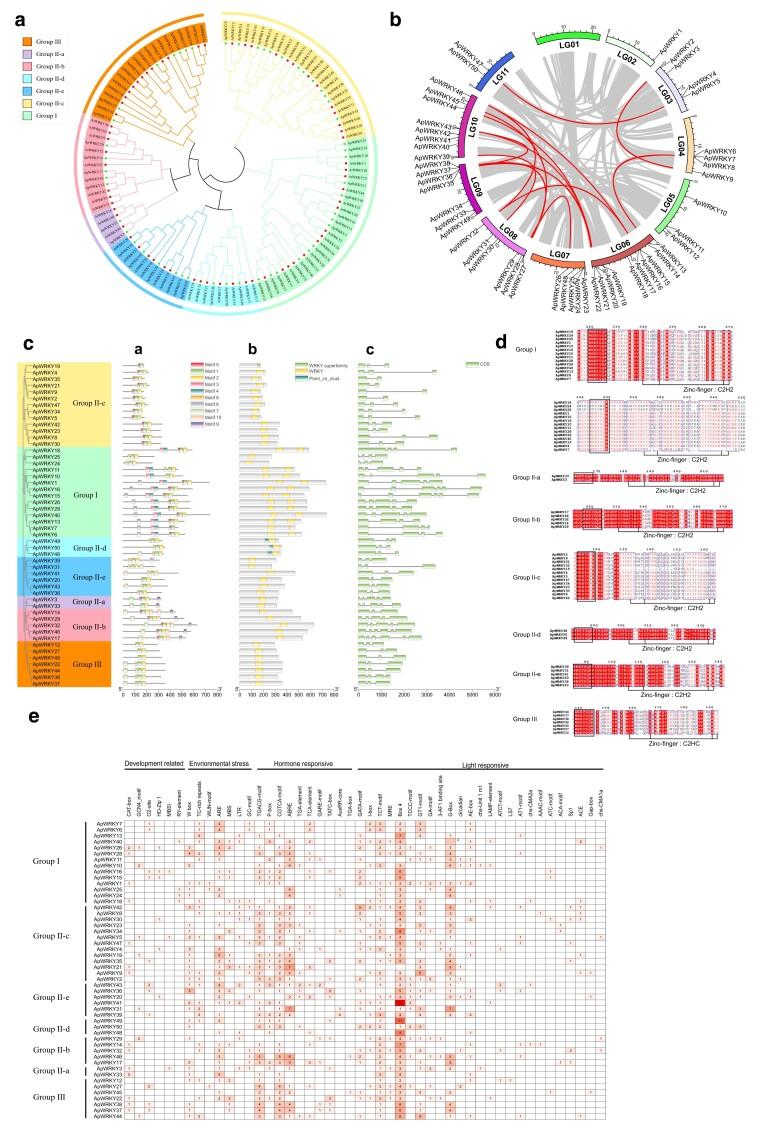
Apocynum pictum Schrenk is a semishrub of the Apocynaceae family with a wide distribution throughout the Tarim Basin that holds significant ecological, medicinal, and economic values. Here, we report the assembly of its chromosome-level reference genome using Nanopore long-read, Illumina HiSeq paired-end, and high-throughput chromosome conformation capture sequencing. The final assembly is 225.32 Mb in length with a scaffold N50 of 19.64 Mb. It contains 23,147 protein-coding genes across 11 chromosomes, 21,148 of which (91.36%) have protein functional annotations. Comparative genomics analysis revealed that A. pictum diverged from the closely related species Apocynum venetum approximately 2.2 million years ago and has not undergone additional polyploidizations after the core eudicot WGT-γ event. Karyotype evolution analysis was used to characterize interchromosomal rearrangements in representative Apocynaceae species and revealed that several A. pictum chromosomes were derived entirely from single chromosomes of the ancestral eudicot karyotype. Finally, we identified 50 members of the well-known stress-responsive WRKY transcription factor family and used transcriptomic data to document changes in their expression at 2 stages of drought stress, identifying a number of promising candidate genes. Overall, this study provides high-quality genomic resources for evolutionary and comparative genomics of the Apocynaceae, as well as initial molecular insights into the drought adaptation of this valuable desert plant.
尖叶白麻是夹竹桃科的一种半灌木,广泛分布于塔里木盆地,具有重要的生态、药用和经济价值。在此,我们报告了利用纳米孔长读长测序、Illumina HiSeq双端测序和高通量染色体构象捕获测序对其染色体水平参考基因组的组装。最终组装的基因组长度为225.32 Mb,支架N50为19.64 Mb。它包含11条染色体上的23,147个蛋白质编码基因,其中21,148个(91.36%)具有蛋白质功能注释。比较基因组学分析表明,尖叶白麻与近缘物种罗布麻大约在220万年前分化,并且在核心真双子叶植物WGT-γ事件之后没有经历额外的多倍化。核型进化分析用于表征夹竹桃科代表性物种的染色体间重排,结果显示尖叶白麻的几条染色体完全源自祖先真双子叶核型的单条染色体。最后,我们鉴定了著名的应激反应WRKY转录因子家族的50个成员,并利用转录组数据记录了它们在干旱胁迫两个阶段的表达变化,确定了一些有前景的候选基因。总体而言,本研究为夹竹桃科的进化和比较基因组学提供了高质量的基因组资源,也为这种珍贵沙漠植物的干旱适应性提供了初步的分子见解。


 Zotero 插件