Ma Yiling, Sun Youshuai, Guo Qian, Wang Xiaoli
School of Economics and Management, Tongji University, Shanghai, People's Republic of China.
Accounting Department, Xianda College of Economics and Humanities Shanghai International Studies University, Shanghai, People's Republic of China.
Sci Rep. 2024 Nov 19;14(1):28653. doi: 10.1038/s41598-024-79976-x.
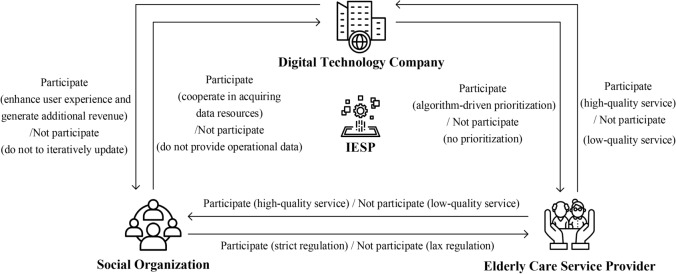
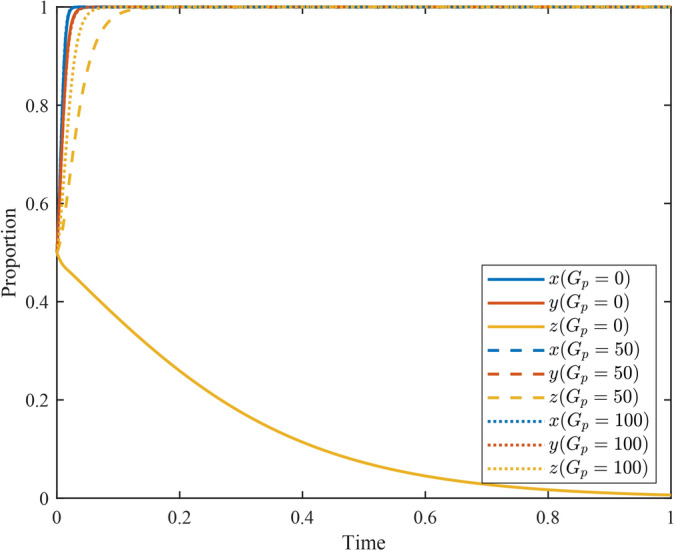
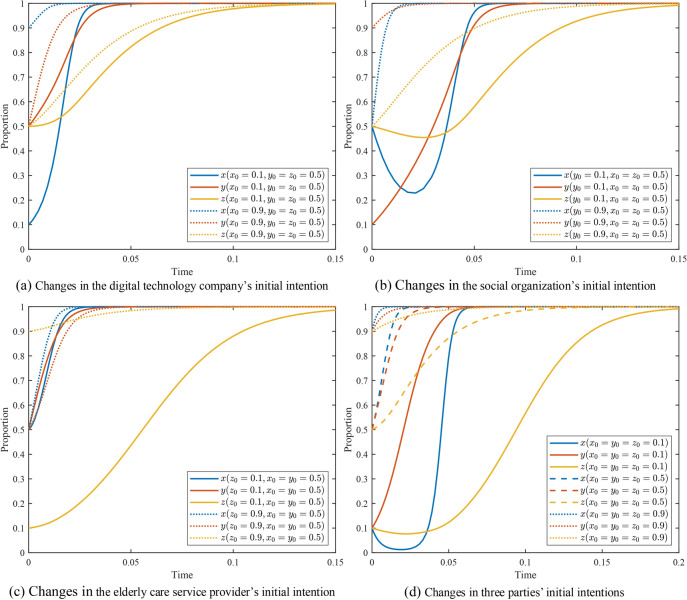
With the rapid aging of populations and advancements in information technology, the development of intelligent elder-care service platforms (IESPs) has gained momentum. This paper examines the feasibility and strategies for constructing an IESP. Unlike commercial internet platforms, IESP facilitates transactions in elderly care services, which are quasi-public goods requiring government guidance and multi-stakeholder collaboration. Utilizing value co-creation theory, this study constructs a tripartite evolutionary game model involving a digital technology company, a social organization, and an elderly care service provider to analyze factors influencing stakeholder behavior. The findings reveal that sustained value co-creation is influenced by platform revenue, participation costs, reputation effects, and government subsidies. To optimize outcomes, the government should balance stakeholder interests, ensure reasonable profits for the digital company and social organization, and reduce participation costs through grassroots mobilization, data support, and subsidies for digital transformation. Strengthening reputation management and standardizing service evaluations are also crucial for achieving system equilibrium.
随着人口的快速老龄化和信息技术的进步,智能养老服务平台(IESPs)的发展势头迅猛。本文探讨了构建智能养老服务平台的可行性及策略。与商业互联网平台不同,智能养老服务平台促进养老服务交易,而养老服务属于准公共物品,需要政府引导和多方利益相关者协作。本研究运用价值共创理论,构建了一个涉及数字技术公司、社会组织和养老服务提供商的三方演化博弈模型,以分析影响利益相关者行为的因素。研究结果表明,持续的价值共创受到平台收益、参与成本、声誉效应和政府补贴的影响。为优化结果,政府应平衡利益相关者的利益,确保数字公司和社会组织获得合理利润,并通过基层动员、数据支持和数字化转型补贴来降低参与成本。加强声誉管理和规范服务评估对于实现系统均衡也至关重要。