Mounesan Leila, Gharibzadeh Safoora, Parsaeian Mahboubeh, Gouya Mohammad Mehdi, Eybpoosh Sana, Hosseini Ali, Haghjou Leila, Haghdoost AliAkbar, Mostafavi Ehsan
Research Centre for Emerging and Re-emerging Infectious Diseases, Pasteur Institute of Iran, Tehran, Iran.
Department of Epidemiology and Biostatistics, Pasteur Institute of Iran, Tehran, Iran.
Med J Islam Repub Iran. 2024 Aug 13;38:93. doi: 10.47176/mjiri.38.93. eCollection 2024.
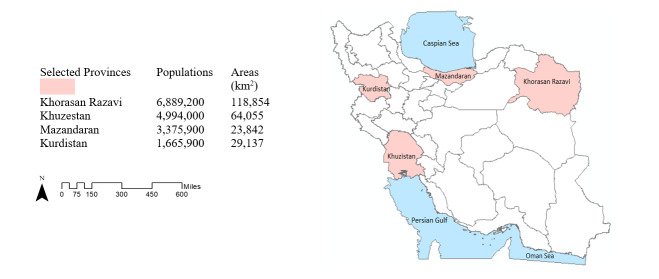
To reduce the clinical burden of COVID-19, healthcare providers, and policymakers need a clear understanding of the illness severity during epidemic waves. This study aimed to identify the clinical severity of patients with COVID-19 during different stages of an epidemic wave (pre-peak, peak, post-peak) in four provinces in Iran.
We conducted a secondary analysis of the data on COVID-19 patients admitted to hospitals (25,382 cases), which were recorded in the Medical Care Monitoring Center. Data included adult patients (≥18 years) who were hospitalized due to COVID-19 infection, confirmed by a positive SARS-CoV-2 RT-PCR test. No exclusion criteria were applied. A pairwise comparison method was used to evaluate clinical severity. Then, based on univariable and multivariable linear regression models, the severity scores of patients were compared during various stages of an epidemic wave.
The findings showed that the level of severity of the disease was higher during and after the peak in the total population. The means (SD) of severity scores were 0.16 (0.25), 0.18 (0.26), and 0.19 (0.26) before, during and after the peak, respectively. Besides, age and the underlying disease had a positive and significant relationship with disease severity.
During the middle and late phases of the COVID-19 epidemic wave, hospitals are seeing patients with more severe illnesses than in the early stages. Enhancing hospital preparedness is essential to avert excess deaths and critical cases. Moreover, it is important to maintain ongoing monitoring of clinical symptoms during the recovery phase to support individual patients, guide public health policy, and enhance scientific understanding of epidemic recovery processes.
为减轻新型冠状病毒肺炎(COVID-19)的临床负担,医疗服务提供者和政策制定者需要清楚了解疫情期间疾病的严重程度。本研究旨在确定伊朗四个省份疫情不同阶段(高峰前、高峰、高峰后)COVID-19患者的临床严重程度。
我们对医疗护理监测中心记录的COVID-19住院患者数据(25382例)进行了二次分析。数据包括因COVID-19感染住院的成年患者(≥18岁),经严重急性呼吸综合征冠状病毒2(SARS-CoV-2)逆转录聚合酶链反应(RT-PCR)检测呈阳性确诊。未应用排除标准。采用成对比较法评估临床严重程度。然后,基于单变量和多变量线性回归模型,比较疫情不同阶段患者的严重程度评分。
研究结果表明,总体人群中疾病严重程度在高峰期间及之后更高。严重程度评分的均值(标准差)在高峰前、高峰期间和高峰后分别为0.16(0.25)、0.18(0.26)和0.19(0.26)。此外,年龄和基础疾病与疾病严重程度呈正相关且具有显著意义。
在COVID-19疫情的中晚期,医院收治的患者病情比早期更为严重。加强医院准备工作对于避免过多死亡和重症病例至关重要。此外,在康复阶段持续监测临床症状对于支持个体患者、指导公共卫生政策以及增进对疫情恢复过程的科学理解也很重要。