
回归根源:肠道菌群失调、肥胖、代谢综合征、2型糖尿病和阻塞性睡眠呼吸暂停——是否存在客观联系?一篇叙述性综述。
Back to Roots: Dysbiosis, Obesity, Metabolic Syndrome, Type 2 Diabetes Mellitus, and Obstructive Sleep Apnea-Is There an Objective Connection? A Narrative Review.
作者信息
Protasiewicz-Timofticiuc Diana Cristina, Bădescu Diana, Moța Maria, Ștefan Adela Gabriela, Mitrea Adina, Clenciu Diana, Efrem Ion Cristian, Roșu Maria Magdalena, Vladu Beatrice Elena, Gheonea Theodora Claudia, Moța Eugen, Vladu Ionela Mihaela
机构信息
Department of Diabetes, Nutrition and Metabolic Diseases, County Clinical Emergency Hospital of Craiova, 200642 Craiova, Romania.
Doctoral School, University of Medicine and Pharmacy of Craiova, 200349 Craiova, Romania.
出版信息
Nutrients. 2024 Nov 26;16(23):4057. doi: 10.3390/nu16234057.
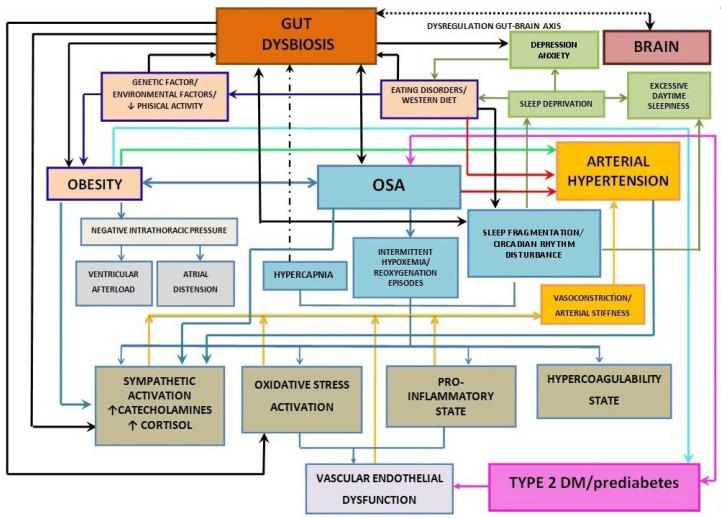
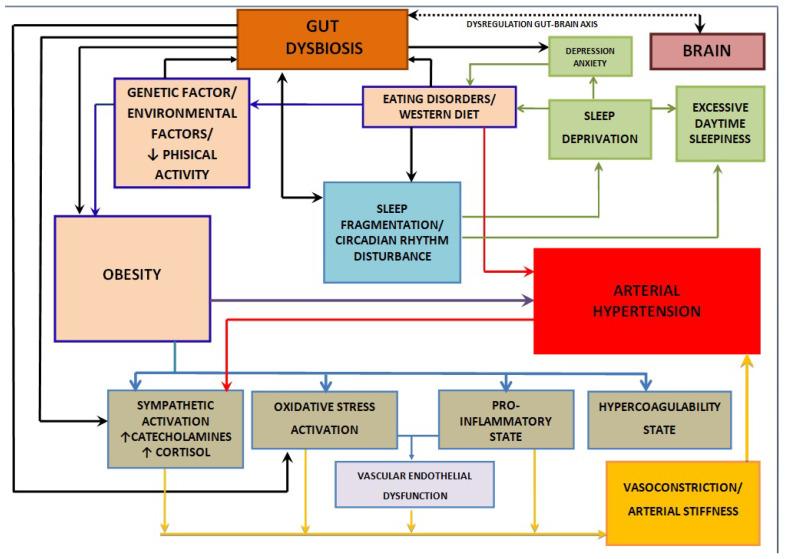
In recent decades, it has become clear that the gut is more than just a digestive organ; it also functions as an immune organ with regulatory capabilities and acts as a "second brain" that influences brain function due to the presence and regulatory roles of the gut microbiota (GM). The GM is a crucial component of its host and significantly impacts human health. Dysbiosis, or microbial imbalance, has been closely linked to various diseases, including gastrointestinal, neurological, psychiatric, and metabolic disorders. The aim of this narrative review is to highlight the roles of the GM in maintaining metabolic health. Sleep is a vital biological necessity, with living organisms having evolved an internal sleep-wake rhythm that aligns with a roughly 24 h light/dark cycle, and this is known as the circadian rhythm. This cycle is essential for tissue repair, restoration, and overall optimal body functioning. Sleep irregularities have become more prevalent in modern society, with fast-paced lifestyles often disrupting normal sleep patterns. Urban living factors, such as fast food consumption, shift work, exposure to artificial light and nighttime noise, medications, and social activities, can adversely affect circadian rhythms, with dysbiosis being one of the many factors incriminated in the etiology of sleep disorders.
近几十年来,人们越来越清楚地认识到,肠道不仅仅是一个消化器官;它还作为一个具有调节能力的免疫器官发挥作用,并由于肠道微生物群(GM)的存在和调节作用而充当影响大脑功能的“第二大脑”。肠道微生物群是其宿主的重要组成部分,对人类健康有重大影响。生态失调,即微生物失衡,与包括胃肠道、神经、精神和代谢紊乱在内的各种疾病密切相关。本叙述性综述的目的是强调肠道微生物群在维持代谢健康中的作用。睡眠是一种至关重要的生物学需求,生物体进化出了一种与大约24小时明暗周期相匹配的内部睡眠-觉醒节律,这被称为昼夜节律。这个周期对于组织修复、恢复和整体身体最佳功能至关重要。睡眠不规律在现代社会中变得更加普遍,快节奏的生活方式常常扰乱正常的睡眠模式。城市生活因素,如食用快餐、轮班工作、接触人造光和夜间噪音、药物以及社交活动等,会对昼夜节律产生不利影响,生态失调是睡眠障碍病因中众多被牵连的因素之一。
 Zotero 插件