Yildiz Güzel Nur, Şirin Gök Meltem, Çiftçi Bahar
Muş Alparaslan University, Muş, Turkey.
Atatürk University, Erzurum, Turkey.
BMC Nurs. 2024 Dec 18;23(1):903. doi: 10.1186/s12912-024-02566-9.
Patients' comfort level during the injection procedure affects the quality of care. However, the literature does not provide a valid, reliable, and specific measurement tool to measure this level.
The present study aimed to develop a valid and reliable measurement tool to determine patients' comfort levels during the injection procedure.
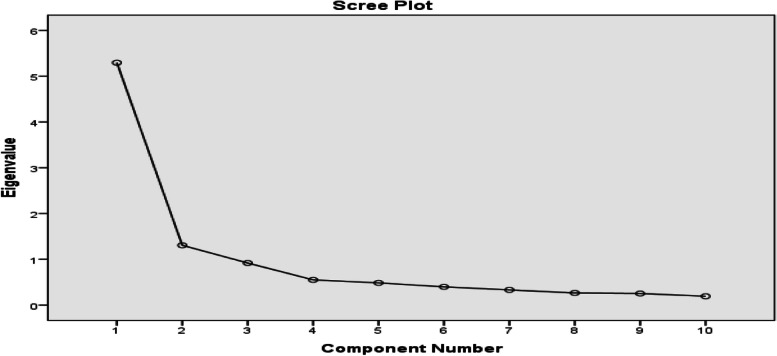
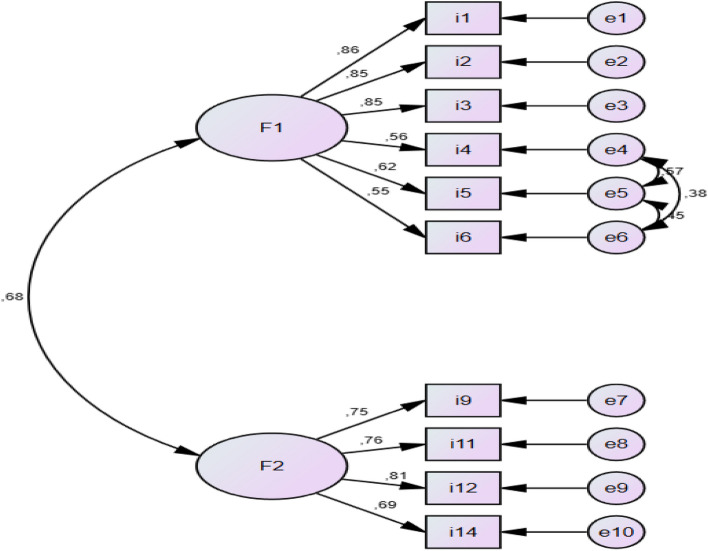
The study was designed methodologically. The study data were collected at two Hospitals. The sample consisted of 102 patients in the pilot application stage and 186 patients in the main application stage. The study's data collection tools were the "Personal Information Form," "VAS for Comfort," and the "Comfort Scale for Injection" draft. The obtained data were used for validity and reliability analyses. Validity analyses involved content validity, Exploratory Factor Analysis (EFA), Confirmatory Factor Analysis (CFA), and criterion validity. Reliability was assessed using Cronbach's Alpha and split-half tests. Statistical analyses were performed with SPSS 22 and AMOS. EFA used the KMO test and Bartlett's Test (KMO = 0.878; p < 0.001), with Varimax rotation, while CFA confirmed the factor structure. Pearson correlation evaluated criterion validity.
The scale consisted of 10 items and two sub-scales: "Comfort during the Injection Procedure" and "Environmental Comfort." The "VAS for Comfort" and the scale and its sub-scales showed a positive correlation. The Cronbach Alpha Value of the entire scale was found to be 0.899.
The data showed that the "Comfort Scale for Injection" is an adequate, valid, and reliable measurement tool for determining patients' comfort level during the injection procedure. Measuring patients' comfort levels during injection at regular intervals is recommended, as new studies are planned to increase injection comfort and adapt the "Comfort Scale for Injection" for different languages and cultures.
注射过程中患者的舒适度会影响护理质量。然而,文献中并未提供一个有效、可靠且专门用于测量该水平的工具。
本研究旨在开发一种有效且可靠的测量工具,以确定患者在注射过程中的舒适度。
本研究采用方法学设计。研究数据在两家医院收集。样本包括试点应用阶段的102名患者和主要应用阶段的186名患者。研究的数据收集工具包括“个人信息表”、“舒适度视觉模拟评分法(VAS)”以及“注射舒适度量表”草稿。所获数据用于效度和信度分析。效度分析包括内容效度、探索性因素分析(EFA)、验证性因素分析(CFA)和效标效度。使用克朗巴哈α系数和分半检验评估信度。使用SPSS 22和AMOS进行统计分析。EFA采用KMO检验和巴特利特检验(KMO = 0.878;p < 0.001),采用方差最大化旋转,而CFA则确认了因素结构。皮尔逊相关性评估效标效度。
该量表由10个项目和两个子量表组成:“注射过程中的舒适度”和“环境舒适度”。“舒适度视觉模拟评分法(VAS)”与该量表及其子量表呈正相关。整个量表的克朗巴哈α值为0.899。
数据表明,“注射舒适度量表”是用于确定患者在注射过程中舒适度水平的一种充分、有效且可靠的测量工具。建议定期测量患者在注射时的舒适度水平,因为计划开展新的研究以提高注射舒适度,并使“注射舒适度量表”适用于不同语言和文化。