Lancet Psychiatry. 2025 Feb;12(2):111-121. doi: 10.1016/S2215-0366(24)00363-8. Epub 2024 Dec 19.
High-quality estimates of the epidemiology of the autism spectrum and the health needs of autistic people are necessary for service planners and resource allocators. Here we present the global prevalence and health burden of autism spectrum disorder from the Global Burden of Diseases, Injuries, and Risk Factors Study (GBD) 2021 following improvements to the epidemiological data and burden estimation methods.
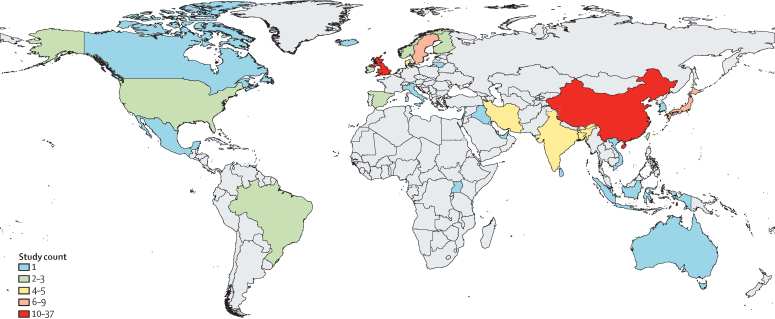
For GBD 2021, a systematic literature review involving searches in PubMed, Embase, PsycINFO, the Global Health Data Exchange, and consultation with experts identified data on the epidemiology of autism spectrum disorder. Eligible data were used to estimate prevalence via a Bayesian meta-regression tool (DisMod-MR 2.1). Modelled prevalence and disability weights were used to estimate health burden in years lived with disability (YLDs) as the measure of non-fatal health burden and disability-adjusted life-years (DALYs) as the measure of overall health burden. Data by ethnicity were not available. People with lived experience of autism were involved in the design, preparation, interpretation, and writing of this Article.
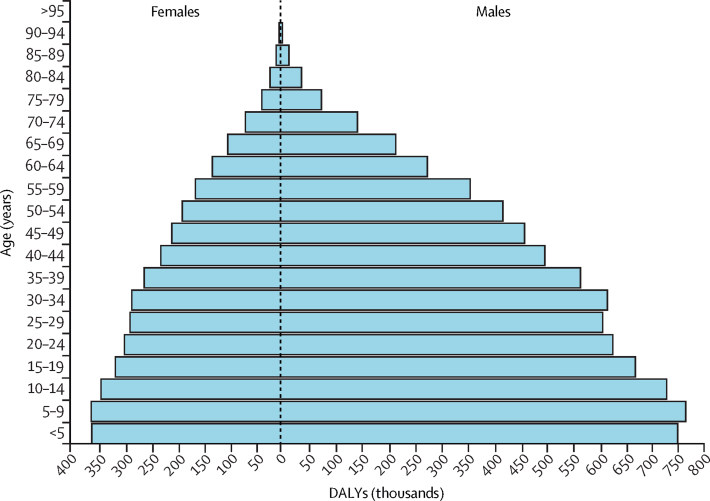
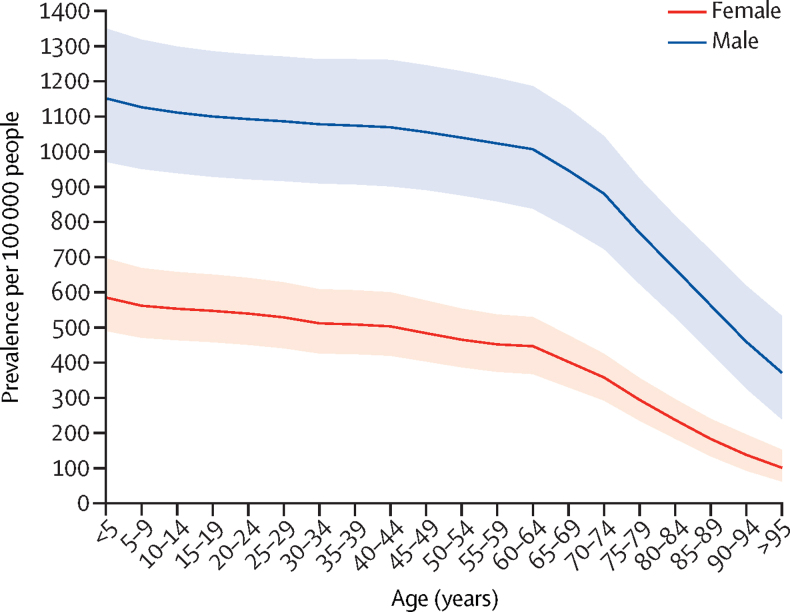
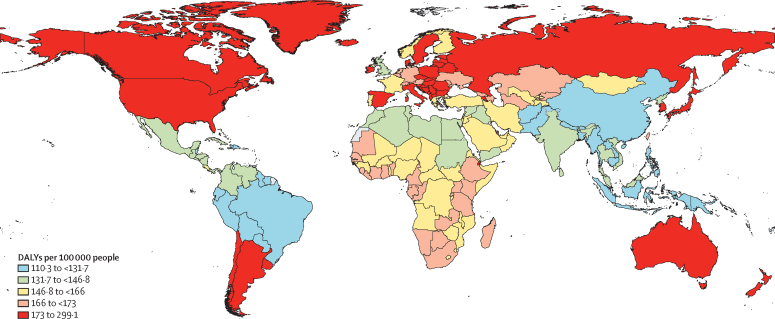
An estimated 61·8 million (95% uncertainty interval 52·1-72·7) individuals (one in every 127 people) were on the autism spectrum globally in 2021. The global age-standardised prevalence was 788·3 (663·8-927·2) per 100 000 people, equivalent to 1064·7 (898·5-1245·7) autistic males per 100 000 males and 508·1 (424·6-604·3) autistic females per 100 000 females. Autism spectrum disorder accounted for 11·5 million (7·8-16·3) DALYs, equivalent to 147·6 (100·2-208·2) DALYs per 100 000 people (age-standardised) globally. At the super-region level, age-standardised DALY rates ranged from 126·5 (86·0-178·0) per 100 000 people in southeast Asia, east Asia, and Oceania to 204·1 (140·7-284·7) per 100 000 people in the high-income super-region. DALYs were evident across the lifespan, emerging for children younger than age 5 years (169·2 [115·0-237·4] DALYs per 100 000 people) and decreasing with age (163·4 [110·6-229·8] DALYs per 100 000 people younger than 20 years and 137·7 [93·9-194·5] DALYs per 100 000 people aged 20 years and older). Autism spectrum disorder was ranked within the top-ten causes of non-fatal health burden for people younger than 20 years.
The high prevalence and high rank for non-fatal health burden of autism spectrum disorder in people younger than 20 years underscore the importance of early detection and support to autistic young people and their caregivers globally. Work to improve the precision and global representation of our findings is required, starting with better global coverage of epidemiological data so that geographical variations can be better ascertained. The work presented here can guide future research efforts, and importantly, decisions concerning allocation of health services that better address the needs of all autistic individuals.
Queensland Health and the Bill & Melinda Gates Foundation.
对于服务规划者和资源分配者而言,高质量地评估自闭症谱系的流行病学情况以及自闭症患者的健康需求至关重要。在此,我们基于对流行病学数据和负担估计方法的改进,呈现了《2021年全球疾病、伤害及风险因素负担研究》(GBD 2021)中自闭症谱系障碍的全球患病率和健康负担情况。
对于GBD 2021,通过在PubMed、Embase、PsycINFO、全球卫生数据交换平台进行检索,并咨询专家,开展了一项系统的文献综述,以确定有关自闭症谱系障碍流行病学的数据。符合条件的数据通过贝叶斯元回归工具(DisMod-MR 2.1)用于估计患病率。将建模得出的患病率和残疾权重用于估计以失能生存年(YLDs)衡量的非致命健康负担以及以伤残调整生命年(DALYs)衡量的总体健康负担。没有按种族划分的数据。有自闭症生活经历的人参与了本文的设计、准备、解读和撰写。
2021年全球估计有6180万人(95%不确定区间为5210万 - 7270万)(每127人中就有1人)处于自闭症谱系中。全球年龄标准化患病率为每10万人788.3例(663.8 - 927.2),相当于每10万男性中有1064.7例(898.5 - 1245.7)自闭症男性患者,每10万女性中有508.1例(424.6 - 604.3)自闭症女性患者。自闭症谱系障碍导致了1150万(780万 - 1630万)伤残调整生命年,相当于全球每10万人中(年龄标准化)有147.6例(100.2 - 208.2)伤残调整生命年。在超区域层面,年龄标准化伤残调整生命年率范围从东南亚、东亚和大洋洲每10万人中的126.5例(86.0 - 178.0)到高收入超区域每10万人中的204.1例(140.7 - 284.7)。伤残调整生命年在整个生命周期中都很明显,在5岁以下儿童中出现(每10万人中有169.2例[115.0 - 237.4]伤残调整生命年),并随年龄下降(20岁以下每10万人中有163.4例[110.6 - 229.8]伤残调整生命年,20岁及以上每10万人中有137.7例[93.9 - 194.5]伤残调整生命年)。自闭症谱系障碍在20岁以下人群非致命健康负担的十大原因中位列其中。
20岁以下人群中自闭症谱系障碍的高患病率以及在非致命健康负担中的高排名凸显了全球范围内对自闭症青少年及其照顾者进行早期检测和支持的重要性。需要开展工作以提高我们研究结果的准确性和全球代表性,首先要更好地覆盖全球流行病学数据,以便能更好地确定地理差异。本文所呈现的工作能够指导未来的研究工作,并且重要的是,为有关卫生服务分配的决策提供依据,从而更好地满足所有自闭症患者的需求。
昆士兰卫生部和比尔及梅琳达·盖茨基金会。