Li Yao, Wang Lulu, Yi Qing, Luo Linsong, Xiong Yuxia
Department of Pharmacology, School of Pharmacy, Southwest Medical University, Luzhou, Sichuan, China.
Front Nutr. 2024 Dec 11;11:1447878. doi: 10.3389/fnut.2024.1447878. eCollection 2024.
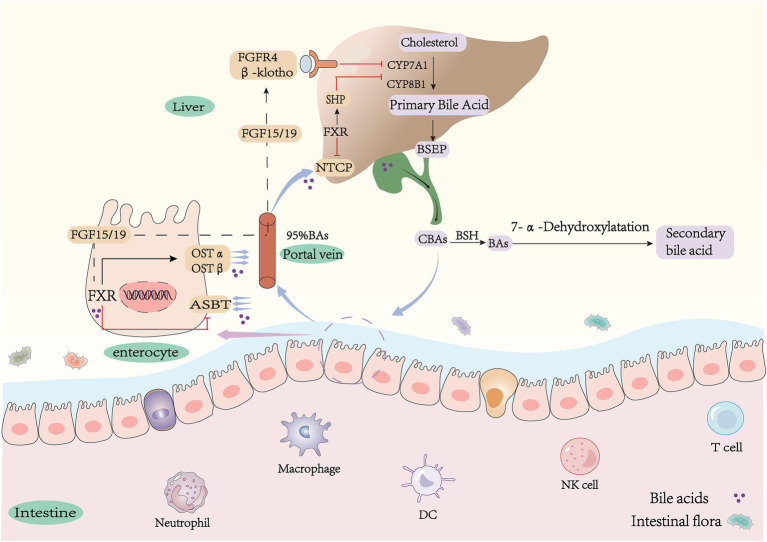
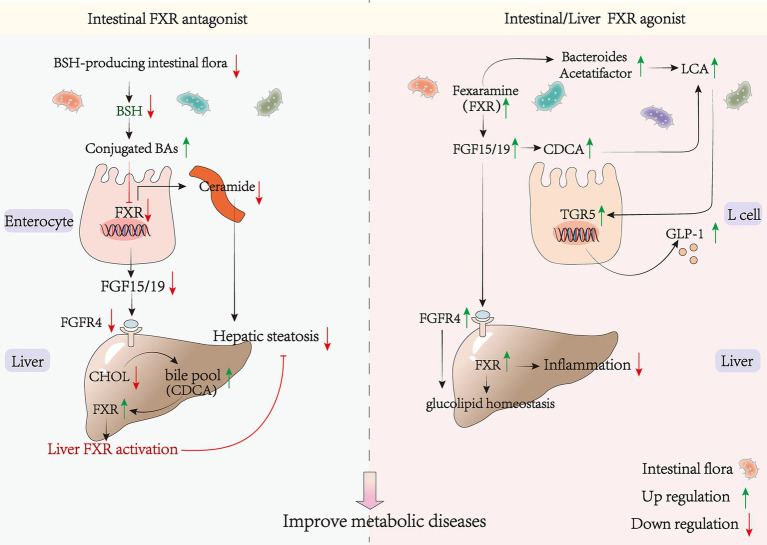
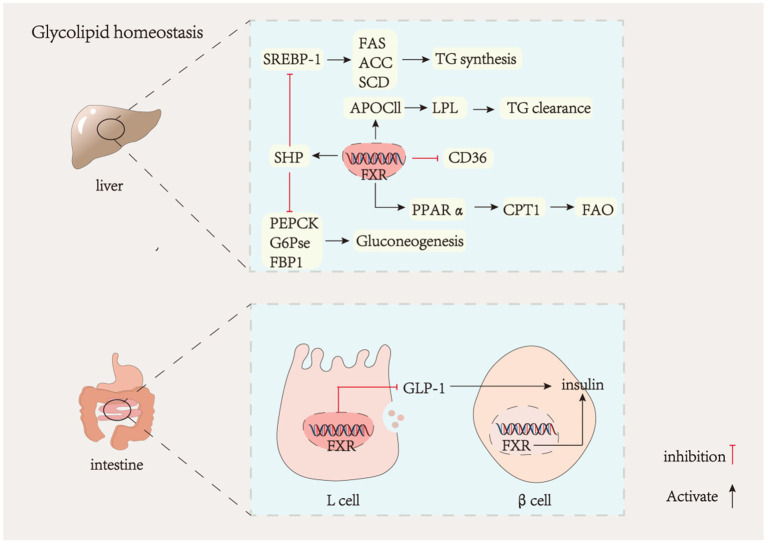
High sugar, high-fat diets and unhealthy lifestyles have led to an epidemic of obesity and obesity-related metabolic diseases, seriously placing a huge burden on socio-economic development. A deeper understanding and elucidation of the specific molecular biological mechanisms underlying the onset and development of obesity has become a key to the treatment of metabolic diseases. Recent studies have shown that the changes of bile acid composition are closely linked to the development of metabolic diseases. Bile acids can not only emulsify lipids in the intestine and promote lipid absorption, but also act as signaling molecules that play an indispensable role in regulating bile acid homeostasis, energy expenditure, glucose and lipid metabolism, immunity. Disorders of bile acid metabolism are therefore important risk factors for metabolic diseases. The farnesol X receptor, a member of the nuclear receptor family, is abundantly expressed in liver and intestinal tissues. Bile acids act as endogenous ligands for the farnesol X receptor, and erroneous FXR signaling triggered by bile acid dysregulation contributes to metabolic diseases, including obesity, non-alcoholic fatty liver disease and diabetes. Activation of FXR signaling can reduce lipogenesis and inhibit gluconeogenesis to alleviate metabolic diseases. It has been found that intestinal FXR can regulate hepatic FXR in an organ-wide manner. The crosstalk between intestinal FXR and hepatic FXR provides a new idea for the treatment of metabolic diseases. This review focuses on the relationship between bile acids and metabolic diseases and the current research progress to provide a theoretical basis for further research and clinical applications.
高糖、高脂饮食和不健康的生活方式导致了肥胖症及肥胖相关代谢性疾病的流行,严重给社会经济发展带来了巨大负担。深入理解和阐明肥胖症发生发展背后的具体分子生物学机制已成为治疗代谢性疾病的关键。最近的研究表明,胆汁酸组成的变化与代谢性疾病的发展密切相关。胆汁酸不仅能乳化肠道中的脂质并促进脂质吸收,还可作为信号分子,在调节胆汁酸稳态、能量消耗、葡萄糖和脂质代谢、免疫方面发挥不可或缺的作用。因此,胆汁酸代谢紊乱是代谢性疾病的重要危险因素。法尼醇X受体是核受体家族的成员之一,在肝脏和肠道组织中大量表达。胆汁酸作为法尼醇X受体的内源性配体,胆汁酸失调引发的错误FXR信号传导会导致包括肥胖症、非酒精性脂肪性肝病和糖尿病在内的代谢性疾病。激活FXR信号传导可减少脂肪生成并抑制糖异生,从而缓解代谢性疾病。已发现肠道FXR可在器官范围内调节肝脏FXR。肠道FXR与肝脏FXR之间的相互作用为代谢性疾病的治疗提供了新思路。本综述重点关注胆汁酸与代谢性疾病之间的关系以及当前的研究进展,为进一步研究和临床应用提供理论依据。