Urme Shah Rucksana Akhter, Ahmed Syeda Fahmida, Imran Md Abdus Shukur, Akhand Mst Rubaiat Nazneen, Khan Mohammad Mehedi Hasan
Department of Biochemistry & Chemistry, Sylhet Agricultural University, Sylhet, Bangladesh.
Department of Animal and Fish Biotechnology, Sylhet Agricultural University, Sylhet, Bangladesh.
Biomed Res Int. 2024 Dec 19;2024:5595575. doi: 10.1155/bmri/5595575. eCollection 2024.
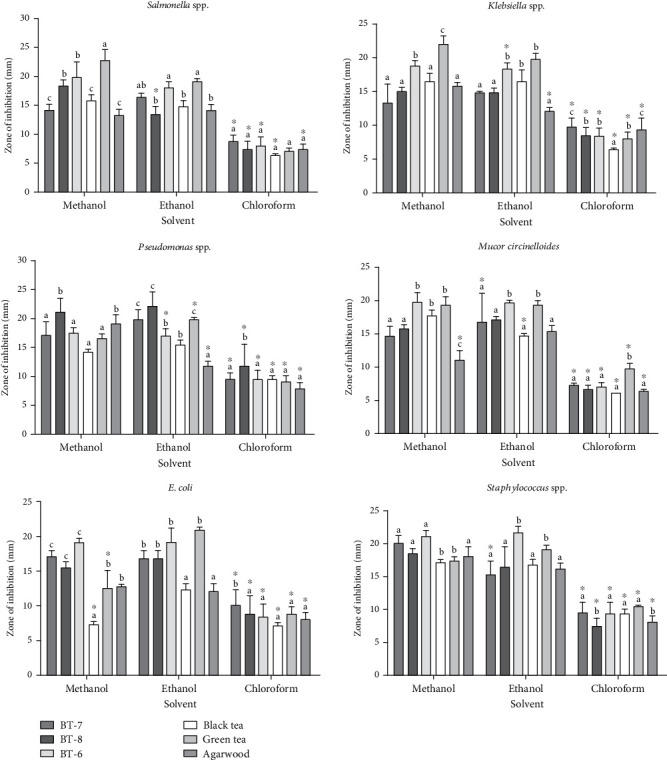
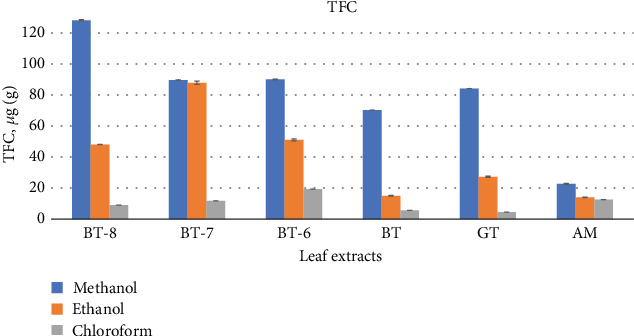
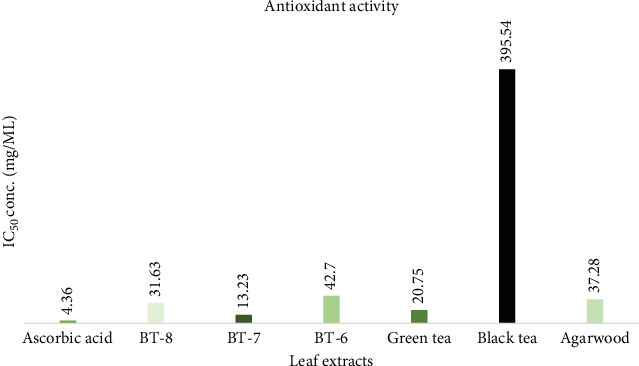
Emerging multidrug-resistant (MDR) strains are the main challenges to the progression of new drug discovery. To diminish infectious disease-causing pathogens, new antibiotics are required while the drying pipeline of potent antibiotics is adding to the severity. Plant secondary metabolites or phytochemicals including alkaloids, phenols, flavonoids, and terpenes have successfully demonstrated their inhibitory potential against the drug-resistant pathogens. In quest of potential phytochemicals, we selected tea () and agarwood () leaves for antimicrobial activity. Fresh tea leaves were collected in three varieties, namely, BT-6, BT-7, and BT-8, including green tea (nonfermented tea), black tea (fully fermented tea), and agarwood leaves collected from Sylhet region of Bangladesh. This study is aimed at analyzing the phytochemical constituency and antimicrobial activity of tea and agarwood leaf extracts and analyzing if there is a combined effect or synergistic activity against multidrug-resistant pathogens. The antimicrobial activity of tea and agarwood leaf extracts was analyzed against MDR pathogenic bacteria and fungus. Qualitative and quantitative phytochemical constituency profiling of these six leaf extracts was evaluated, and preliminary screening exhibited that most of the leaves contained diverse groups of metabolites (alkaloids, tannin, flavonoids, glycosides, saponins, etc.). The highest amounts of TPC (total phenolic content) (110.16 ± 0.48 g/mg) were found in BT-7 in ethanol extracts, and BT-8 in methanol extracts possessed the highest (128.1 ± 0.43 g/mg) TFC (total flavonoid content). Notably, green tea showed remarkable results in TPC and TFC. In antioxidant scavenging activity, BT-7 and green tea showed significant IC values which were 13.23 and 20.75 mg/mL, respectively. In antimicrobial assays, both 50 L of each tea and agarwood leaf extract antimicrobial activities were examined against 50 L of each bacterial and fungal culture. In synergistic activity, 50 L of each type of leaf extracts was poured over the commercial antibiotics to evaluate their synergism, additive, or antagonism activity against the multidrug-resistant pathogens. In the antimicrobial activity test, green tea showed a maximum diameter (22.0 ± 1.1 mm) zone of inhibition against whereas BT-8 showed 22.0 ± 2.5 mm against . Indeed, fresh tea BT-6 and BT-7 both showed remarkable zone of inhibition against the selected microbes including Gram-negative and Gram-positive bacteria. Besides, leaf extract also showed antimicrobial activity against pathogenic fungus . Aiming to increase antibiotic resistance efficacy, synergistic activities were evaluated among leaf extracts and antibiotics against the selected pathogens where synergism, antagonism, and additive results were noted. Combination of BT-8 extracts with antibiotics (ceftiofur) showed the highest synergism nearly 36 mm of the zone of inhibition against . Additionally, green tea with gentamicin and erythromycin also showed remarkable synergism 35 and 33 mm against and , respectively. Tea and agarwood leaves grown in Bangladesh possess high antioxidant activity, promising antibacterial and antifungal activity, thus might provide a potential source for drug discovery.

新出现的多重耐药(MDR)菌株是新药研发进程中的主要挑战。为了减少引起传染病的病原体,需要新的抗生素,而有效抗生素研发渠道的枯竭加剧了这一严峻形势。植物次生代谢产物或植物化学物质,包括生物碱、酚类、黄酮类和萜类,已成功证明它们对耐药病原体具有抑制潜力。为了寻找潜在的植物化学物质,我们选择了茶叶()和沉香()叶进行抗菌活性研究。收集了三个品种的新鲜茶叶,即BT - 6、BT - 7和BT - 8,包括绿茶(非发酵茶)、红茶(全发酵茶),以及从孟加拉国锡尔赫特地区采集的沉香叶。本研究旨在分析茶叶和沉香叶提取物的植物化学成分及抗菌活性,并分析其对多重耐药病原体是否具有联合效应或协同活性。针对MDR病原菌和真菌分析了茶叶和沉香叶提取物的抗菌活性。对这六种叶提取物进行了定性和定量的植物化学成分分析,初步筛选表明大多数叶子含有不同种类的代谢物(生物碱、单宁、黄酮类、糖苷、皂苷等)。乙醇提取物中BT - 7的总酚含量(TPC)最高(110.16±0.48 g/mg),甲醇提取物中BT - 8的总黄酮含量(TFC)最高(128.1±0.43 g/mg)。值得注意的是,绿茶在TPC和TFC方面表现出显著结果。在抗氧化清除活性方面,BT - 7和绿茶的IC值分别为13.23和20.75 mg/mL,具有显著意义。在抗菌试验中,分别对50 L的每种茶叶和沉香叶提取物的抗菌活性针对50 L的每种细菌和真菌培养物进行了检测。在协同活性方面,将50 L的每种叶提取物与商业抗生素混合,以评估它们对多重耐药病原体的协同、相加或拮抗活性。在抗菌活性测试中,绿茶对表现出最大抑菌圈直径(22.0±1.1 mm),而BT - 8对表现出22.0±2.5 mm。事实上,新鲜茶叶BT - 6和BT - 7对所选微生物,包括革兰氏阴性菌和革兰氏阳性菌,均表现出显著的抑菌圈。此外,叶提取物对致病真菌也表现出抗菌活性。为了提高抗生素耐药性疗效,评估了叶提取物与抗生素对所选病原体的协同活性,观察到了协同、拮抗和相加结果。BT - 8提取物与抗生素(头孢噻呋)的组合对表现出近36 mm的最高协同抑菌圈。此外,绿茶与庆大霉素和红霉素组合分别对和也表现出显著的协同作用,抑菌圈直径分别为35和33 mm。在孟加拉国生长的茶叶和沉香叶具有高抗氧化活性、良好的抗菌和抗真菌活性,因此可能为药物研发提供潜在来源。