Garoushi Sufyan, Säilynoja Eija, Frater Mark, Keulemans Filip, Vallittu Pekka K, Lassila Lippo
Department of Biomaterials Science and Turku Clinical Biomaterial Center -TCBC, Institute of Dentistry, University of Turku, Turku, Finland.
Research Development and Production Department, Stick Tech Ltd, Turku, Finland.
BMC Oral Health. 2024 Dec 30;24(1):1573. doi: 10.1186/s12903-024-05267-6.
Short fiber-reinforced composites (SFRCs) are restorative materials for large cavities claimed to effectively resist crack propagation. This study aimed to compare the mechanical properties and physical characteristics of five commercially available SFRCS (Alert, Fibrafill Flow, Fibrafill Dentin, everX Flow, and everX Posterior) against a conventional particulate-filled composite (PFC, Essentia Universal).
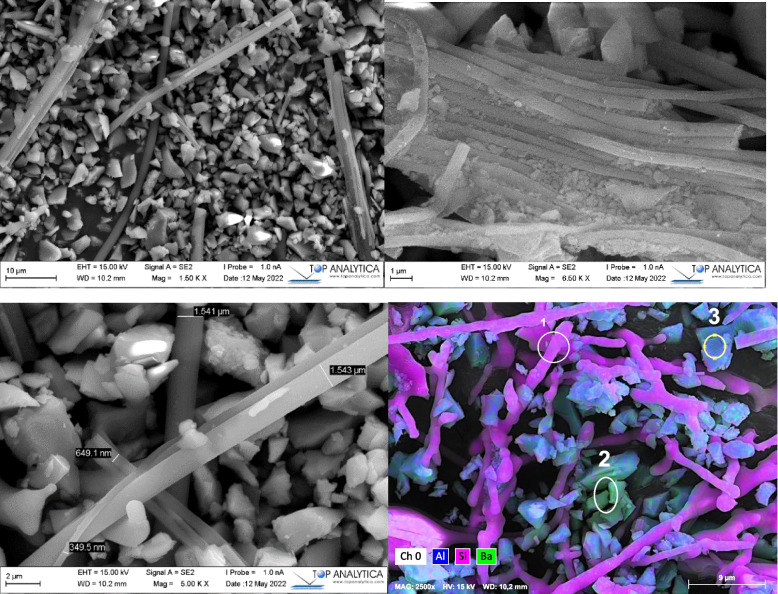
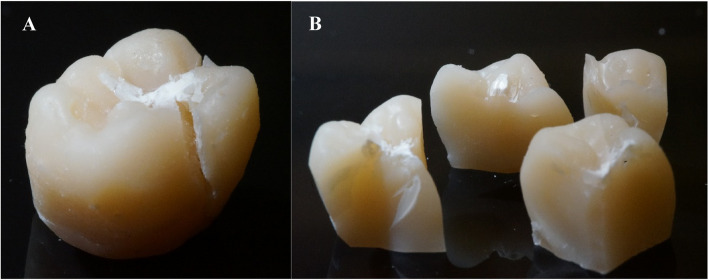
The following characteristics were evaluated in accordance with ISO standards: flexural strength and modulus and fracture toughness. FTIR-spectrometry was used to calculate the degree of monomer conversion (DC%). The two-body wear test was performed in a ball-on-flat configuration using a chewing simulator with 15,000 cycles. A non-contact 3D optical profilometer was utilized to measure wear depth. The tensilometer method was used to quantify polymerization shrinkage-stress. Posterior composite crowns (n = 8) were made and quasi-statically loaded until fracture. The microstructure of the SFRCs were assessed using scanning electron microscopy. ANOVA was applied to statistically interpret the results, and then the post hoc Tukey's analysis was performed.
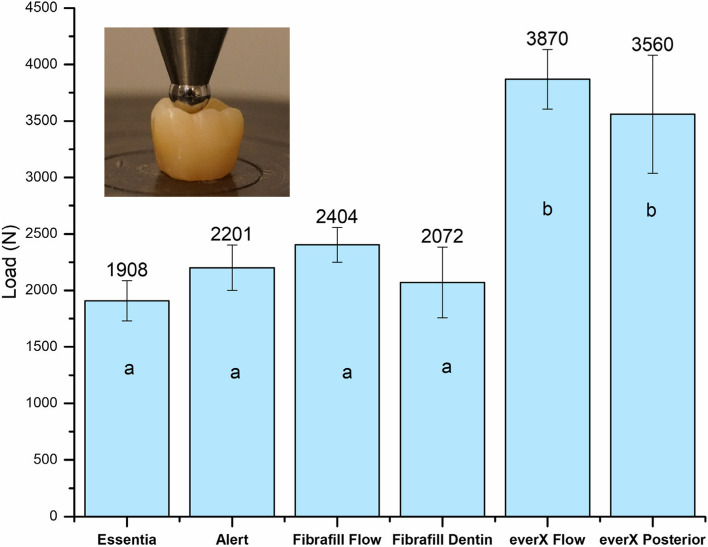
Among the evaluated composites, SFRC (everX Flow) had the lowermost wear depth (20.4 μm) and uppermost fracture toughness (2.8 MPa m) values (p < 0.05). Fibrafill Flow (92 MPa) and Fibrafill Dentin (98 MPa) showed the lowest flexural strength values (p < 0.05). The used SFRCs exhibited equivalent values (p > 0.05) of shrinkage stress, except for everX Flow which had the highest value (5.3 MPa). everX Flow composite crowns presented significantly greater fracture resistance (3870 ± 260 N) (p < 0.05) than that of the other SFRCs tested.
Significant differences were found between the investigated characteristics of different commercially available SFRCs. It is noteworthy that certain SFRCs exhibited behavior comparable to that of conventional PFC, while others demonstrated superior performance.
短纤维增强复合材料(SFRCs)是用于大窝洞修复的材料,据称能有效抵抗裂纹扩展。本研究旨在比较五种市售短纤维增强复合材料(Alert、Fibrafill Flow、Fibrafill Dentin、everX Flow和everX Posterior)与传统颗粒填充复合材料(PFC,Essentia Universal)的力学性能和物理特性。
根据ISO标准评估以下特性:弯曲强度、模量和断裂韧性。使用傅里叶变换红外光谱法计算单体转化率(DC%)。采用球-平面配置,使用咀嚼模拟器进行15000次循环的双体磨损试验。利用非接触式三维光学轮廓仪测量磨损深度。采用拉伸计法量化聚合收缩应力。制作后牙复合树脂全冠(n = 8)并进行准静态加载直至断裂。使用扫描电子显微镜评估短纤维增强复合材料的微观结构。应用方差分析对结果进行统计学解释,然后进行事后Tukey分析。
在所评估的复合材料中,短纤维增强复合材料(everX Flow)的磨损深度最低(20.4μm),断裂韧性最高(2.8MPa·m)(p < 0.05)。Fibrafill Flow(92MPa)和Fibrafill Dentin(98MPa)的弯曲强度值最低(p < 0.05)。除everX Flow收缩应力最高(5.3MPa)外,所用短纤维增强复合材料的收缩应力值相当(p > 0.05)。everX Flow复合树脂全冠的抗折性能(3870±260N)明显高于其他测试的短纤维增强复合材料(p < 0.05)。
不同市售短纤维增强复合材料的研究特性之间存在显著差异。值得注意的是,某些短纤维增强复合材料的性能与传统颗粒填充复合材料相当,而其他一些则表现出卓越的性能。