Zhang Junfeng, Peng Qingyan, Fan Jin, Liu Fuzhong, Chen Hongbo, Bi Xing, Yuan Shuai, Jiang Wei, Pan Ting, Li Kailing, Tan Sihai, Chen Peng
Department of Urology, Xinjiang Medical University Affiliated Cancer Hospital, Urumqi, China.
School of Nursing, Xinjiang Medical University, Urumqi, China.
J Transl Med. 2024 Dec 30;22(1):1157. doi: 10.1186/s12967-024-06018-5.
Immune checkpoint inhibitors (ICIs) are a cornerstone therapy for advanced renal cell carcinoma (RCC). However, significant rates of primary resistance hinder their efficacy, and the underlying mechanisms remain poorly understood. This study aims to unravel the tumor-immune interactions and signaling pathways driving primary resistance to ICIs in RCC.
We integrated single-cell RNA sequencing, spatial transcriptomics, and clinical sample analysis to investigate the tumor microenvironment and intercellular signaling. Advanced computational methods, including cell-cell communication networks, pseudotime trajectories, and gene set enrichment analysis (GSEA), were employed to uncover the underlying resistance mechanisms.
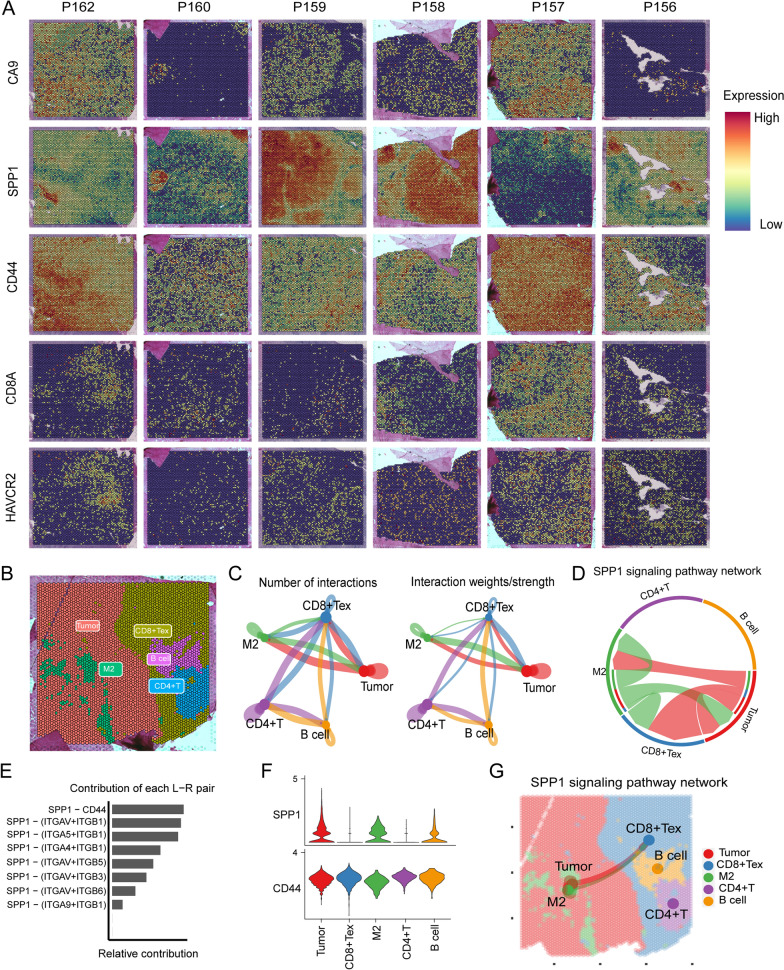
Compared to the sensitive group, the primary resistance group exhibited a significant increase in SPP1-CD44 signaling-mediated interactions between tumor cells and immune cells. These interactions disrupted antigen presentation in immune effector cells and suppressed key chemokine and cytokine pathways, thereby impairing effective immune responses. In contrast, the sensitive group showed more active antigen presentation and cytokine signaling, which facilitated stronger immune responses. Furthermore, the interaction between SPP1-secreting tumor cells and CD44-expressing exhausted CD8 + T cells activated the MAPK signaling pathway within CD8 + Tex cells, exacerbating T cell exhaustion and driving the development of ICI resistance in RCC.
Our findings reveal a potential mechanism by which SPP1-CD44 signaling mediates tumor-immune cell interactions leading to ICI resistance, providing a theoretical basis for targeting and disrupting this signaling to overcome primary resistance in RCC.
免疫检查点抑制剂(ICIs)是晚期肾细胞癌(RCC)的基石疗法。然而,原发性耐药率较高,阻碍了其疗效,其潜在机制仍知之甚少。本研究旨在揭示RCC中驱动对ICIs原发性耐药的肿瘤-免疫相互作用和信号通路。
我们整合了单细胞RNA测序、空间转录组学和临床样本分析,以研究肿瘤微环境和细胞间信号传导。采用先进的计算方法,包括细胞-细胞通讯网络、伪时间轨迹和基因集富集分析(GSEA),来揭示潜在的耐药机制。
与敏感组相比,原发性耐药组中肿瘤细胞与免疫细胞之间由SPP1-CD44信号介导的相互作用显著增加。这些相互作用破坏了免疫效应细胞中的抗原呈递,并抑制了关键的趋化因子和细胞因子通路,从而损害了有效的免疫反应。相比之下,敏感组显示出更活跃的抗原呈递和细胞因子信号传导,这促进了更强的免疫反应。此外,分泌SPP1的肿瘤细胞与表达CD44的耗竭性CD8+T细胞之间的相互作用激活了CD8+Tex细胞内的MAPK信号通路,加剧了T细胞耗竭,并推动了RCC中ICI耐药的发展。
我们的研究结果揭示了一种潜在机制,即SPP1-CD44信号介导肿瘤-免疫细胞相互作用导致ICI耐药,为靶向和破坏该信号以克服RCC中的原发性耐药提供了理论基础。