Ku Ti-Hsuan, Ram-Mohan Nikhil, Zudock Elizabeth J, Abe Ryuichiro, Yang Samuel
Department of Emergency Medicine, Stanford University, 240 Pasteur Drive Rm 0300 Stanford, CA 94305, USA.
Nucleic Acids Res. 2025 Jan 24;53(3). doi: 10.1093/nar/gkae1262.
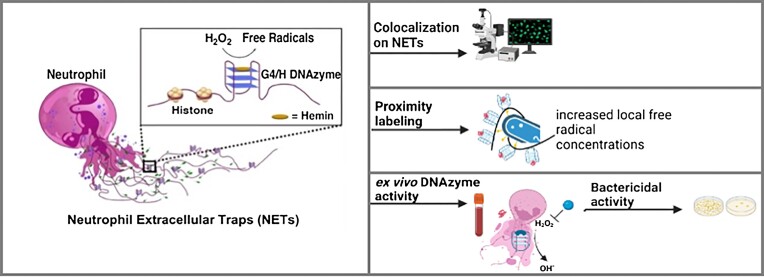
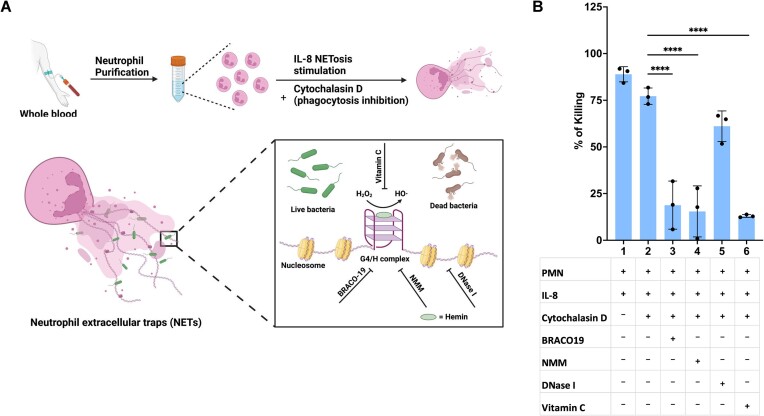
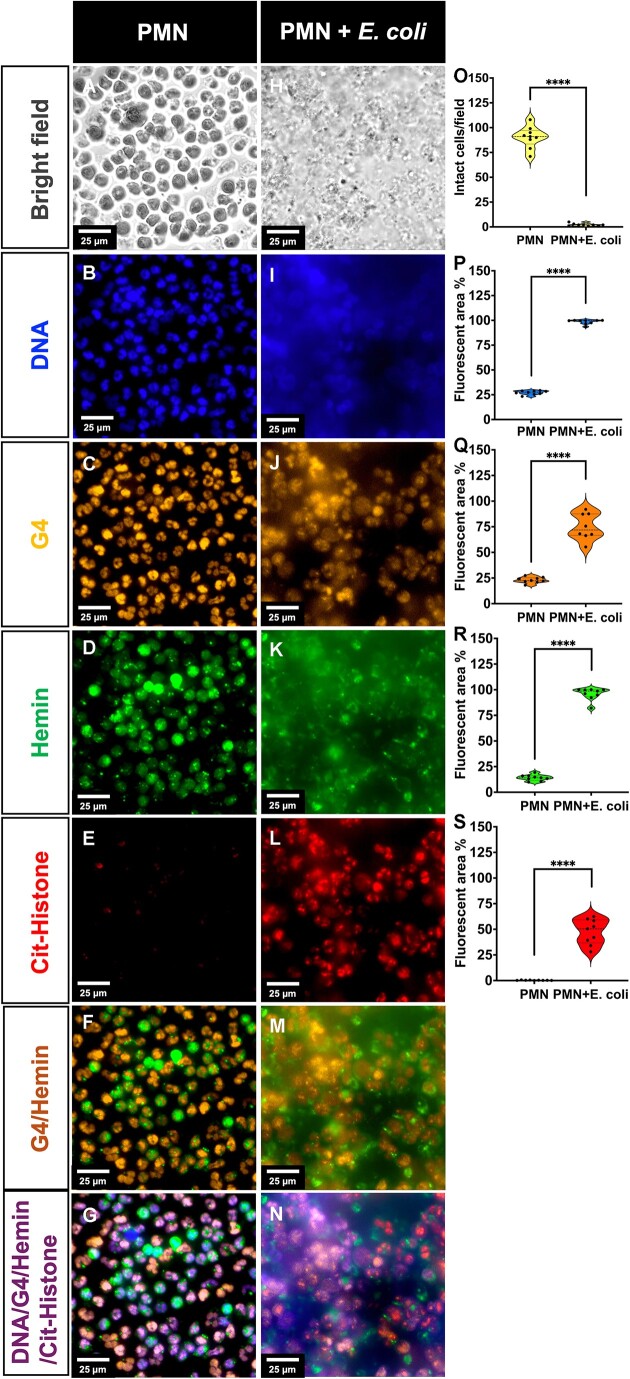
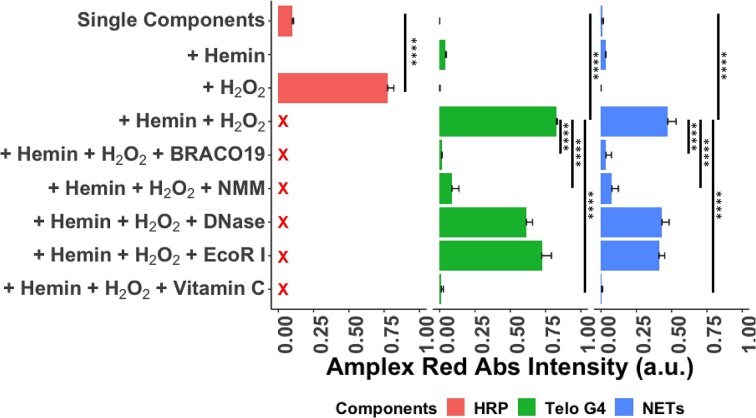
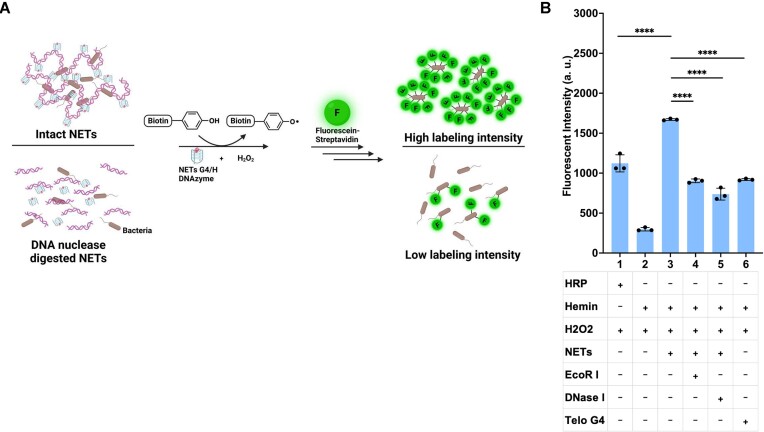
The mechanisms of bacterial killing by neutrophil extracellular traps (NETs) are unclear. DNA, the largest component of NETs was believed to merely be a scaffold with antimicrobial activity only through the charge of the backbone. Here, we demonstrate for the first time that NETs DNA is beyond a mere scaffold to trap bacteria and it produces hydroxyl free radicals through the spatially concentrated G-quadruplex/hemin DNAzyme complexes, driving bactericidal effects. Immunofluorescence staining showed potential colocalization of G-quadruplex and hemin in extruded NETs DNA, and Amplex UltraRed assay portrayed its peroxidase activity. Proximity labeling of bacteria revealed localized concentration of radicals resulting from NETs bacterial trapping. Ex vivo bactericidal assays revealed that G-quadruplex/hemin DNAzyme is the primary driver of bactericidal activity in NETs. NETs are DNAzymes that may have important biological consequences.
中性粒细胞胞外陷阱(NETs)杀死细菌的机制尚不清楚。DNA是NETs的最大组成部分,过去人们认为它仅仅是一个支架,仅通过主链电荷具有抗菌活性。在此,我们首次证明NETs DNA不仅仅是捕获细菌的支架,它还通过空间浓缩的G-四链体/血红素DNA酶复合物产生羟基自由基,从而产生杀菌作用。免疫荧光染色显示G-四链体和血红素在挤出的NETs DNA中可能共定位,而Amplex UltraRed检测显示了其过氧化物酶活性。对细菌的邻近标记揭示了NETs捕获细菌产生的自由基的局部浓度。体外杀菌试验表明,G-四链体/血红素DNA酶是NETs杀菌活性的主要驱动因素。NETs是可能具有重要生物学意义的DNA酶。