• 文献检索
  • 文档翻译
  • 深度研究
  • 学术资讯
  • Suppr Zotero 插件Zotero 插件
  • 邀请有礼
  • 套餐&价格
  • 历史记录
应用&插件
Suppr Zotero 插件Zotero 插件浏览器插件Mac 客户端Windows 客户端微信小程序
定价
高级版会员购买积分包购买API积分包
服务
文献检索文档翻译深度研究API 文档MCP 服务
关于我们
关于 Suppr公司介绍联系我们用户协议隐私条款
关注我们

Suppr 超能文献

核心技术专利:CN118964589B侵权必究
粤ICP备2023148730 号-1Suppr @ 2026

文献检索

告别复杂PubMed语法,用中文像聊天一样搜索,搜遍4000万医学文献。AI智能推荐,让科研检索更轻松。

立即免费搜索

文件翻译

保留排版,准确专业,支持PDF/Word/PPT等文件格式,支持 12+语言互译。

免费翻译文档

深度研究

AI帮你快速写综述,25分钟生成高质量综述,智能提取关键信息,辅助科研写作。

立即免费体验

医生现在要给你做测谎检查。

The doctor will polygraph you now.

作者信息

Anibal James, Gunkel Jasmine, Awan Shaheen, Huth Hannah, Nguyen Hang, Le Tram, Bélisle-Pipon Jean-Christophe, Boyer Micah, Hazen Lindsey, Bensoussan Yael, Clifton David, Wood Bradford

机构信息

Center for Interventional Oncology, Clinical Center, National Institutes of Health (NIH), Bethesda, MD USA.

Computational Health Informatics Lab, Institute of Biomedical Engineering, Department of Engineering Science, University of Oxford, Oxford, UK.

出版信息

Npj Health Syst. 2024;1(1):1. doi: 10.1038/s44401-024-00001-4. Epub 2024 Dec 5.

DOI:10.1038/s44401-024-00001-4
PMID:39759269
原文链接:https://pmc.ncbi.nlm.nih.gov/articles/PMC11698301/
Abstract

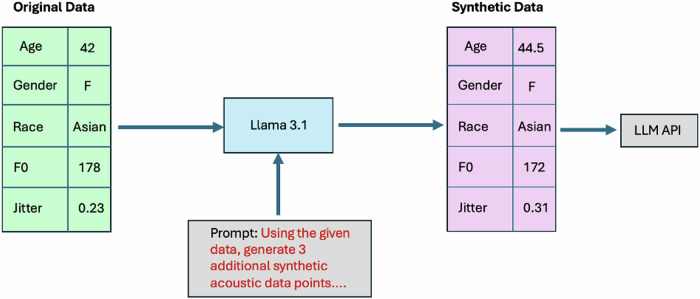
Artificial intelligence (AI) methods have been proposed for the prediction of social behaviors that could be reasonably understood from patient-reported information. This raises novel ethical concerns about respect, privacy, and control over patient data. Ethical concerns surrounding clinical AI systems for social behavior verification can be divided into two main categories: (1) the potential for inaccuracies/biases within such systems, and (2) the impact on trust in patient-provider relationships with the introduction of automated AI systems for "fact-checking", particularly in cases where the data/models may contradict the patient. Additionally, this report simulated the misuse of a verification system using patient voice samples and identified a potential LLM bias against patient-reported information in favor of multi-dimensional data and the outputs of other AI methods (i.e., "AI self-trust"). Finally, recommendations were presented for mitigating the risk that AI verification methods will cause harm to patients or undermine the purpose of the healthcare system.

摘要

人工智能(AI)方法已被提出用于预测可从患者报告信息中合理理解的社会行为。这引发了关于尊重、隐私以及对患者数据控制权的新的伦理问题。围绕用于社会行为验证的临床人工智能系统的伦理问题可分为两大类:(1)此类系统中存在不准确/偏差的可能性,以及(2)引入用于“事实核查”的自动化人工智能系统对患者与医疗服务提供者关系中的信任产生的影响,特别是在数据/模型可能与患者相矛盾的情况下。此外,本报告使用患者语音样本模拟了验证系统的滥用情况,并识别出大型语言模型(LLM)对患者报告信息存在潜在偏差,倾向于多维数据和其他人工智能方法的输出结果(即“人工智能自我信任”)。最后,针对降低人工智能验证方法对患者造成伤害或破坏医疗系统目的的风险,提出了相关建议。

https://cdn.ncbi.nlm.nih.gov/pmc/blobs/fce8/11698301/86ff8b4c96ca/44401_2024_1_Fig3_HTML.jpg
https://cdn.ncbi.nlm.nih.gov/pmc/blobs/fce8/11698301/56fcde257055/44401_2024_1_Fig1_HTML.jpg
https://cdn.ncbi.nlm.nih.gov/pmc/blobs/fce8/11698301/75e8e9fa6f28/44401_2024_1_Fig2_HTML.jpg
https://cdn.ncbi.nlm.nih.gov/pmc/blobs/fce8/11698301/86ff8b4c96ca/44401_2024_1_Fig3_HTML.jpg
https://cdn.ncbi.nlm.nih.gov/pmc/blobs/fce8/11698301/56fcde257055/44401_2024_1_Fig1_HTML.jpg
https://cdn.ncbi.nlm.nih.gov/pmc/blobs/fce8/11698301/75e8e9fa6f28/44401_2024_1_Fig2_HTML.jpg
https://cdn.ncbi.nlm.nih.gov/pmc/blobs/fce8/11698301/86ff8b4c96ca/44401_2024_1_Fig3_HTML.jpg

相似文献

1
The doctor will polygraph you now.医生现在要给你做测谎检查。
Npj Health Syst. 2024;1(1):1. doi: 10.1038/s44401-024-00001-4. Epub 2024 Dec 5.
2
The doctor will polygraph you now: ethical concerns with AI for fact-checking patients.医生现在将对你进行测谎:人工智能用于核实患者情况的伦理问题。
ArXiv. 2024 Nov 11:arXiv:2408.07896v2.
3
Large Language Models and User Trust: Consequence of Self-Referential Learning Loop and the Deskilling of Health Care Professionals.大语言模型与用户信任:自我参照学习循环的后果及医疗保健专业人员的技能退化
J Med Internet Res. 2024 Apr 25;26:e56764. doi: 10.2196/56764.
4
Unraveling the Ethical Enigma: Artificial Intelligence in Healthcare.解开伦理谜团:医疗保健领域的人工智能
Cureus. 2023 Aug 10;15(8):e43262. doi: 10.7759/cureus.43262. eCollection 2023 Aug.
5
Trustworthy and ethical AI-enabled cardiovascular care: a rapid review.可信且合乎道德的人工智能赋能心血管护理:快速综述。
BMC Med Inform Decis Mak. 2024 Sep 4;24(1):247. doi: 10.1186/s12911-024-02653-6.
6
The Effects of Presenting AI Uncertainty Information on Pharmacists' Trust in Automated Pill Recognition Technology: Exploratory Mixed Subjects Study.呈现人工智能不确定性信息对药剂师对自动药丸识别技术信任度的影响:探索性混合主题研究
JMIR Hum Factors. 2025 Feb 11;12:e60273. doi: 10.2196/60273.
7
Shaping the Future of Healthcare: Ethical Clinical Challenges and Pathways to Trustworthy AI.塑造医疗保健的未来:伦理临床挑战与可信人工智能之路。
J Clin Med. 2025 Feb 27;14(5):1605. doi: 10.3390/jcm14051605.
8
Your Robot Therapist Will See You Now: Ethical Implications of Embodied Artificial Intelligence in Psychiatry, Psychology, and Psychotherapy.您的机器人治疗师现在为您服务:具身人工智能在精神病学、心理学和心理治疗中的伦理意义。
J Med Internet Res. 2019 May 9;21(5):e13216. doi: 10.2196/13216.
9
High-reward, high-risk technologies? An ethical and legal account of AI development in healthcare.高回报、高风险技术?医疗保健领域人工智能开发的伦理与法律剖析
BMC Med Ethics. 2025 Jan 15;26(1):4. doi: 10.1186/s12910-024-01158-1.
10
Artificial Intelligence (AI) Trust Framework and Maturity Model: Applying an Entropy Lens to Improve Security, Privacy, and Ethical AI.人工智能(AI)信任框架与成熟度模型:运用熵视角提升人工智能的安全性、隐私性及伦理道德性
Entropy (Basel). 2023 Oct 9;25(10):1429. doi: 10.3390/e25101429.

引用本文的文献

1
AI listens for health conditions.人工智能监听健康状况。
Nature. 2025 May 22. doi: 10.1038/d41586-025-01598-8.

本文引用的文献

1
Simulated misuse of large language models and clinical credit systems.大型语言模型和临床信用系统的模拟滥用情况。
NPJ Digit Med. 2024 Nov 11;7(1):317. doi: 10.1038/s41746-024-01306-2.
2
Digital Vocal Biomarker of Smoking Status Using Ecological Audio Recordings: Results from the Colive Voice Study.利用生态录音的吸烟状况数字语音生物标志物:Colive Voice研究结果
Digit Biomark. 2024 Aug 28;8(1):159-170. doi: 10.1159/000540327. eCollection 2024 Jan-Dec.
3
The ethics of ChatGPT in medicine and healthcare: a systematic review on Large Language Models (LLMs).
ChatGPT在医学与医疗保健领域的伦理问题:关于大语言模型(LLMs)的系统综述
NPJ Digit Med. 2024 Jul 8;7(1):183. doi: 10.1038/s41746-024-01157-x.
4
Large language models in health care: Development, applications, and challenges.医疗保健领域的大语言模型:发展、应用与挑战。
Health Care Sci. 2023 Jul 24;2(4):255-263. doi: 10.1002/hcs2.61. eCollection 2023 Aug.
5
Identification of patients' smoking status using an explainable AI approach: a Danish electronic health records case study.利用可解释 AI 方法识别患者的吸烟状况:丹麦电子健康记录案例研究。
BMC Med Res Methodol. 2024 May 17;24(1):114. doi: 10.1186/s12874-024-02231-4.
6
Ethical and regulatory challenges of large language models in medicine.医学领域大型语言模型的伦理和监管挑战。
Lancet Digit Health. 2024 Jun;6(6):e428-e432. doi: 10.1016/S2589-7500(24)00061-X. Epub 2024 Apr 23.
7
Leveraging generative AI for clinical evidence synthesis needs to ensure trustworthiness.利用生成式人工智能进行临床证据综合需要确保其可信度。
J Biomed Inform. 2024 May;153:104640. doi: 10.1016/j.jbi.2024.104640. Epub 2024 Apr 10.
8
The Overlooked Risk of Intimate Violation in Research: No Perianal Sampling Without Consent.研究中被忽视的亲密侵犯风险:未经同意不得进行肛周采样。
Am J Bioeth. 2024 Apr;24(4):118-120. doi: 10.1080/15265161.2024.2308145. Epub 2024 Mar 26.
9
A scoping review of fair machine learning techniques when using real-world data.使用真实世界数据时公平机器学习技术的范围综述。
J Biomed Inform. 2024 Mar;151:104622. doi: 10.1016/j.jbi.2024.104622. Epub 2024 Mar 6.
10
The validity of electronic health data for measuring smoking status: a systematic review and meta-analysis.电子健康数据测量吸烟状况的有效性:系统评价和荟萃分析。
BMC Med Inform Decis Mak. 2024 Feb 2;24(1):33. doi: 10.1186/s12911-024-02416-3.